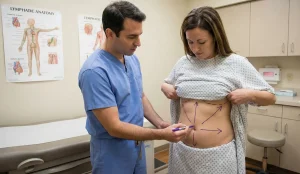
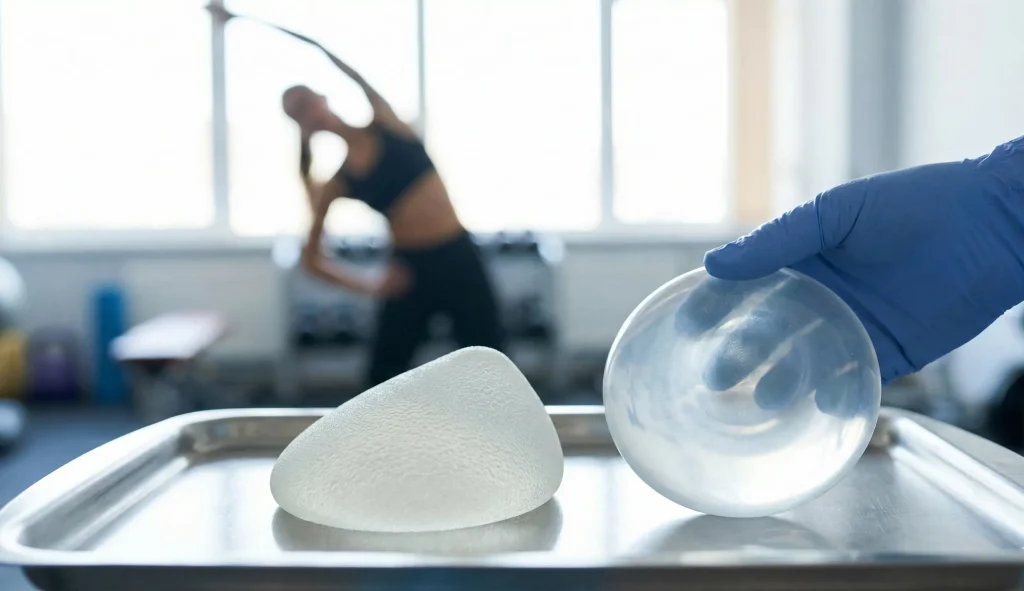
Silicone implants are often the best choice for athletes.
Athletes and fitness enthusiasts have to deal with a totally different set of issues when it comes to breast augmentation. While you want a result that is feminine and beautiful, you also require an implant that fits well with your active lifestyle. The “best” implant for an athlete is basically an implant that highlights your figure without interfering with your performance, limiting your range of motion, or causing discomfort during high-impact activities. Lin Europe Clinic is aware that your body is your instrument. We focus on picking out specific types of implants and using surgical techniques along which your muscular anatomy is respected thus, delivering the aesthetic volume you wish for.
Low body fat percentages, strong pectoral muscles, and intense training schedules call for a customized surgical plan. A runner needs a totally rethought approach compared to a CrossFit competitor or a competitive swimmer. If you pick a wrong size or placement, you will be risking the possibility of “animation deformity”, which is when the implant moves in an unnatural way when you flex your chest muscles. The information below will help you make a technically informed decision that a podium judge could not distinguish from natural and that is also comfortable in the gym.
The Problem: Body Fat Levels, Muscle Activity
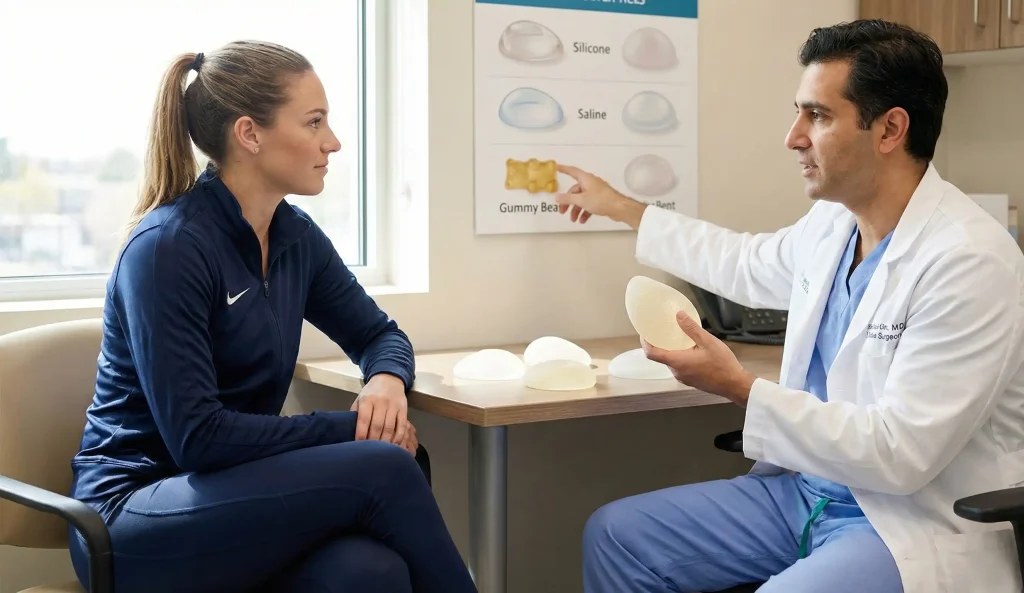
The majority of female athletes have lower body fat levels than the general population. This means that less natural padding is available which makes it harder to hide the breast implant borders. Without a doubt, the skin of a lean athlete is very thin and if you put the implant just directly under her skin, it will often seem like it is “bolted on” or artificially round with the edges showing ripples. Hence, you want a method which gives coverage but does not take away from the muscle function.
Besides this, your chest muscles are probably more developed and being more active. So, with each push-up, throw of a ball, or lifting weights, your pectoralis major muscle is in contraction. If the implant is deeply positioned behind this muscle, the strength of the contraction will temporarily alter the breast’s shape. Meeting both requirements i.e. the need for soft tissue coverage and the need for muscle stability is actually the heart of athletic breast augmentation. Your doctor at Lin Europe Clinic looks closely at your sport of choice to find the best compromise.
Silicone Vs. Saline
The implant’s weight and how it moves are extremely important to athletes. Usually, silicone gel implants have a considerably bigger benefit over saline ones. That’s because silicone is very much like natural breast tissue in density and such implants move easily with your body when you run or jump. Once the saline implants are filled with saltwater, they might on occasions feel heavier or “slosh” in the course of vigorous movement. Besides, they are more prone to ripple, which is a major problem for lean athletes with thin skin.
To be more precise, “lightweight” silicone implants of the latest generation (like B-Lite) are becoming the choice of endurance athletes. The reason behind this is that these implants weigh up to 30% less than the standard silicon implants of the same size. Putting less weight on your chest wall means less strain on your connective tissues and skin over time. However, if your sport is one with lots of high-impact vertical movements such as running or gymnastics, then seriously considering lightweight implants with your surgeon is a wise step.
Implant Profile: Moderate vs. High Profile
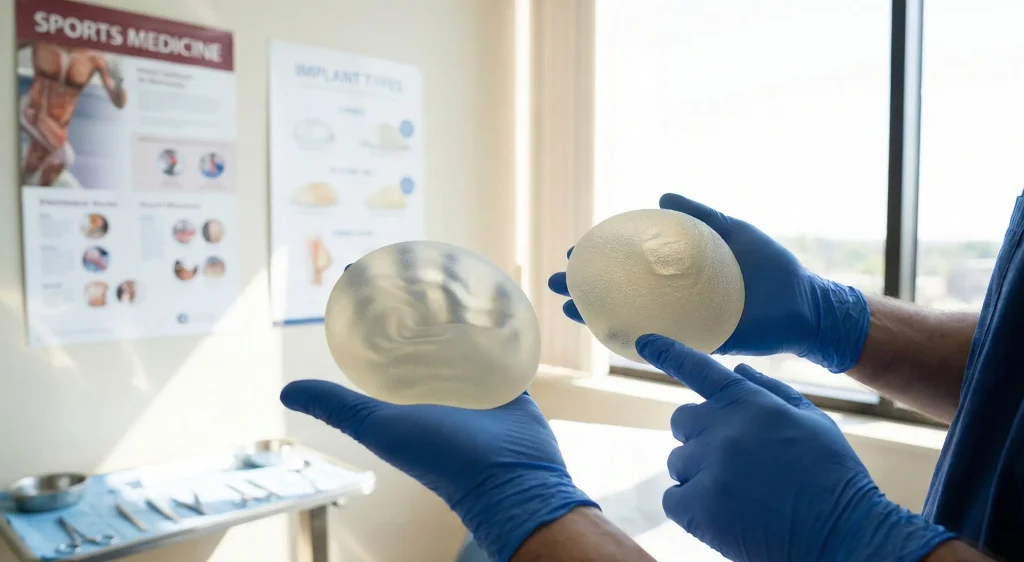
The “profile” of the implant is essentially the distance from the chest to the furthest point of the implant. Moderate profile is likely the most suitable implant for the majority of athletes. Implants of moderate profile have lower forward projection, and their base is also wider. On occasions physical activity center of gravity is very important, and if it is off even by a few inches, it can mean a lot of balancing. This is why such an implant gives a stable feeling on the chest wall because its center of gravity remains quite close to it. You get that sporty and in proportion look that will not interfere with the movement of your arms or any equipment.
High-profile implants can protrude quite a bit. Even though, from the looks of it, they add glamour, they might get in the way with certain sport activities. A high-profile implant that is of a certain size might cause problems when one tries to swing a golf club, serve in tennis, or is lying prone on a yoga mat. Unless your very narrow chest frame calls for a narrow implant, keeping a moderate projection means your breasts can enhance your figure and not become a physical obstacle.
Placement Strategy: Subfascial vs. Submuscular
Implant placement discussion is maybe the most determining factor for athletes. Submuscular implantation is considered the best way to hide the implant edges since the muscle covers them. But for those who lift weights or bodybuilders, this is a problem because you may get “animation deformity”, i.e. the breast changes its shape as the chest muscle flexes. In addition to distracting the audience visually on the stage, it can also be uncomfortable during training.
In fact, the subfascial technique is a good choice for power athletes who want to keep the strength. The surgeon will in this case place the implant on the muscle but beneath the very thin layer of connective tissue (fascia) which covers the muscle. It is more than simply putting the implant just over the muscle as here there is more than enough coverage provided but muscle is still left completely intact. This means that you can keep up with your strength training regime and trouble with the animation deformity is completely out of the picture. Your surgeon can check your skin thickness and thus tell whether you are suitable for this specialized technique or not.
Incision Location and Scar Management
Athletes tend to sport more revealing varieties of sportswear. It can be anything starting from a swimsuit to a sports bra that displays the underarm. Hence, where to make an incision is a big aesthetic consideration. The inframammary incision (in the fold below the breast) is the most common and safest route. It allows the surgeon to perform the most precise implant placement because the surgeon has the best visibility. The scar will be very discreet and can be covered by the band of a bikini top or a sports bra.
Making an incision in the armpit will save the breast from a scar, but for athletes, it is almost never the right choice since the condition of the tissue scar in the armpit can be really tight or cause dryness when you move your arms up doing sports such as volleyball, tennis or CrossFit, which in turn is uncomfortable. Generally, we advise athletes to get the fold incision in order to keep the maximum possible shoulder mobility and comfort.
Back to Training: The closer you get to ‘perfect’, the more patience you need

When returning to the sport, it is essential to be very careful so as not to shift the implants or cause internal bleeding. After a week, you can, in general, do lower-body cardio again, like walking or using the stationary bike. On the other hand, you will have to wait four to six weeks before you can go running. During this time your breasts will be going through a process where they develop a stable scar tissue capsule that surrounds the implants and keeps them in place.
Regarding upper-body strength training, this is where your patience will put to test the most. If you engage your chest muscles too soon, the implants will be pushed to the side, in the direction of the armpits. You need to stay away from such heavy chest exercises as bench pressing, doing push-ups, and pull-ups for a minimum of six to eight weeks. When you are back to lifting again, start with light weights and pay attention to what your body is telling you. We have a very detailed “return-to-sport” program to help you gradually and safely achieve your top performance.
Breast Implants in Turkey
Turkey in recent years has risen to become one of the favorite places for active women to get their aesthetic needs met. At the Lin Europe Clinic in Istanbul, we are pioneers of this trend offering not only advanced but also customized surgical techniques to fit denial physique perfectly. However, besides being a patient, you are also an athlete and the body you have hence what is functioning is only putting beautiful on top of it. Hence, our surgeons are very adept in pre-op consultation where they usually discuss even the minor aspects that could contribute to your post-op fitness level. For instance, there comes a choice of the implant type and muscle-sparing surgeries.
We at Lin Europe Clinic have been providing to all our patients a recovery environment that is derived straight from their inner athlete. We do not only take care of the doctor-patient relationship but also full hospitalization and post-op transportation. Besides, the logistics of a foreign hospital stay, inconvenience, and waste of time, are no longer the patient’s problems. And of course, regardless of whether you are a professional competitor or a weekend warrior, rest assured that here in Istanbul, with a team of people recognizing your fitness dedication, you will definitely be able to enhance your confidence.
Frequently Asked Questions About Breast Implants for Athletes
Typically, silicone implants with a moderate profile are the best option. They provide a stable center of gravity and feel natural when you move.
After complete healing, you can lift heavy weights. To avoid muscle animation, you might have to change your workout technique or opt for subfascial placement.
Large implants will definitely add weight and might change your balance, which can lead to altered running mechanics. The best way to avoid this is to go for a moderate size and wear a supportive sports bra.
One week after the operation, you are allowed to do light cardio activities such as a gentle walk. Before doing any high-impact workouts or heavy lifting, you will need to wait for six weeks.
Definitely, for an athlete who has implants, a high-impact sports bra is a must-have. During vigorous workouts, not only will it keep you from sagging, but it also backs up and protects the breast tissue.
Baxter, R. A. (2009). Management of the athletic patient. In: Breast Augmentation: Principles and Practice. Springer.
Hamdi, M., & DeFrene, B. (2014). Pectoral muscle dynamics in submuscular breast augmentation. Plastic and Reconstructive Surgery, 134(5), 889-896.
Jewell, M. L. (2017). Clinical applications of the subfascial approach in breast augmentation. Aesthetic Surgery Journal, 37(1), 45-53.
Maxwell, G. P., & Gabriel, A. (2016). Bio-dimensional planning in breast augmentation for the athletic patient. Clinics in Plastic Surgery, 43(2), 334-342.