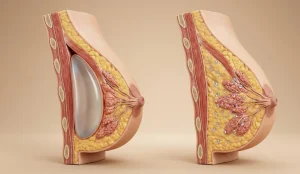

It depends on the implant size.
Women may typically resort to plastic surgery to enhance their breasts, whereby the most efficient and commonly used way is to place silicone implants to the natural shape of the woman.
The weight of breast implants depends largely on the type, size, and materials of the implant. The average weight of a breast implant is an essential piece of information for the patients and surgeons as the planning of the operation becomes easier leading to natural and comfortable results. In the condition of the choice of saline or silicone implants, the weight still affects the beauty and the functionality of the surgical results.
In a procedure of breast augmentation, patients would like to know how much their implants would weigh. The matter of the breast implant’s weight is quite major because it changes the total sensation, the appearance, and the comfort of the patient after the operation. In theory, an overweight implant can give a firmer and more noticeable shape, while a lightweight implant may give a softer and more natural-looking breast. Understanding the differences is vital in getting the best possible result that fits your objectives and body type.
Average Weight of Breast Implants
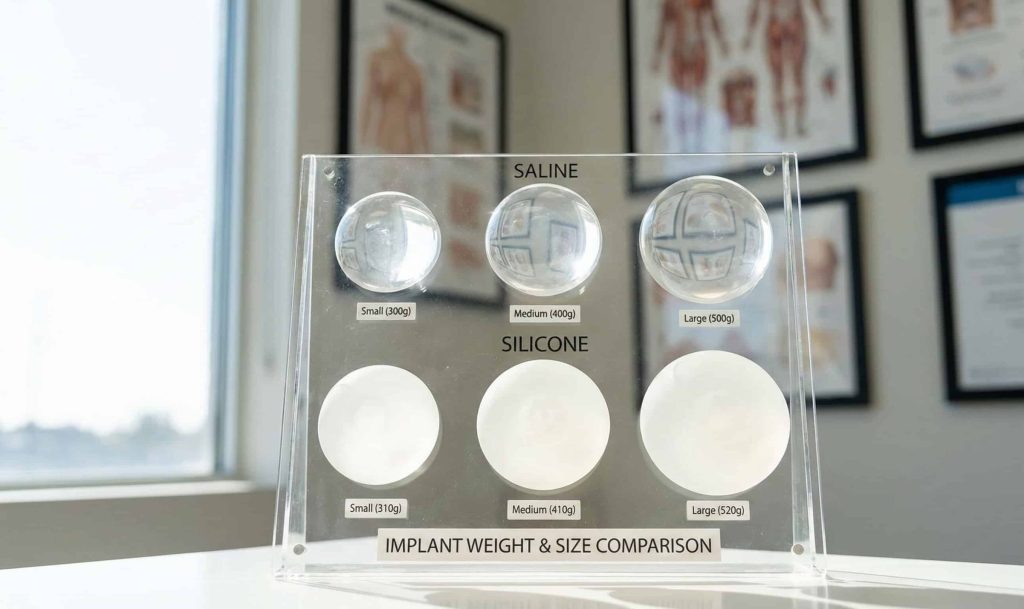
Typically, a breast implant weighs around 200 to 350 grams (0.4 to 0.7 pounds) for each implant. The given weight is determined by the implant’s size and the material that is used for the implant. As an instance, a 300cc implant will generally weigh more than a 200cc implant due to the increased volume of silicone or saline inside. These weights are different from one another but all fall into a standard range and can be changed according to the patient’s desire for volume and projection.
The precise weight of each implant will also depend on the kind of breast implant that you decide to go for. Implant weight can influence post-operative experience significantly – this fact is worth noting. If the implants are heavier, they will give more projection and firmness, whereas smaller implants will be lighter and more natural in some body types. Before they suggest implants, surgeons always consider these factors, thus, making sure that the weight is appropriate for the patient’s body.
How Implant Size and Volume Affect Weight
The size of a breast implant is the factor that determines the weight of the implant. Bigger implants, which are mostly within the range of 350cc to 800cc, will naturally weigh more because the volume of the material will be greater. The size of the implant is the main reason why the weight is directly proportional to the volume; the larger the implant, the more silicone or saline is used to fill the shell and thus the weight is higher. Those patients who desire a dramatic change will not only get more volume but also more weight by deciding on a larger implant.
On the contrary, smaller implants provide a more noticeable and weigh less. Those patients who want a natural look but with less visible enhancement can choose an implant on the smaller side of the scale and it can weigh as little as 200 grams for each implant. Surgeons can facilitate the process of choosing implant size by taking into account factors such as body frame, breast tissue, and personal preferences thus, making sure that the final decision complements your body and at the same time achieves the desired look.
Difference Between Saline and Silicone Implant Weight

Saline and silicone implants vary in their materials and this, in turn, influences their weight. In the case of silicone, the implant is composed of a thicker, gel-like material, whereas a saline implant contains a sterile saltwater solution; thus, the former is heavier than the latter. Generally, silicone implants tend to be heavier and firmer; however they also give a more natural feel as they are made of one consistent material. Hence, silicone implant weight helps the overall effect be not only firmer, but also more natural with the breast tissue.
On the other hand, saline implants are lighter in weight and thus may provide a softer feeling, but they may not be able to offer the same degree of projection as silicone implants. The difference in the weight of these two types of implants may also affect the postoperative feel of the breast. Some patients may prefer the lighter feel of saline implants while others may choose silicone implants for a fuller, more natural result. Both are implants that are generally used in breast augmentation procedures and the final decision will be made based on a variety of factors such as the desired look, body type, and personal preferences etc.
How Weight Impacts the Feel and Look of Breast Implants
The weight of breast implants is a major factor that determines the beauty of the work after surgery and obviously the feel of the breasts as well. Heavier implants are usually the ones that create more prominence hence the resultant shape is more obvious and more defined. For instance, women who desire a fuller look with more apparent breasts can benefit greatly from this. Anyway, heavier implants may also lead to the breasts becoming firmer which may not be the case for those who want a softer, more natural look and feel of their breasts.
Meanwhile, lighter implants give a delicate and more natural look and thus can be preferred by those ladies who want to retain the beauty of subtlety. Lighter implants can achieve volume just like the heavy ones but without that tight and hard feeling that is sometimes associated with heavy implants after surgery. Doctors always keep the weight in their minds in order to get the final result to be in line with the patient’s goals in terms of both aesthetics and comfort after surgery
How Surgeons Help Choose the Right Implant Weight for Your Body

It is instrumental in the breast enhancement operation to figure out the weight of the implant just right. Doctors analyze a lot of factors like the patient’s body structure, breast tissue, skin flexibility, desired results, etc., while deciding what the ideal implant weight should be. For patients with petite frames and low breast tissue, using a lighter implant will ensure the attainment of a natural look. Contrarily, a heavier implant might be chosen to achieve the same fullness and projection if the patient has more breast tissue or a bigger frame.
The knowledge and skill of the surgeon are what is mainly responsible for the implant weight that goes well with your body. When the surgeon does the consultation and physical check-up, they will know how best they can assist in reaching your goals with the implant. Achieving an outcome which makes your body look naturally shapely and at the same time keeping it comfortable as well as giving you long-term satisfaction with the results is what the right weight is all about.
Breast Implants in Turkey
In fact, it is mainly the mixture of highly skilled doctors, advanced hospitals, and affordable prices with which Turkey has turned into a major place of breast operations worldwide. Lin Europe Clinic in Istanbul is always ready to provide the most up-to-date breast enhancement solutions to global patients. Supported by skillful surgeons and individual consultation, Turkey is a great choice for anyone planning to get breast implants. The patients get all their needs taken care of – from consultations before the surgery to recovery after the surgery – within a smoothly run medical tourism system.
By deciding to undergo a breast augmentation operation in Turkey, the patient is allowed to enjoy the very competitive prices in the country while quality is kept intact. The expertise available at Lin Europe Clinic is what guarantees the best care for every patient with results that meet both aesthetic goals and medical safety. Whatever the reason is, cosmetic traveling or natural-looking getting, Turkey is your world-class option for breast implants.
- Bembenek, J., & Kamiński, M. (2017). The effect of implant type and weight on the aesthetic outcome of breast augmentation: A systematic review. Journal of Aesthetic Plastic Surgery, 41(2), 237-245.
- Mahajan, A. L., & Yoon, A. P. (2018). Silicone versus saline implants: A review of their physical properties and patient outcomes. Plastic and Reconstructive Surgery, 141(6), 1440-1448.
- Petty, M. R., & Williams, M. F. (2019). Assessing the impact of implant size and weight on postoperative complications in breast augmentation. Aesthetic Surgery Journal, 39(5), 565-572.
- Colic, M., & Ivkovic, S. (2020). Impact of breast implant weight on postoperative aesthetic satisfaction and recovery: A 5-year follow-up study. The Aesthetic Surgery Journal, 40(4), 458-464.
Frequently Asked Questions About Breast Implant Weight
A breast implant weighs on average between 200 and 350 grams per implant, the size and material being the deciding factors.
Indeed, silicone implants are more compact and consequently heavier than saline ones. This contributes to their more natural look and feel.
The weight of the implant determines not only the appearance of the breasts but also their touch, as heavier implants can make the breast more protruding and firmer, while lighter implants can produce a softer and more natural feel.
Maybe implant weight can affect recovery, as it is argued that heavier implants could cause more discomfort due to muscle strain in the chest area during the healing period. Nevertheless, surgeons will weigh up the factors and determine the most suitable weight for your body.
Heavier implants are more likely to result in additional stretching of the skin and muscle layers, thus changing the sensation and movement in the area after the procedure. An experienced surgeon, however, will be able to use the weight of the implant to work well with your body and thus lessen any possible risks.