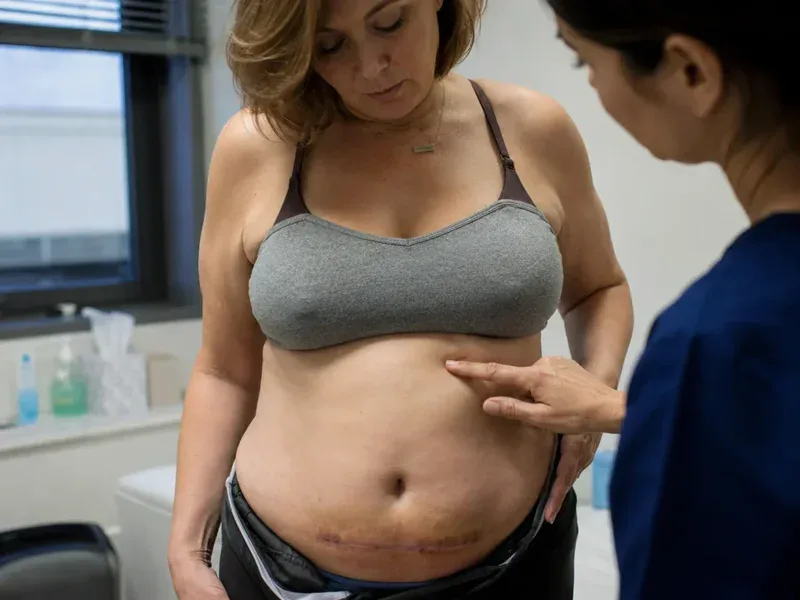
Compression and healing reduce upper abdominal bulging.
Review of the Upper Abdomen’s Structure After Abdominoplasty
In the highly technical area of high-definition body contouring combined with major abdominal remodeling, the attainment of a totally flat and sculpted midsection assumes the role of the most accurate tissue execution. After undergoing a full abdominoplasty (tummy tuck), patients generally anticipate a flattening of the entire torso that happens instantly and is consistent throughout. Nevertheless, during the healing period, a common issue is the appearance of a fullness in the upper abdomen or a persistent feeling of protrusion in the upper part of the abdomen, i.e., the area between the lower end of the breastbone and the belly button.
From a final clinical perspective, the management of an upper belly bulge is totally dependent on the accurate determination of its physiological source. An upper abdominal bulge seldom indicates the failure of the surgery. In fact, the most common reasons for this are visceral swelling, soft-tissue edema (fluid retention), or an anatomical difference in how the upper abdominal muscles settle after the operation. It is crucial to understand the biological reasons for this upper fullness before you think of changing your final figure.
Main Reasons for the Upper Abdomen Bulge After the Operation
It is very important to thoroughly examine the three major biological causes that might produce this very specific kind of structural look when it comes to targeting and dissolving the upper epigastric bulge:
- Epigastric Edema (Soft Tissue Edema): Following a tummy tuck, the surgeons detach the skin and fat layers of the abdomen up to the rib level so that they can repair the muscles. During this type of extensive dissection, the lymphatic drainage pathways are temporarily cut off. Since the lymphatic fluids are naturally routed to drain from the upper body downwards, the fluids can accumulate in the upper abdomen, making the tissues there feel swollen and hard. This swelling can persist for 6-12 months, after which the fluids are totally cleared.
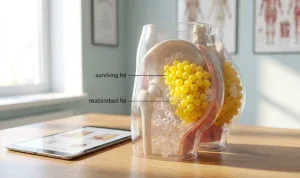
- Deep Abdominal Visceral Fat: A tummy tuck only works on the outside of the belly, i.e., the visible skin layer together with the fat under the skin and the muscles making up the wall of the abdomen. The deep fat stored within the organs of the abdomen, or the visceral fat, however, cannot be changed by this operation. If the patient has a lot of this internal fat, then the muscle wall that has just been tightened will be pushed from inside, causing the upper part to bulge out and this fullness cannot be changed by surgery.
- Upper Rectus Fascia Laxity: The muscle plication or abdominal wall repair operation is one whereby the surgeons bring together the rectus abdominis muscles from the pubic bone to the xiphoid process to tighten them. Since the upper abdominal muscles have to expand to allow the breathing process and the movement of the chest through the ribs, these muscles will loosen slightly or get stretched when you return to your normal activities.
Abdominal Functionality While Supporting Perfect Core Contouring
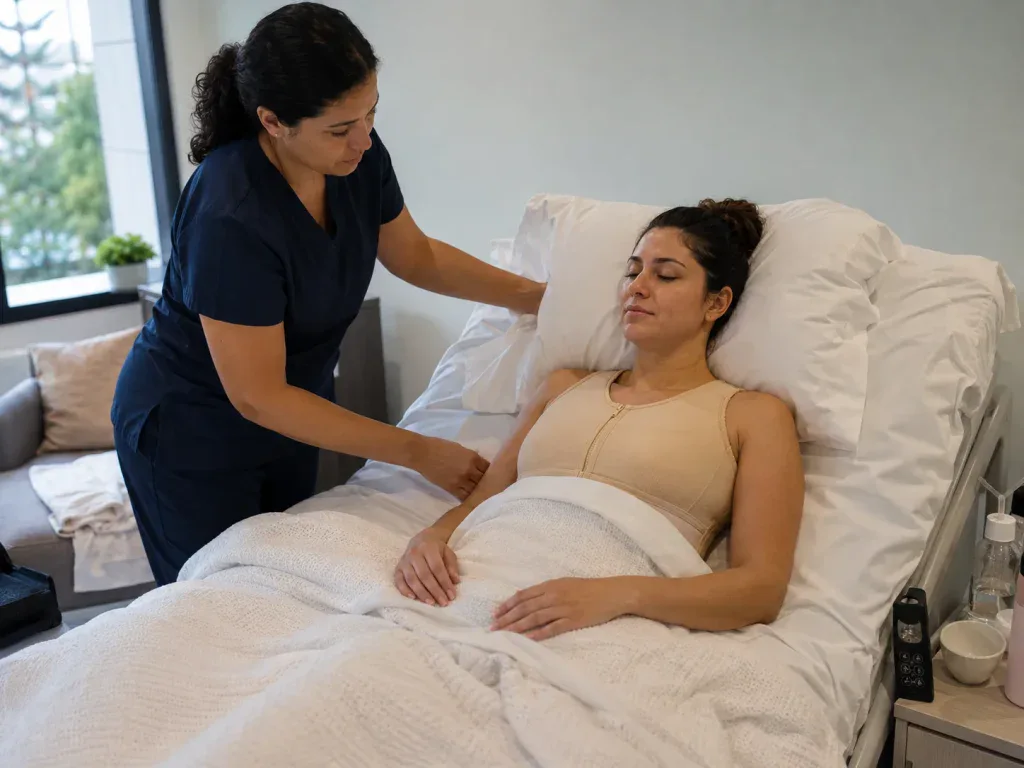
For those who are determined to have perfect profiles, it is absolutely essential to stick to strict behavioral limitations and follow targeted care instructions. As the innermost layers of your abdominal tissues will be healing and the skin will be drawn over your tightened core, wearing compression garments for active compression and tissue rest is necessary for your physical structure to survive. If the swelling is allowed to settle up in the epigastric area, causing the formation of hard, irregular scar tissue, the situation may worsen.
To guarantee that the clean lines of your upper abdominal region get locked in at the highest level of precision and the fluid gets drained evenly, you should wear your specially designed post-surgical compression garment for as long as directed, without interruption. Putting an abdominal foam pad (Abdo-board) inside your binder allows you to apply concentrated, uniform external pressure on the epigastric area, thereby flattening the fluid pockets. Moreover, totally ignoring the use of nicotine and tobacco products is a must. Nicotine is a very strong systemic vasoconstrictor that narrows micro-vessels instantly, thereby starving your skin flaps that are going through remodeling of the oxygenated blood necessary for smooth cellular recovery. Moving your diet to clean, protein-dense food while low in sodium helps reduce the amount of fluid collection.
The Abdominal Tissue Healing Schedule: Fluid Retention vs. True Excess
In order to differentiate between the two conditions, i.e., the transient post-surgical fluid retention and the actual structural defect, one needs to follow the standard tissue maturation timeline very carefully:
| Recovery Phase | Upper Abdomen Presentation | Underlying Biological Activity | Primary Clinical Action |
| Weeks 2–6 | Firm, round bulge; feels tight | Acute lymphatic disruption and peak fluid retention; highly responsive to compression adjustments. | Maintain consistent garment wear; integrate gentle lymphatic drainage massages. |
| Months 3–6 | Fluctuating fullness; soft to touch | Early tissue stabilization; swelling begins to shift and clear, revealing your true underlying muscle contour. | Implement core stabilization exercises (if cleared); monitor lifestyle nutrition. |
| Month 12+ | Definitive abdominal profile | Full tissue and bone remodeling is complete. Any remaining bulge represents visceral fat or residual tissue. | Conduct a physical evaluation; consider touch-up liposuction or lifestyle modifications if required. |
Tummy Tuck in Turkey
Selecting the services of LIN Europe Clinic will bring you into a first-rate medical paradise where your abdominal beauty and body contouring procedures will be taken care of not only by highly skilled surgical methods but also with great empathy for your feelings. It is well understood that going through the different steps of recovery, changes, and adaptations of the tissues after a serious operation such as abdominoplasty is very complex and must be handled in an open and highly supportive way while making evidence-based medicine the top priority. LIN Europe Clinic in Turkey is known worldwide as a prestigious leader in advanced body remodeling and plastic surgery follow-up care. It is a very tranquil place where the regulations for all patient safety standards worldwide are followed strictly.
Giving full trust to our committed team of professionals at LIN Europe Clinic in Istanbul will mean that your structural healing conditions will be observed using state-of-the-art diagnostic precision. We offer very detailed and individual postoperative support, high-definition tissue assessments, and personalized healing plans so that you have guidance at every step of your tissue healing and lifestyle adaptation process. Our highly qualified medical staff will make sure that your body shaping and systemic well-being are the best of both worlds, thus paving your way towards your dream body without worry. Come to us for refined and comprehensive care that is delivered in the heart of Turkey.
FAQ:
The most common reason for a bulge in the upper abdomen after a tummy tuck is isolated post-operative swelling (edema) resulting from disrupted lymph drainage pathways, leftover pockets of fat under the skin, or more rarely, internal visceral fat expanding and pushing against the newly tightened abdominal muscles.
The major part of the post-operative swelling disappears within 6 to 8 weeks after surgery, however fluid that collects in the upper epigastric area may take up to 6 to 12 months to be completely absorbed and to disappear as your tissue fully matures.
Yes, it can. Using a special medical foam insert under your compression garment will provide flat, even external pressure right on your upper epigastrium and this will stop fluid from building up and will hurry the draining away of any fluids still trapped.
Subcutaneous fat, which is located right under the skin, can be removed during a tummy tuck or liposuction without any problems. On the other hand, visceral fat is stored in your abdomen, surrounding the internal organs; it is targeted only by changes in diet and exercise as it cannot be surgically removed.
Following 12 months, after all the swelling has completely resolved, a bulge that is still there may be caused by a small area of stubborn subcutaneous fat. This is a situation that is very simple to amend and to make flat through a minor, non-invasive secondary touch-up or localized micro-liposuction session.
Matarasso, A. (1999). Abdominoplasty classification and complications: Managing skin tension vectors, epigastric fluid dynamics, and micro-vascular stability. Clinics in Plastic Surgery, 26(1), 119-132.
Pitman, G. H., et al. (1985). Partial and full abdominoplasty: Analyzing operational parameters, upper abdominal swelling rates, and tissue adherence standards. Plastic and Reconstructive Surgery, 75(3), 356-364.
Rohrich, R. J., et al. (2014). Advanced postoperative care, pressure-relief garment protocols, and soft-tissue optimization in revision body contouring. Plastic and Reconstructive Surgery, 134(3), 356-365.