Yes, mild swelling can persist.
Biological Timeline of Periorbital Maturation
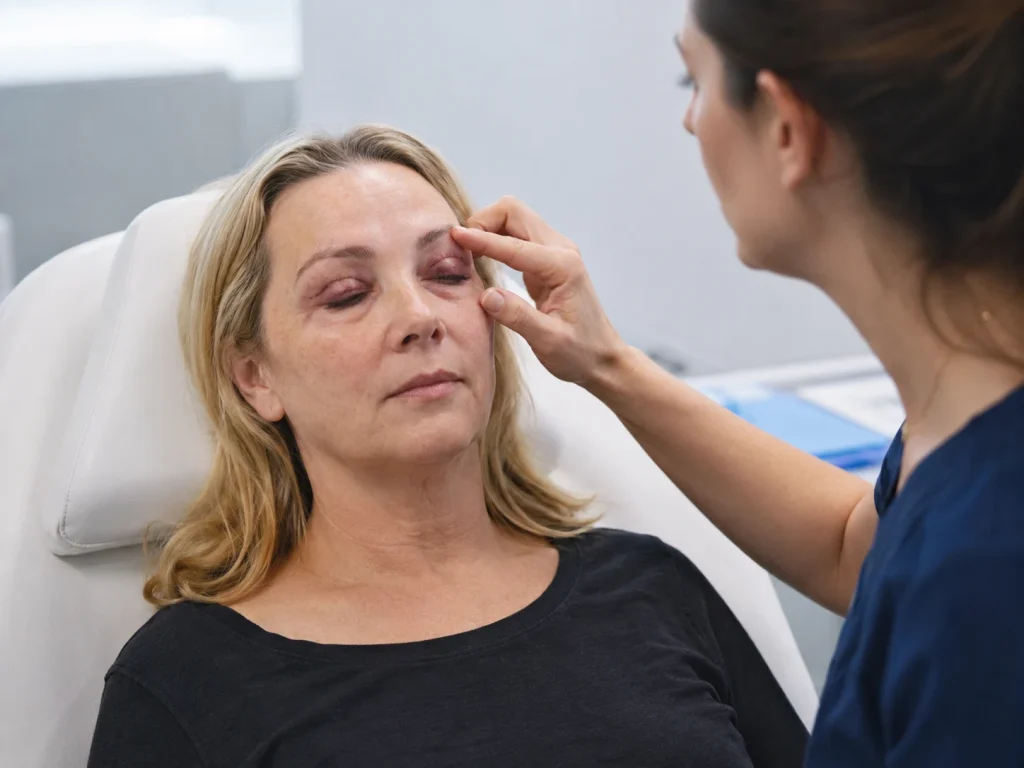
In the very specialized field of facial plastic surgery and periorbital rejuvenation, patients frequently anticipate a thoroughly clear, rested look within the first two weeks after the surgery. Nevertheless, it is quite normal at the four-week point to have some residual, almost invisible micro-swelling. The upper eyelid skin is not only the thinnest but also the most fragile among the human body tissues. It has a subcutaneous matrix that is very loose and highly expandable, which is why the area naturally retains fluid after it has been surgically traumatized.
By four weeks, the acute inflammatory phase is over for you, but the deeper layers of the tissue—for instance, the orbicularis oculi muscle and the underlying fat pad regions—are still internally healing. This leftover feeling of “heaviness” or slight puffiness is merely the body’s lymphatic routes slowly adjusting and eliminating the leftover fluid (edema) from the tight orbital pockets.
Factors Influencing Lingual and Periorbital Persistence
However, the length and the intensity of the four-week swelling can be markedly different depending on the level of technical difficulty of your surgery and your individual biological response. A number of factors invariably affect the timing of the maturation:
- Scope of Surgery: The more extensive the procedure, such as a combined upper and lower blepharoplasty or a complicated orbital fat repositioning, the greater the total amount of tissue disturbance, which therefore naturally necessitates a longer lymphatic drainage interval.
- Skin Tightness: People who have naturally thinner and more translucent skin usually show more conspicuous residual puffiness as opposed to those with thicker and more robust dermal structures.
- Systemic Lifestyle Kinetics: The things you eat daily, like salt, your sleeping position, and your overall fluid intake level all have a direct influence on how much fluid you retain. When using a lot of salt or sleeping flat on your back, gravity pulls the fluid into the orbital sockets and so the swelling seems to be greatly increased with each morning.
Optimizing Your Recovery and Finalizing Results
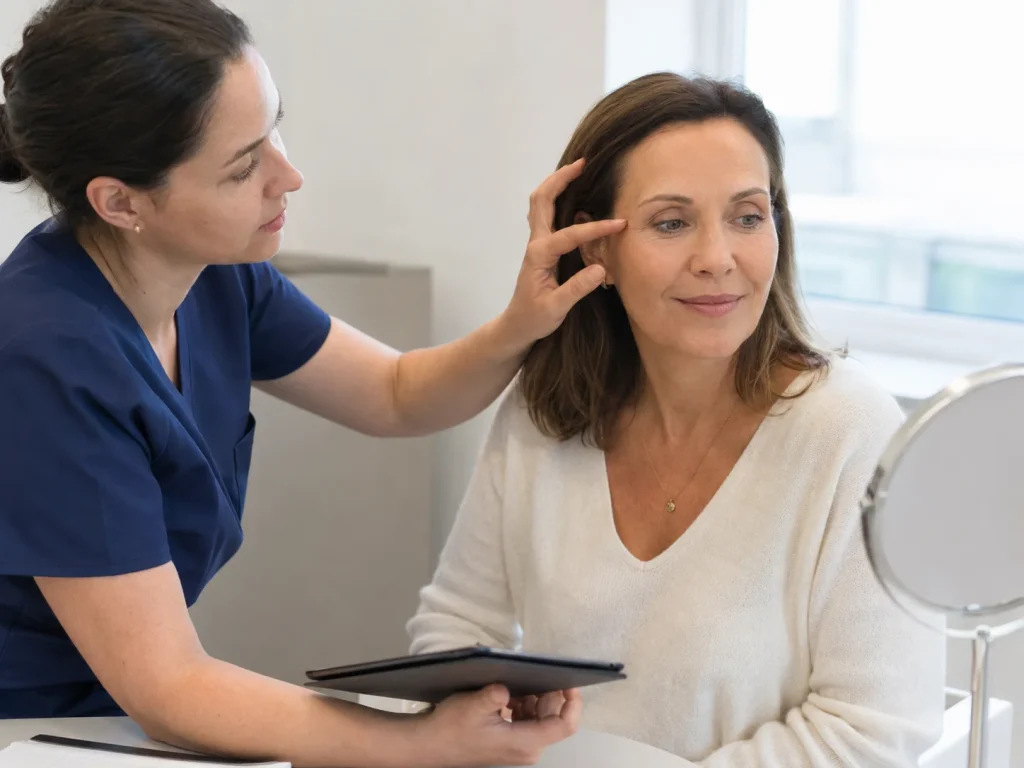
Observing strict behavioral restrictions during this midway healing phase is very important for those who still want to maintain an excellent personal presentation and expect facial perfection from the matrix. In order to speed up the last elimination of micro-swelling and to make sure that your incisions develop into thin, barely visible lines, you have to keep up with your post-operative care regularly.
For those who are committed to always having a very clear facial appearance, protecting your vascular health is critical. One has to keep the head raised during sleep by using two or three firm pillows. It will allow gravity to help drain away the fluid from the eyes as you sleep. Besides that, totally giving up on nicotine and other tobacco products is absolutely essential. Nicotine exerts the effect of a systemic vasoconstrictor very strongly and rapidly, so that it causes the micro-vessels supplying the periorbital skin flaps to shrink and oxygen delivery to the tissue required for the completion of cellular repair to be reduced drastically.
Distinguishing Normal Maturation from Surgical Anomalies
Being able to discern the differences between normal tissue maturation and actual surgical complications is greatly reassuring as to the final outcome of the aesthetic. It is crucial to remember that residual micro-swelling is totally different from highly problematic symptoms, such as:
- Normal Maturation: Mild, symmetrical puffiness upon waking up, which disappears during the day; the eyelid is a little hard but still moves naturally and there is no pain.
- Surgical Anomaly: A sudden localized redness, heat, severe pain, discharge from the incision sites or very uneven eyelid closure. If you get any of these symptoms, then you should see your surgical team without delay for a professional diagnostic evaluation so that infection or other complications can be ruled out.
Blepharoplasty in Turkey
Going for LIN Europe Clinic means you will get into a prime global medical oasis where your facial aesthetics, structural rejuvenation and surgical procedures are handled with uncompromising clinical excellence and deep empathetic care. We understand that the recovery phases after advanced blepharoplasty require a very sophisticated, transparent and supportive environment in which evidence-based medicine is of the highest priority. LIN Europe Clinic in Turkey is a world leader in advanced facial remodeling and plastic aftercare and offers a peaceful environment where your health plan is strictly administered by top international patient safety standards.
By entrusting the expert team at LIN Europe Clinic in Istanbul with your deepest recovery parameters, your healing progress is monitored with complete diagnostic accuracy. We offer full and individually focused post-operative instructions, periorbital tissue visualization, and personalized safety checklists that will lead you by the hand through every stage of your tissue maturation and lifestyle integration. Our top-level medical team will guarantee that your cosmetic investment and systemic health are both perfectly safeguarded, so you can relax in your dream figure and have total peace of mind. Enjoy the elegant, all-round care of LIN Europe Clinic and get a well-balanced, artistically delivered canvas safely and wonderfully in the heart of Turkey.
FAQ:
Having some mild micro-swelling even at four weeks after surgery is completely normal. In fact, the eyelid skin is so thin and sensitive that it simply takes some time to get rid of all the leftover water.
Although most of the puffiness should go away at 2 to 3 weeks, very minor internal swelling might remain up to 3 to 6 months before it completely goes away and unveils that final, rejuvenated look.
The fluid is pulled down by gravity into the loose eyelid tissues while you are lying down at night. That is why your eyes tend to be more swollen when you wake up and then they get better as you walk around during the day.
Yes – sodium can cause your body to hold on to water so much that it can cause swelling. So if you want to reduce your tissues’ buffer by all the water that they hold on to, then the best approach is to control your diet and choose a low-sodium menu.
If in addition to swelling, you have localized heat, severe pain, discharge, or one eye is quite noticeably more swollen than the other, you need to contact your surgeon’s office immediately for a safety evaluation.
Putterman, A. M. (1998). Blepharoplasty: Analyzing localized tissue tension, periorbital healing kinetics, and long-term scar maturation standards. Ophthalmic Plastic and Reconstructive Surgery, 14(2), 123-134.
Hester, T. R., et al. (2000). Advanced surgical protocols in periorbital rejuvenation: Balancing skin excision with kinetic preservation. Plastic and Reconstructive Surgery, 105(3), 1111-1122.
Baker, S. S., et al. (2013). Postoperative lifestyle boundaries, vascular homeostasis, and structural stability standards in aesthetic blepharoplasty. Aesthetic Surgery Journal, 33(4), 512-521.