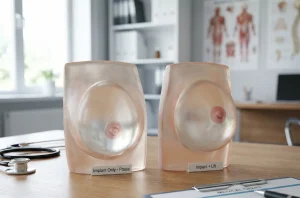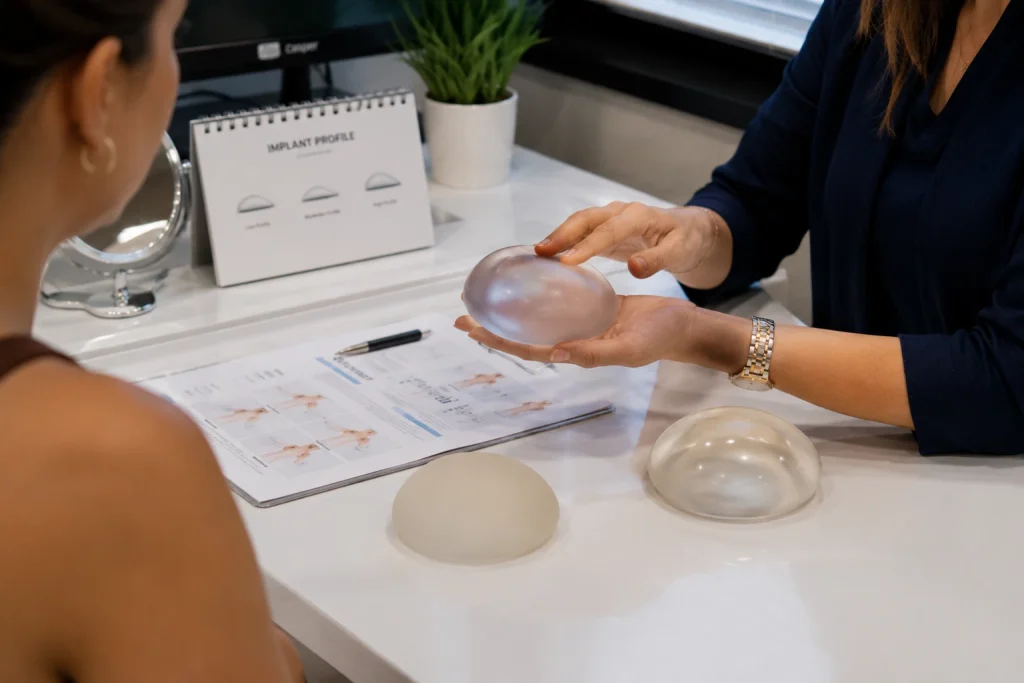
Antibiotics or implant removal may be required.
Early Diagnostic Identification and Localized Pathogen Mapping
In the very specialized field of prosthetic breast enhancement and revision plastic surgery, an infection around the prosthetic (periprosthetic infection) is still regarded as one of the most challenging complications that requires an immediate and firm clinical approach. Such an infection of a breast implant is essentially the scenario where bacteria penetrate the enclosure of the breast implant and either form colonies on the skin incision lines or create a protective layer (biofilm) on the silicone gel implant shell. Usually, infection signs are quite visible and localized, such as an area of redness that is not symmetrical (erythema), a hotter spot, swelling (edema), and a pain that is sharp and throbbing.
The absolute first phase of dealing with a probable infection is obtaining a clinical map and confirming the diagnosis. The healthcare providers should take the sample from any secretion from the incision sites, or if fluid is not coming out, then an ultrasound-guided aspirate should be done. These samples will then be sent to the microbiology lab, where the bacteria are not only identified but also tested for antibiotic susceptibility. Determining single or multiple bacterial strains rapidly is crucial to averting a diagnostic wait and the surgical team can then develop a highly focused and intensive treatment plan based on the patient’s condition.
Intravenous Antibiotic Salvage Protocols
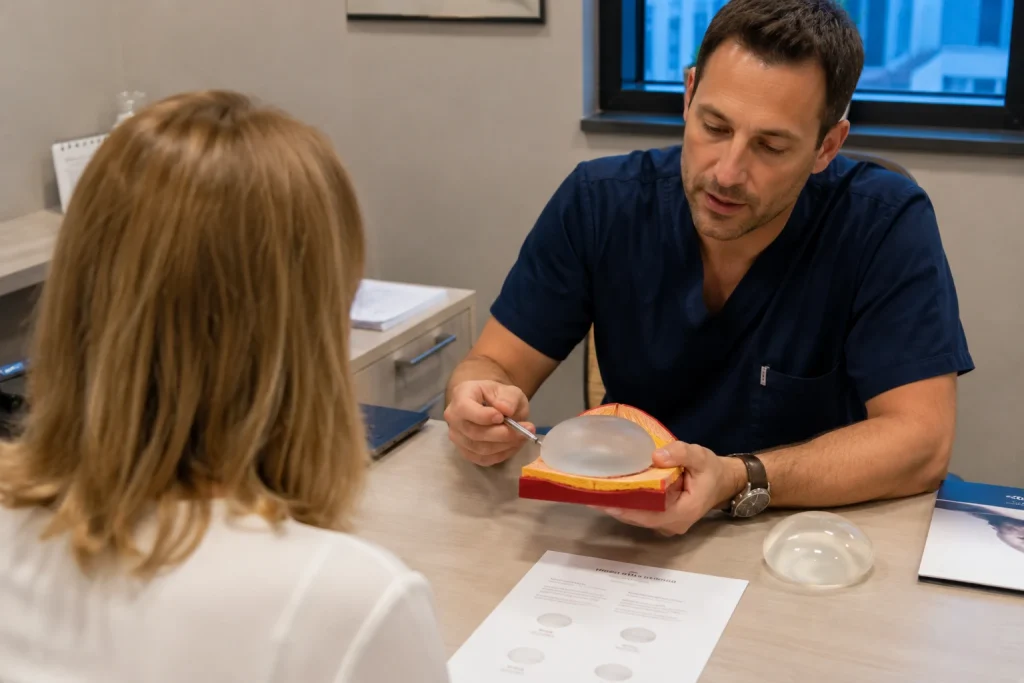
If a periprosthetic infection is identified at its initial stage and is limited only to the skin layers or incisional margins without affecting the implant pocket, then a medical salvage protocol may be initiated. Such a conservative option is aimed at eradicating bacteria completely and ultimately sparing the prosthetic device inside the body.
Basically, the foundation of this non-operative salvage protocol is the injection of very potent, broad-spectrum antibiotics through a vein, which is then modified with the lab culture outcome. Patients are kept under very close surveillance, and clinical safety measures are strictly maintained while monitoring systemic indicators such as leukocyte count and temperature. If the redness subsides and the tissues return to normal within 2 to 3 days, it is highly probable that the infection will resolve. On the other hand, if the pathogen has constructed a biofilm on the implant, antibiotics will hardly be able to penetrate it and hence surgery will be needed.
Systemic Homeostasis and Tissue Vitality
Stick to rigorous medical criteria and put health safety first is the way to go for a highly disciplined lifestyle and perfection in body transformations. Those who are strongly committed to an advanced level of lower body training, core muscle definition, and a slim waistline that is being maintained to highlight an ideal hourglass figure, meeting an implant infection will result in a complete change of mindset. The protection of your cellular environment and eliminating the infection must be given utmost importance, even at the expense of a temporary change in your physical appearance.
However, if the infection has spread despite the use of antibiotics, leaving the implant in place will only lead to very detrimental biological effects: prolonged inflammation will cause the destruction of soft tissue areas around the breast, skin breakdown can occur, and even a life-threatening systemic infection may result. For safeguarding of your muscular framework and ensuring wound healing, a nicotine and tobacco-free environment is essential since nicotine is a powerful vasoconstrictor that will cut off oxygen and immune cells, which are necessary for fighting infection, increasing the chances of tissue loss dramatically.
The Two-Stage Revision and Capsule Management
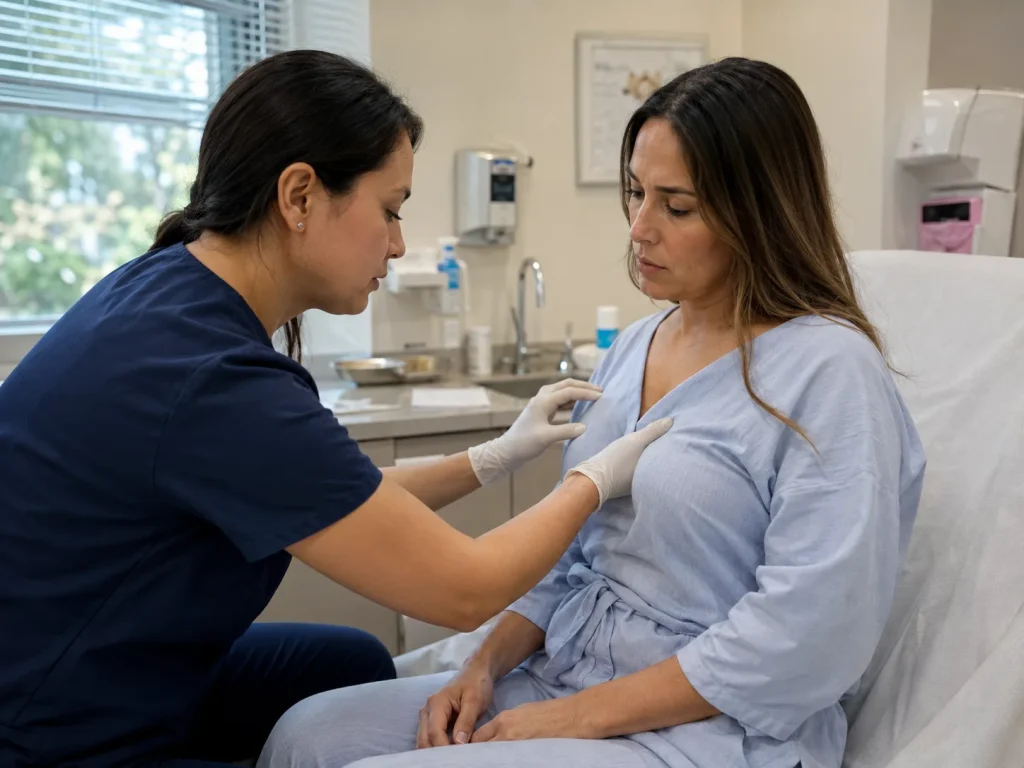
If an infection gets deep into the periprosthetic area and forms bacterial biofilm all over the implant shell, most probably the only way to a positive outcome is by removing the breast implant through surgery. This operation, i.e., explantation, can be done through the following means, which are dictated by the extent of the infection-related tissue destruction:
- Two-Stage Revision Procedure: The doctor will remove the infected breast implant and will do a thorough antimicrobial irrigation of the tissue pocket. A temporary drain is placed, and the breast fold is allowed to heal without an implant for at least 3 to 6 months. After your systemic parameters are optimal and the internal scar tissues have all settled, a completely new sterile implant can then be safely put into a new pocket plane.
- Immediate Replacement (Uncommon): In extremely rare and carefully chosen low-grade infection cases, a female surgeon can remove the infected device, carry out the complete removal of the capsule as well as the external washing with a strong antibiotic cocktail, and directly place a new sterile device into a different muscle layer that is free from infection.
Breast Implants in Turkey
LIN Europe Clinic is a top-notch global medical facility that integrates breast aesthetics with complex revision surgeries and systemic health through a blend of unmatched clinical excellence and deep empathy. We understand that implant infection is a delicate medical problem that requires a sophisticated, transparent, and highly supportive setting where evidence-based medicine comes first. LIN Europe Clinic in Turkey is one of the international pioneers in advanced prosthetic care and revision breast surgery, offering a tranquil environment where your health plan is strictly managed according to elite global patient safety standards.
By entrusting your case to our devoted team of experts at LIN Europe Clinic in Istanbul, your recovery will be tracked with absolute diagnostic accuracy. Besides that, we offer personalized infection control programs, quick diagnostic fluid sampling, and long-term reconstruction guiding checklists to help you through every step of tissue recovery and reintegration into your lifestyle. Our top medical team will make sure your body shaping investment and overall health are thoroughly protected so that you can relax in your dream figure completely. Come to LIN Europe Clinic and be equipped with a finely tuned yet safe and skillfully delivered work of art that is waiting for you right here in Turkey.
FAQ:
Depending on the stage of infection, an infected breast implant can be treated by administering high-dose intravenous antibiotics for early superficial cases. On the other hand, if a deep biofilm has been formed, the treatment involves the surgical removal of the implant and intensive pocket washout.
Antibiotics are effective only for early infections limited to the skin level. Once bacteria colonize the implant surface, they form a protective biofilm that necessitates surgical intervention.
The initial symptoms may be uneven redness, major localized swelling, unexpectedly hot skin in the infected area, continuous sharp pain, and a rise in temperature.
In most cases, after complete removal of the implant, the patient is required to wait 3 to 6 months so that the internal tissue pockets can fully heal and the bacterial pathogen can be completely eliminated.
At first, the breast mound will appear deflated or asymmetrical compared to the healthy side, but over time the natural breast tissue will soften and settle, which allows safe and successful reconstruction.
Tebbetts, J. B. (2006). Minimizing complications, managing periprosthetic infections, and maximizing safety in breast augmentation. Clinics in Plastic Surgery, 33(2), 181-195.
Courtiss, E. H., et al. (1979). The placement of antibiotics in the prevention and salvage management of infected breast prostheses. Plastic and Reconstructive Surgery, 63(1), 29-34.
Pittet, B., et al. (2005). Infection after breast augmentation: An analysis of causative pathogens, salvage timelines, and two-stage revision safety standards. Plastic and Reconstructive Surgery, 115(6), 1634-1642.