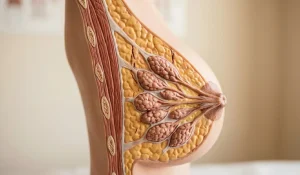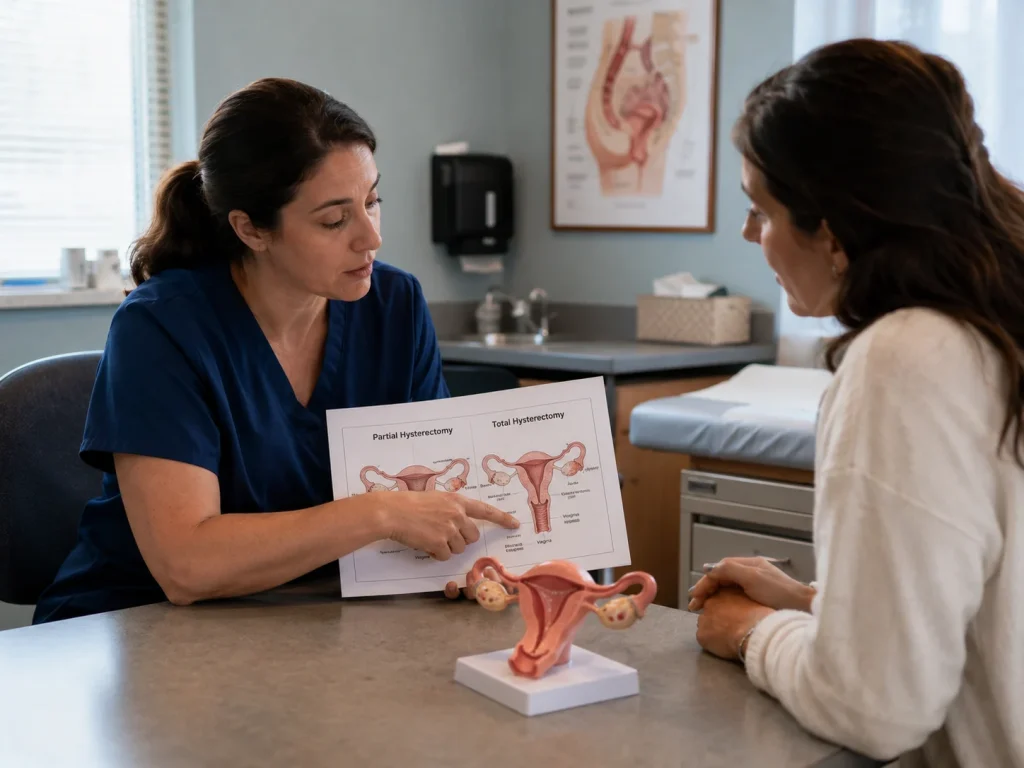
Partial removes uterus; total removes uterus and cervix.
Identifying the Cervical Resection Line as Anatomical Boundary
In the multifaceted subject of the pelvic structure and human reproduction, deciding the perfect surgical method for uterine problems calls for an exact knowledge of pelvic anatomy. Patients are often confused about the distinction between a partial and a total hysterectomy. In fact, the main dissimilarity between the two operations is entirely based on whether the cervix, the lower, slim part of the uterus that is connected to the vagina, is simply preserved as a structure or removed completely.
Partial hysterectomy, also known as supracervical or subtotal hysterectomy in medical terms, involves the removal of only the ligaments affecting the upper part of the uterus, called the uterine corpus. The cervix, however, remains completely intact and is still connected to the top of the vaginal vault. Conversely, a total hysterectomy means that the uterine corpus as well as the cervix are both removed. Many people mistakenly think that total hysterectomy always entails removal of ovaries as well but in medical terms, “total” refers only to complete removal of uterus, whereas decisions related to removing ovaries or fallopian tubes are separate ones.
Surgical Techniques, Operative Routes, and Pelvic Support Structures
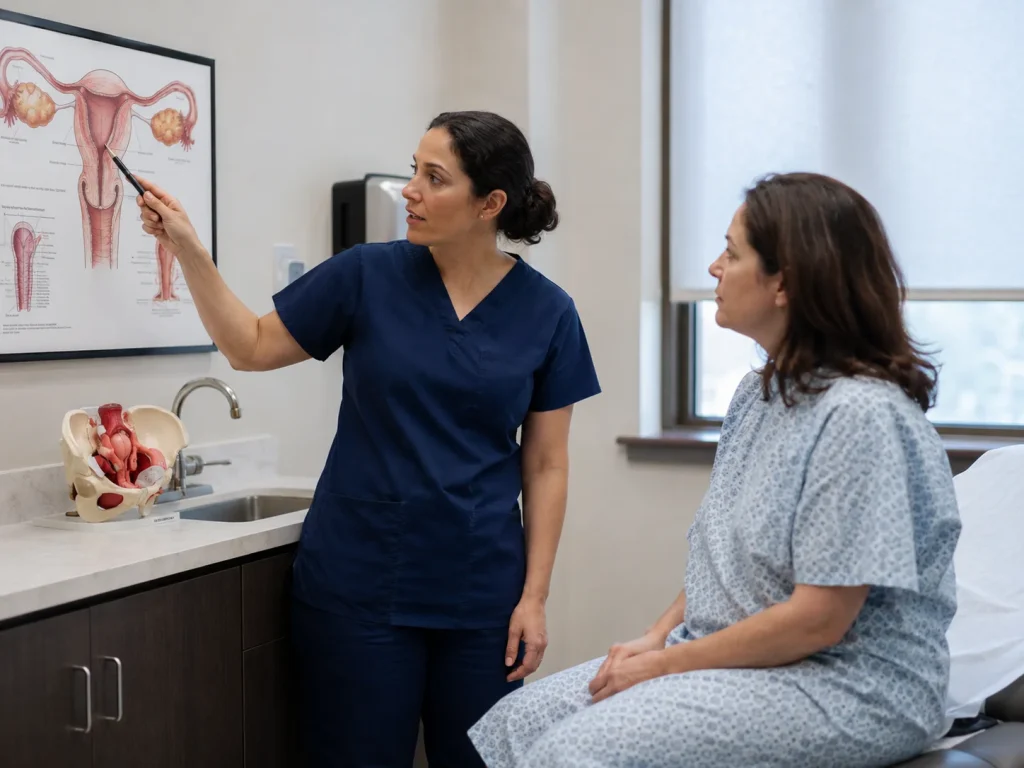
The differences in technical aspects between partial and total uterus removals determine surgical procedures and pelvic floor reconstruction subsequently. A partial hysterectomy has many advantages, especially this one: a surgeon will be able to reduce the trauma to the deep pelvic connective tissues at the initial stage. Since the cervix is still present, the patterns of uterosacral and cardinal ligaments are hardly disturbed, which is an important factor in carrying on the support of the pelvic floor and intact upper vaginal form.
If a total hysterectomy is performed, the anatomical detachment of the cervix from its vaginal extensions is necessary and the vaginal vault will become open. After the entire uterus, along with the cervix, has been removed, the surgeon has to close the vaginal opening by applying strong sutures in different layers to form the so-called vaginal cuff. At this point, the surgeon fixes the major pelvic ligaments to the vaginal cuff by suturing them. This critical anchoring step greatly strengthens the pelvic floor mesh to evenly spread the intra-abdominal pressure, which is instrumental in preventing vaginal vault prolapse that might occur in the long run, and also allows the delicate tissues inside to heal.
Aligning Pelvic Strength to Uphold a Superior Physical Figure
To those who are keepers of extremely fit bodies, coming to grips with how these major body structural changes can influence them is the first step. For athletes who are obsessed with not only increasing the size of the lower body parts but also their gluteal muscles so they can have a great figure, retaining deep core stability of the pelvis is a must. This muscular pelvic floor serves as your main anchoring point while you execute high-intensity compound exercises during which large internal pressure builds up, such as deep squats, heavy deadlifts, or challenging core resistance training.
Choosing the right surgical method that preserves this fundamental stability will make sure that your core does not deteriorate but instead will remain robust and reactive during the healing process. Having a successful recovery program that allows the deep pelvic floor tissues to integrate entirely into their new position results in the internal framework being in line with the overall health and physical discipline that the individual exhibits. This well-calculated equilibrium is beneficial in protecting internal support structures while the robust lower curves, tightened waistline, and athletic body shape are being shown off with complete structural confidence from every angle.
Oncological Concerns, Diagnostic Procedures, and Tissue Adaptation
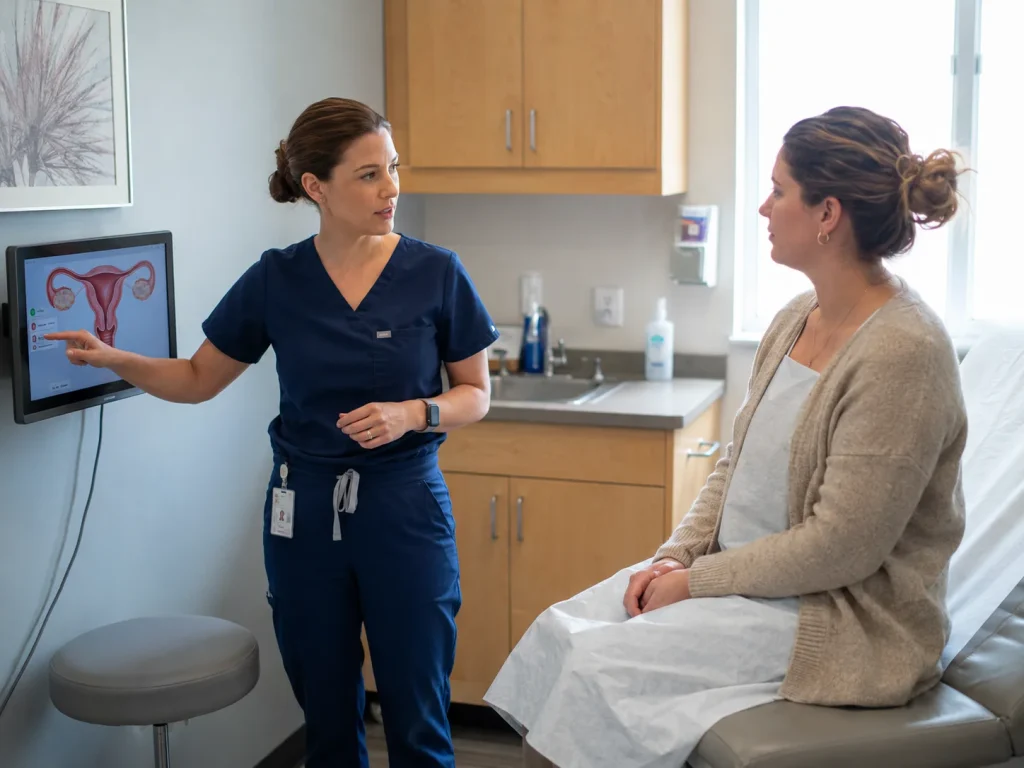
An objective, data-backed analysis of such a stalemate between keeping or cutting the cervix might prove quite helpful in understanding how one or another decision might change regular medical checks and conditions of the first months of recovery.
| Clinical Parameter | Partial (Supracervical) Hysterectomy | Total Hysterectomy |
| Organs Removed | Uterine corpus (upper body of the uterus) | Entire uterus and the complete cervix |
| Vaginal Cuff Creation | Not required (Vaginal vault remains untouched) | Mandatory (The top of the vaginal canal is sutured closed) |
| Ongoing Screening | Requires continued, regular Pap smears to monitor cervical cells | Pap smears can typically be discontinued for benign conditions |
| Risk of Cyclic Bleeding | Low risk (~5-10%) if residual endometrial tissue remains on the cervix | Zero risk of future cyclic menstrual bleeding |
| Primary Healing Window | Typically 4 to 6 weeks | Typically 6 to 8 weeks (Requires complete vaginal cuff fusion) |
According to the above clinical template, a patient who undergoes a partial hysterectomy with the cervix left will need to keep up the schedule of Pap tests and cervical cancer checks as indicated by international health standards. Moreover, in case some remnants of the inner uterine lining (endometrium) have been left on the cervix, a patient may suffer light, periodic bleeding similar to a menstrual cycle. A total hysterectomy, on the other hand, is a complete removal of the uterus and cervix; hence, there are no cervical cancer risks anymore and no further bleeding at all. Therefore, a total hysterectomy is the surgical option that is usually undertaken for cases of extensive endometriosis, adenomyosis, or severe cervical dysplasia.
Gynecologic Health in Turkey
Choosing LIN Europe Clinic means you are part of the greatest world medical sanctuary where your unique structural transformation will be conducted at the highest level of clinical excellence and caring communication. We recognize that developing and evaluating your complex gynecological surgery requires a highly sophisticated, transparent, and personal touch, not only medicine based on the best clinical evidence. LIN Europe Clinic in Turkey is an international leader in carrying out advanced minimally invasive pelvic surgeries. It is also a place of peace where your therapeutic plan is determined strictly by top global standards of patient safety.
By entrusting our highly competent team of medical professionals at LIN Europe Clinic in Istanbul with your treatment, your surgical path will be developed with utmost mathematical accuracy. We implement the most advanced laparoscopic and robotic-assisted technologies to perform the surgeries through minute, hardly visible incisions, thereby reducing the trauma to the tissues and significantly enhancing the passage of your cellular repair. Our top-notch medical experts closely follow the healing process inside your body and take necessary actions to make sure that your operation results in a very stable and well-balanced outcome that is consistent with your active lifestyle. You will be able to enjoy the exquisite, comprehensive care of LIN Europe Clinic as well as attain a beautifully balanced figure, both safely and skillfully delivered in the heart of Turkey.
FAQ:
No, if you have a total hysterectomy, it means that only your uterus and cervix are removed. Removing the ovaries (oophorectomy) and fallopian tubes (salpingectomy) is a completely separate decision and depends on your age, family genetic factors, and condition of the ovaries.
If your cervix is totally healthy and you haven’t had an abnormal Pap smear at all, the doctor may suggest a subtotal hysterectomy. Not having a cervix means that operation time can be reduced a bit, necessity of making a vaginal cuff can be done away with, and your native support ligaments of upper vagina can be kept intact.
A vaginal cuff is the surgical closure created by stitching up the edges of the vaginal opening after the removal of the cervix. It is a very important structure that needs to heal completely and without interruptions during the initial eight weeks to avoid fluid build-up or wound opening.
If your ovaries continue to function, they will keep producing hormones as usual. Although you won’t have regular menstrual periods anymore, a small percentage of women who get a partial hysterectomy may experience very light monthly spotting if there is still some endometrial tissue on the cervix.
After a partial hysterectomy, early recovery phase is a little bit shorter four to six weeks since the vaginal canal has not been opened. After a total hysterectomy, you should expect to dedicate six to eight weeks for recovery so that your internal vaginal cuff heals completely before you start doing intense exercise or lifting heavy things again.
Garry, R., et al. (2004). The eVALuate study: two parallel randomised trials, one comparing laparoscopic with abdominal hysterectomy, and the other comparing laparoscopic with vaginal hysterectomy. BMJ, 328(7432), 129.
Lethaby, A., et al. (2006). Total versus subtotal hysterectomy for benign uterine conditions: a systematic clinical review. Cochrane Database of Systematic Reviews, (2).
Munro, M. G. (1997). Supracervical hysterectomy: a modern appraisal of a traditional procedure. Current Opinion in Obstetrics and Gynecology, 9(4), 232-239.