Yes, hair transplants restore receding hairlines.
The Biometrics Of Follicular Miniaturization And Frontal Advancement
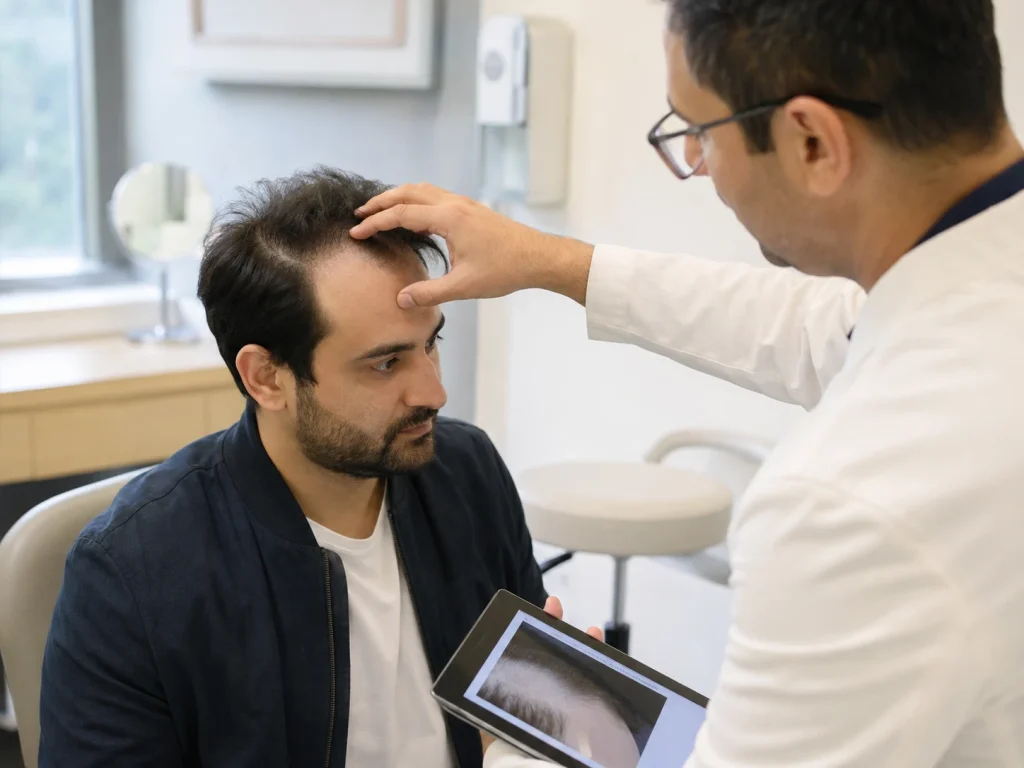
Trichologists and restoration physicians would generally regard a receding hairline as a symptom of androgenetic alopecia. It is a structural derangement whereby replacement of hair follicles in the frontal and temporal zones of the scalp is affected by the gene expression pattern that causes hair follicles to produce DHT hormone sensitivity-dependent miniaturization. Eventually, these follicles become dormant and lose their hair-producing function. If visitors ask if a hair transplant can permanently fix a receding hairline, the clinical answer is an emphatic yes. This type of intervention is grounded on the fundamental biometric concept of donor dominance, whereby hair fibers from healthy, DHT-resistant root samples are utilized to bring back one’s younger look.
During a mathematically calibrated hair transplant, a world-class practitioner extracts potent follicular units from the occipital area of the scalp – the very back and sides of the head where hair roots are genetically predisposed to resist shedding. These live micro-grafts are then carefully handled and transplanted into the receded frontal areas. Since these grafted follicles retain their genetic resistance to hormone-induced hair loss indefinitely, they will continue to grow naturally in their new environment, serving as a permanent and very effective architectural solution that completely repairs a receding hairline.
Structural Design And Density In Frontal Hairline Architecture
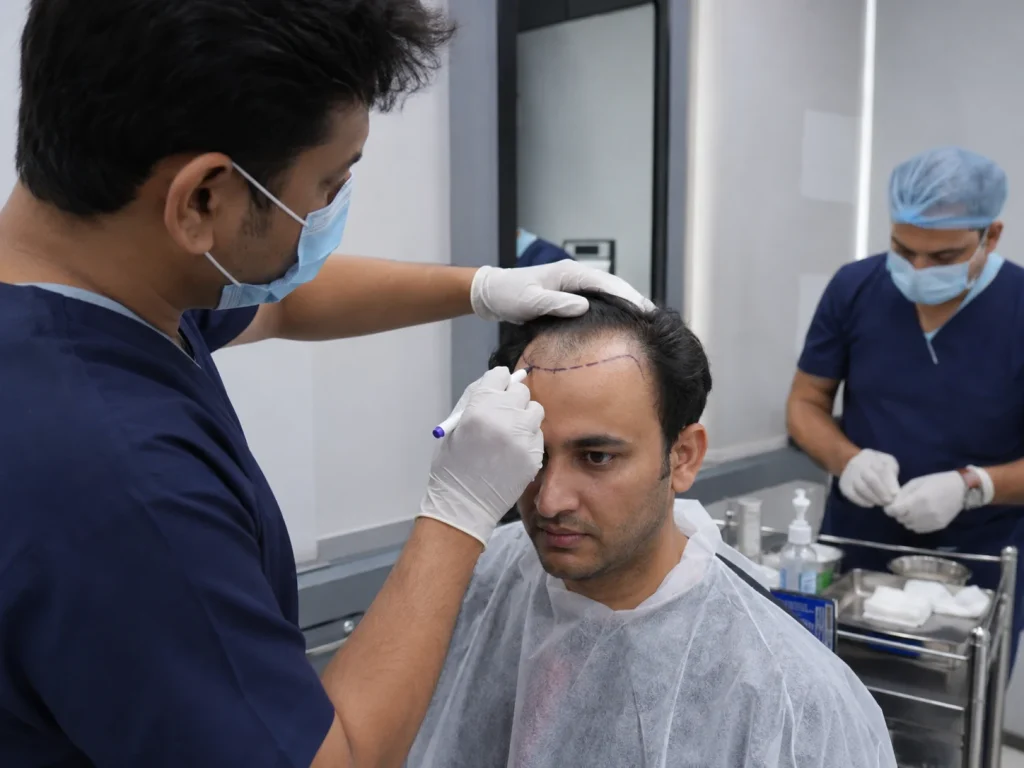
Ultimately, whether a hairline restoration will look good for a long time depends 100% on the talent and experience the surgeon has put into the clinical and artistic phases. Designing a hairline that looks completely natural involves much more than just drawing a straight line on the forehead. An outstanding reconstructive surgeon will take your unique facial proportions, bone structure, and age into consideration to come up with a personalized, macro-irregular boundary that your features can easily blend with in a natural way.
Also, the surgeon has to be able to carry out a very specific formula in terms of follicular density. The very first row at the front of the receded hairline that has been pushed forward should be made up exclusively of extremely thin, single-hair grafts placed in a randomized zigzag pattern to replicate a naturally occurring growth gradient. Just behind this initial boundary layer, thicker multi-hair follicular units are laid out in a well-considered manner to give great volume and structural strength. This very thorough, step-by-step method indeed gets rid of the risk of a stiff, fabricated appearance, leaving the impression that your restored hairline is totally genuine even upon close examination.
Matching Facial Structure With Your Athletic Build
One of the most important factors in assessing a hair transplant is discovering that a robust, youthful hairline goes so well with a person’s total physical proportions and is in line with their long-run architectural goals. For people who put a lot of effort into shaping an athletic body – especially those who work hard on lower body hypertrophy and gluteal development to obtain a perfect hourglass or a highly balanced figure – the upper facial frame is very important. An early receding hairline on the face can make a person look older and tired, which can be at odds with one’s highly active lifestyle.
The way to change this is to make the hairline of the forehead surgically advanced and follicular density restored. Through this operation, the expert achieves visual harmony between the face and the body. The new face structure provides further refinement of balance and ensures that the top height features depict exactly the same unrelenting systemic vitality and discipline as the body. Planning based on mathematics results in a single harmonious, well-balanced outline, a situation in which the facial lines are an exact reflection of the biological success that has been achieved through great effort.
Post-Operative Tissue Maturation And Growth Timelines
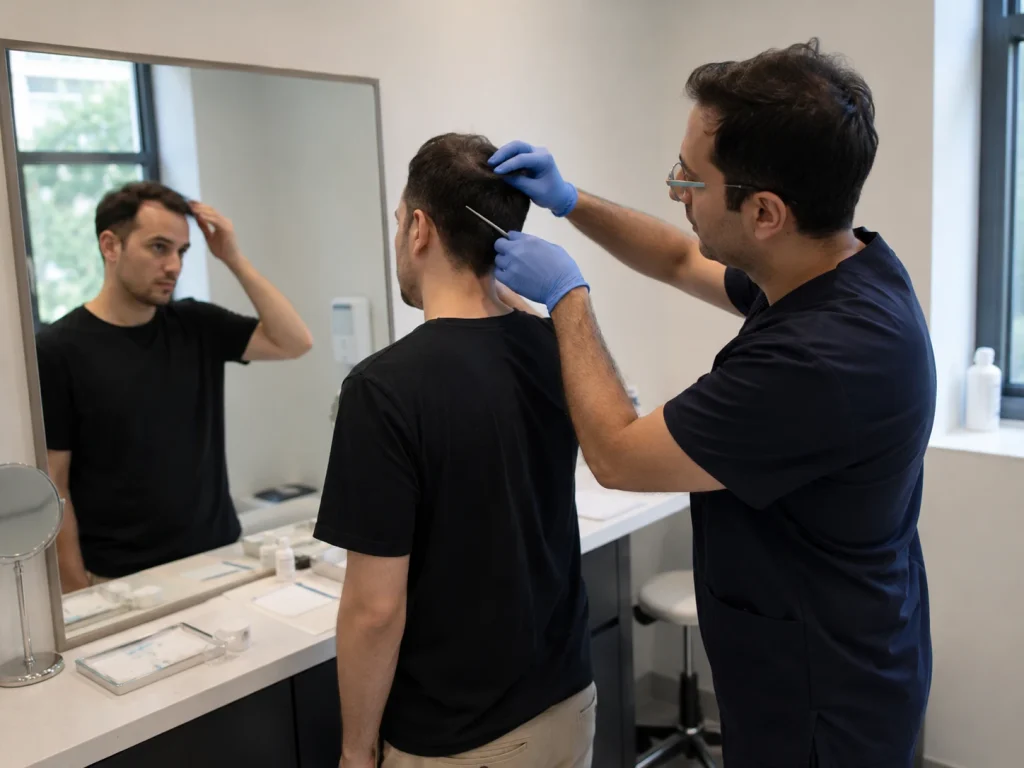
Acknowledging that in order to have a full and dense result, one must be patient and follow a biological timetable is what it means to exercise utmost seriousness when dealing with the patients. The surgical placement is followed immediately by an acute healing stage during which scalp micro-incisions are closed, and small scale crust shedding is initiated, the period lasting around ten to fourteen days.
Between the 3rd and 6th week post-surgery, hairs at the transplantation sites fall out. In hair restoration terms, this phenomenon is referred to as shock loss. It is a physiological response as cells of hair follicles are driven into a state of rest due to the trauma caused by the surgery. The living hair roots undergo normal functioning hidden under the skin, and the new hair begins its emergence after 3-4 months from the surface of the skin. At 12-18 months after surgery is when the peak, high-resolution follicular density is revealed, while the tissue also completes maturation, delivering a perfectly thick, lifelong hairline frame.
Hair Transplant in Turkey
Choosing LIN Europe Clinic means entering a premier global medical oasis where your unique structural transformation is managed with uncompromising clinical mastery and profound empathetic care. We recognize that rectifying a receding hairline is an extremely intricate and delicate process that calls for the creation of a highly personalized and transparent environment where the rule of evidence-based medicine is maintained without any compromises. LIN Europe Clinic, located in Turkey, has been leading the advanced hair restoration sector for years, and it offers a calm and soothing atmosphere where your surgical path is solely dictated by the highest standards of patient safety.
By entrusting your most valued attribute to our attentive and skilled physicians in Istanbul, you associate yourself with an outstanding medical structure that meticulously works on determining your exact graft numbers and donor density before the first hair follicle is relocated. Employing microscopic diagnostic evaluation of the highest quality alongside cutting-edge micro-sapphire blades, we guarantee that your hair transplant will be a naturally flawless, densely packed shape that will remarkably upgrade your look. Come and enjoy the excellent, all-inclusive service of LIN Europe Clinic and discover a well-balanced profile which is a product of safe and skillful techniques – right in the center of Turkey.
FAQ:
Absolutely, hair transplant surgery results are permanent. The reason is that the transplanted hair follicles are taken from the donor area on the back of the head. They possess the genetic trait of being immune to hair loss hormones. Therefore, they keep growing in a natural way for the rest of your life.
If the operation is done by top reconstructive doctors, the outcome will be totally natural. They are experts in the use of very small single-hair grafts that they put along the front line of the hairline in a random and natural way to imitate the natural hairline’s flow and gradient.
With FUE, hair follicles are taken out one by one and afterward, micro-channels are made in the balding area for the planting of follicles. In DHI, a special implanter pen is used to both make the channel and insert the graft at the same time, which results in the highest level of accuracy in the orientation and density of the placement.
Initially, you will notice some growth around the third or fourth month after shedding your old hair which is temporary. However, the highest level of your hair thickness, density, and the final aesthetic appearance will happen between 12 to 18 months after the procedure.
LIN Europe Clinic has a combination of world-class trichological knowledge and the latest micro-grafting technologies that ensure absolute patient safety. Our medical experts in Turkey are highly trained and create every hair restoration plan in such a way that it leads to a very smooth, natural, and dense hairline without any risks.
Unger, W. P., & Shapiro, R. (2004). Hair Transplantation (4th ed.). Marcel Dekker.
Bernstein, R. M., & Rassman, W. R. (1997). Follicular Unit Transplantation. Dermatologic Surgery, 23(9), 771-784.
Jimenez, F., & Vogel, J. E. (2012). Distribution of human hair follicles: anatomical and physiological considerations in hair transplantation. Aesthetic Surgery Journal, 32(6), 711-720.