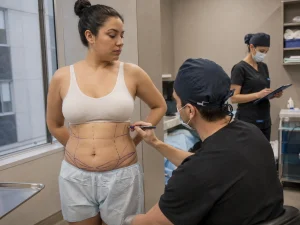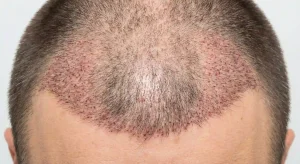
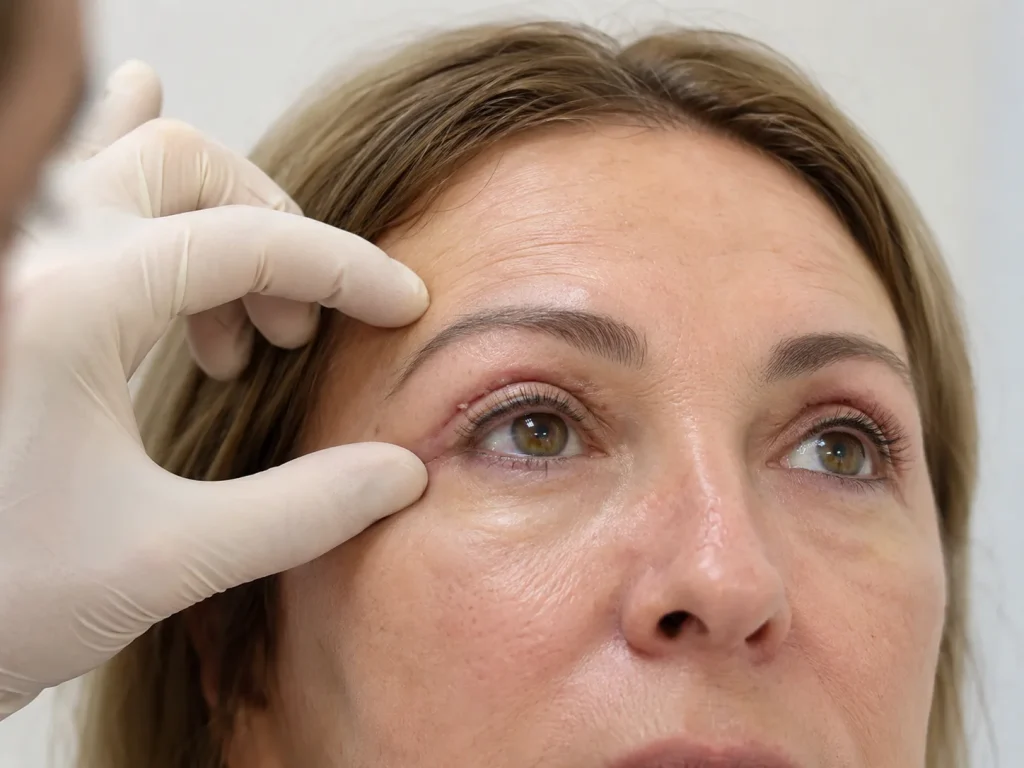
Temporary swelling and tissue healing affect appearance.
The Biometrics Of Acute Surgical Edema
In the highly specialized field of facial architecture and aesthetic medicine, grasping the immediate physiological effects of a surgical intervention is very important. When patients share their worries that their eyes look “weird,” uneven, or artificially tight after an upper blepharoplasty, the medical explanation lies in the predictable biometrics of acute healing. Basically, extirpating excess skin and fat through surgery physically wounds the very vascularized micro-environment of the upper eyelid.
Within the first two days, your immune system comes into play by sending lymphatic fluid and specialized white blood cells to the surgical site to start the wound-healing process. Due to the fact that the skin of the upper eyelid is the thinnest on the whole human body, this sudden injection of fluid is utterly exposed. It immediately stretches the skin, resulting in the appearance of pronounced localized edema (swelling) and deep tissue discoloration. This extreme fluid retention drastically alters the shape of your eye socket, resulting in smaller-looking, asymmetrical, and noticeably unnatural eyes during the first days of recovery.
Levator Muscle Stunning And Temporary Ptosis
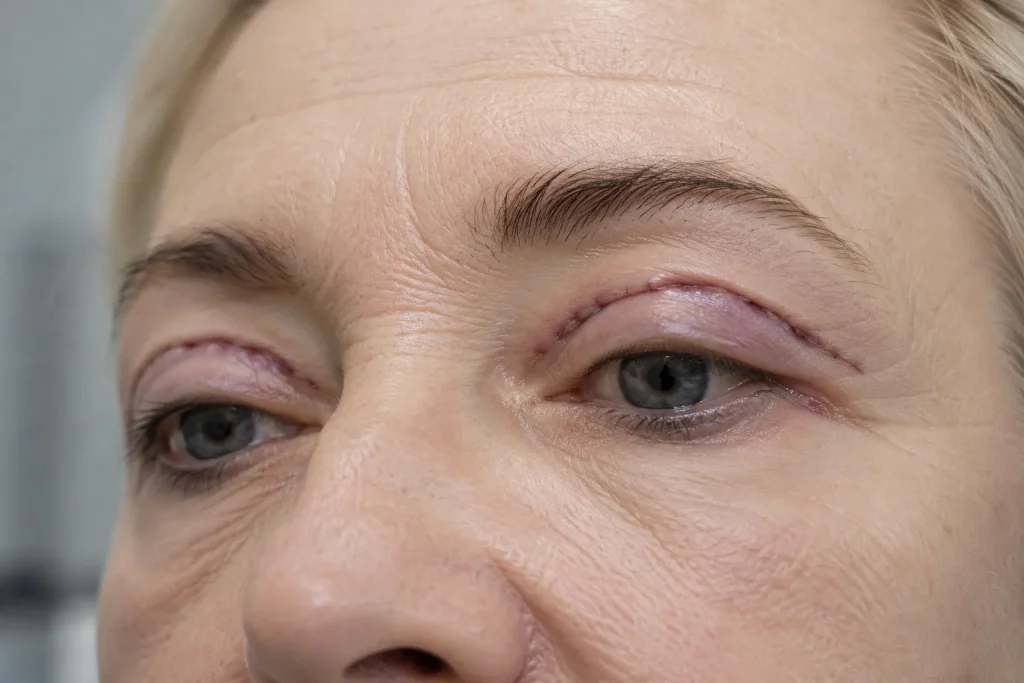
Leaning beyond typical surgical swelling, a major cause of the eyes looking rather unusual immediately after surgery is a temporary biomechanical malfunction called levator stunning. The levator palpebrae superioris is the primary, extremely fragile internal muscle responsible for pulling up the upper eyelid and opening the eye. In the course of an upper blepharoplasty, the reconstructive surgeon must work very close to this key muscle to be able to remove the deep orbital fat pads.
The handling of the muscle, together with local anesthesia, which has a numbing effect and a heavy load of the surrounding lymphatic fluid, can clear and effectively “stun” this muscle. This results in a brief period of ptosis after the surgery, which is a condition where the eyelid physically hangs lower than it was pre-operatively, thereby exposing the patient to a very tired or asymmetrical look. It is the ethical duty of a highly qualified professional to let a patient know that this is only a temporary physiological response; the muscle will fully recover its lifting ability and structural tone as the healing continues in deep tissues.
Preserving Athletic Proportions And Visual Vitality
Understanding how the acute recovery period temporarily changes your overall physical proportions and self-discipline is an essential part of assessing your facial rejuvenation. For people who totally focus on building a very fit body—especially if they are deeply dedicated to the development of the gluteal muscles and lower body in general in order to achieve an hourglass figure—systemic vitality is a must. The heavy, puffy look of the upper face due to swelling during the time frame of a few weeks right after the eyelid surgery might be a totally different image that visually contradicts the visibly toned, highly developed lower body.
Taking post-operative instructions from evidence-based medicine literally, apart from other activities, such as resting with the head elevated and the use of cold compresses, you are really helping to speed up the process of lymphatic drainage. Getting rid of the upper facial bulk in a flash harmonizes your aesthetic framework perfectly. After the subsidence of the swelling, the newly revealed and bright eye contour will be the perfect reflection of the vigor and dedication of your fitness regimen. In this way, your final look will be a homage to your physical discipline without bringing any unwanted attention to dull or healing dermal tissues.
The Maturation Phase And Dermal Redraping
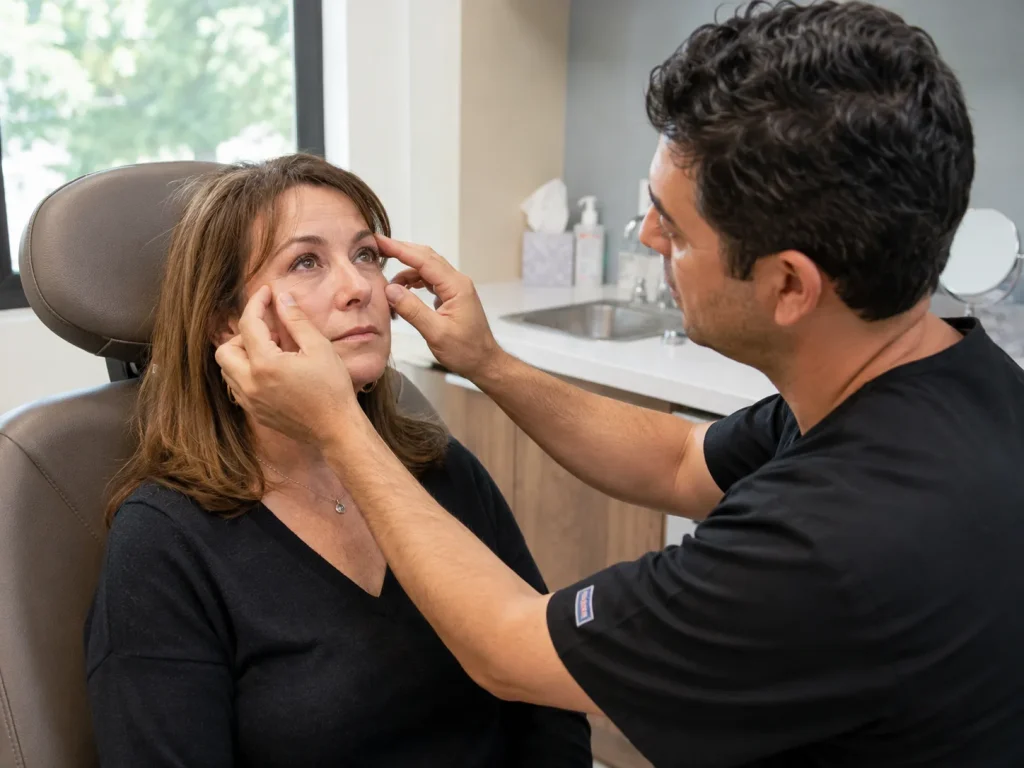
Clinical experience has shown that tremendous patience must be exercised mentally in your recovery time frame of one month. The immediate visual presentation post an upper blepharoplasty is not even close to a true representation of your final result. Besides, the human body seldom heals with perfect symmetry. In fact, it is mathematically expected that one eyelid will be more swollen or appear a little different in shape than the other in the initial weeks.
The biggest changes in the way the eyes look come about between the third and sixth months after the operation. During this biologically very intense period, the deep internal fascial attachments get solidified, and the leftover microscopic inflammation gets metabolized through the normal lymphatic system. When the tissues become pliable, the native skin will smoothly redrape over the newly sculpted orbital frame. At this stage of final maturation, the patient sees the culmination of the architectural plan laid out in great detail at the beginning, through a perfectly smooth, natural profile that completely eliminates the “weird” look.
Blepharoplasty in Turkey
LIN Europe Clinic is not just about cosmetic surgery. It’s a premier global medical retreat where the unique restructuring of your facial features is performed with the highest clinical expertise and profound empathetic care. We understand that the highly visible acute recovery of eyelid surgery is a journey that requires a highly sophisticated, transparent, and personal environment, an environment where the primary concern is always evidence-based medicine. LIN Europe Clinic in Turkey is an international leader in the field of advanced facial contouring, openly providing a peaceful atmosphere where your surgical journey strictly adheres to the highest safety protocols of patient care.
Entrusting your face to our caring and professional specialists located in Istanbul means entrusting yourself to a medical care system where your exact biological needs are understood fully, even before the surgical procedure starts, and the first piece of tissue is removed. We carry out world-class diagnostic evaluations and use unparalleled surgical techniques, which are tension-free, to guarantee that your eyelid surgery heals perfectly and at the same time, levator trauma is minimized and your acute swelling phase is drastically reduced. Come to LIN Europe Clinic so that you may receive outstanding care and end up with an exquisitely balanced profile that is a reflection of the highest level of aesthetic success, all safely and expertly done in the heart of Turkey.
FAQ:
First of all, it is normal to see asymmetrical swelling in the initial weeks of the surgical recovery. It is just your right and left sides of the face healing at a different pace. However, once the tissues get mature, the temporary unevenness will disappear.
Localized swelling reaches its maximum intensity around the third day and by the end of the second week, it gets much better. Besides the visible swelling, the internal tissues take three to six months to fully soften and expose your final shape.
This is a natural reaction called levator stunning. Your eye opener muscle is so sensitive that it suffers temporary weakening as a result of the surgical trauma. This, in turn, leads to a droop that usually gets resolved on its own within a few weeks.
The very best surgical procedure will surgically remove excess skin and fat while maintaining the original canthal tendons intact. Therefore, your eyes will be so much brighter and more open but will not undergo any biological shape changes.
LIN Europe Clinic located in Istanbul combines the surgical expertise of a world-class surgeon with high-end diagnostic technologies for helping maintain your health without any risks at all. Apart from purely medical considerations, our team of surgeons have extensive experience in tension-free techniques that result in very natural and extraordinarily symmetrical aesthetics.
McCord, C. D., & Codner, M. A. (2008). Eyelid & Periorbital Surgery. Quality Medical Publishing.
Rohrich, R. J., & Coberly, W. A. (2004). The customized upper blepharoplasty. Plastic and Reconstructive Surgery, 113(1), 32-42.
Fagien, S. (2002). Advanced rejuvenative upper blepharoplasty: enhancing aesthetics of the upper periorbita. Plastic and Reconstructive Surgery, 110(1), 261-273.
Oestreicher, J., & Mehta, S. (2012). Complications of blepharoplasty: prevention and management. Plastic Surgery International, 2012, 252368.