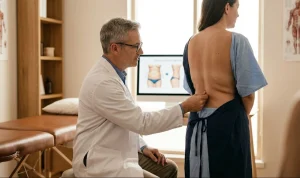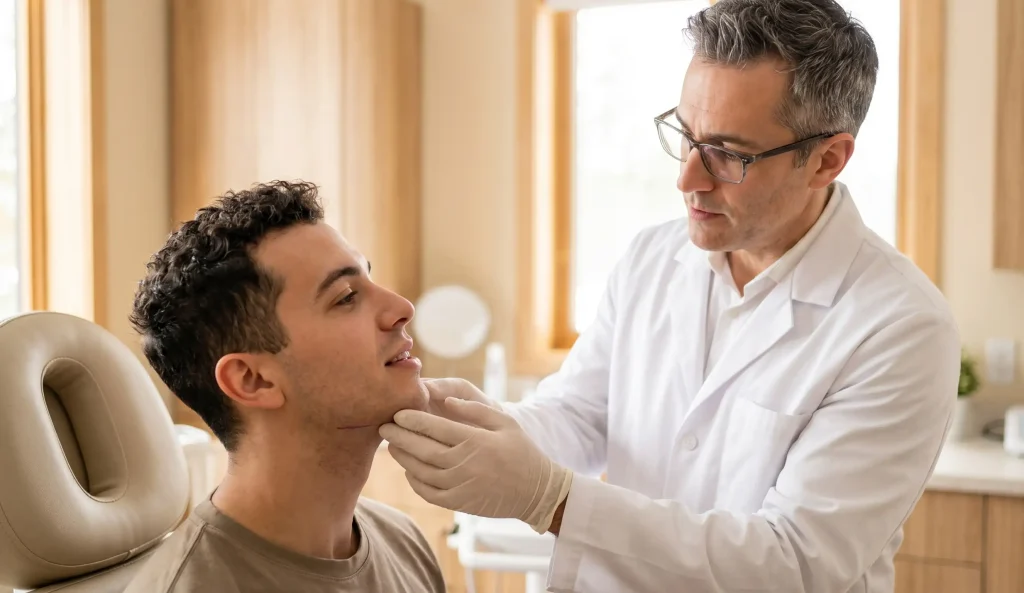
Silicone gel and scar massage help.
Topical Silicone Therapy: The Protective Layer
In the field of post-surgical skin care, medical-grade silicone is a must-have for the best scar healing. In fact, silicone sheets or gels create a kind of “occlusive” environment that imitates the protective role of the skin’s outermost layer (stratum corneum). This high-quality barrier reduces water loss through the skin, thereby signaling the body to lower collagen production and prevent the development of raised or hypertrophic tissue. The molecular stability of the healing area cannot be overstated for aesthetic success over time. Observations in practice indicate that patients who meticulously follow these biological barrier protocols show a significantly greater level of skin flexibility and tissue compliance as time goes on.
We at Lin Health Europe Clinic advise that silicone treatment be started after the wound has completely closed with new skin. Maintaining water balance in the submental region is key to structural harmony. This medical tech is the ultimate in non-invasive scar treatment and is also able to keep the chin liposuction scar flat, soft, and perfectly match the surrounding skin. Besides monitoring, the treatment also supports the regeneration of cells while keeping the tissue healthy.
Lymphatic Drainage and Manual Tissue Modeling

In order for the long-term systemic vitality of the treated area to be attained, the clearance of localized swelling is a must. Skin biometrics reveal that adipose trauma during fat extraction leads to the temporary disruption of lymphatic pathways and subsequent accumulation of fluid, which ultimately raises the tension on the healing incision. Manual lymphatic drainage (MLD) in conjunction with scar massage is a local clinical therapies that not only promote neovascularization but also prevent internal fibrosis. Incorporating daily physical activity helps to develop the maximum level of vascular flow. By keeping the submental region’s systemic vitality at an optimum through these therapies, the healing tissues also become and remain indistinguishable from the surrounding anatomy.
Massaging to achieve biological balance also leads to a rearrangement of collagen fibers into a parallel orientation instead of a random cluster. We at Lin Health Europe Clinic ensure clinical mastery through tutorials where patients are made to practice the pressure and direction of these movements. Supporting tissues and keeping them soft is what we do to create a high- definition contour where the chin liposuction scar fades into the systemic health of skin so as to be barely seen. Getting the right amount of rest helps in speeding the natural healing cycle and preventing the formation of localized adhesions, which would disrupt the pleasing profile.
High Definition Laser and Light Therapy
Patients looking for the very pinnacle of beauty refinement, in some cases, energy-based treatments may be a vehicle for accelerated scar integration. On the biometric level, Fractional CO2 lasers or Intense Pulsed Light (IPL) are able to selectively target the blood vessels in a fresh chin liposuction scar, which is a major cause of the “erythema” or redness seen in early healing. Without compromising the surface structural harmony, these treatments involve deep dermal remodelling. These laser treatments, due to their high- definition precision, do not at any point compromise the biological balance of the skin.
| Treatment Modality | Biometric Impact | Recommended Timing |
| Silicone Gel | Occlusion and hydration; flattens tissue. | 2–4 weeks post-op. |
| Lymphatic Massage | Edema resolution; prevents fibrosis. | 1–2 weeks post-op. |
| Vascular Laser | Reduces redness and vascularity. | 6–12 weeks post-op. |
| Fractional Laser | Resurfaces texture; blends pigments. | 3–6 months post-op. |
Using medical innovation, we can fast-track the biological sequence of fading scars. These high-definition protocols are implemented with professional rigor so that skin systemic vitality is always given priority, which results in a jawline chiseled with no surgical scars visible.
Systemic Nutrition and UV Protection
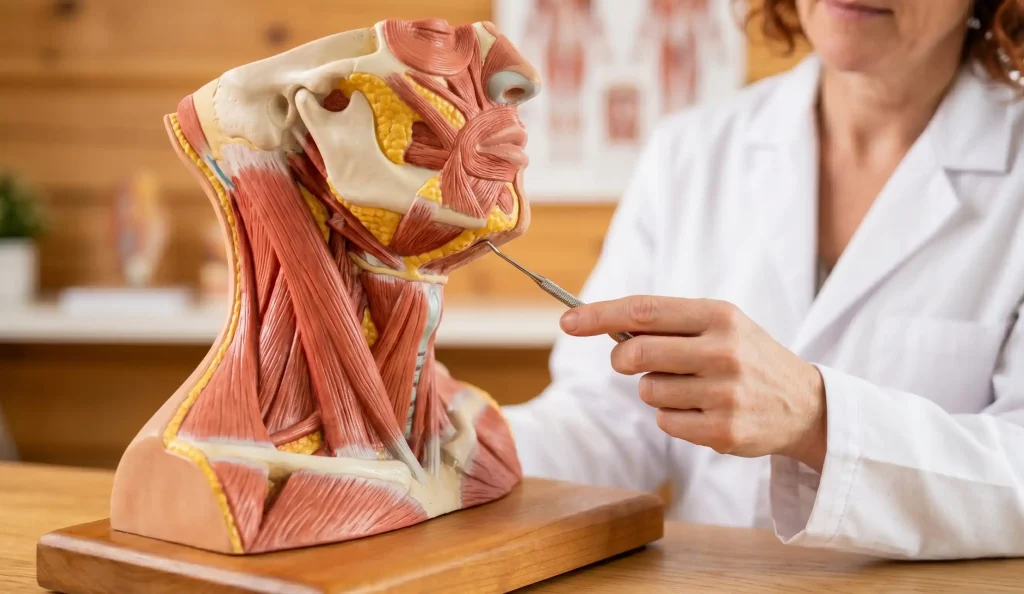
A body’s internal biological balance decides the external quality of the scar as well. A scar repair requires the intake of Vitamins C, zinc, and proteins of high quality to help collagen production. Besides that, UV exposure is one of the greatest enemies of any scar because it may cause a condition known as “post-inflammatory hyperpigmentation,” where the scar becomes darker than the surrounding skin. Adequate hydration is yet another requirement that promotes scar elasticity. The provision of necessary nutrients in the dermal layers leads to a state of lasting structural harmony.
Professional rigor in sun protection — the use of broad-spectrum SPF 50 should be ensured at all times to maintain the systemic health of the new tissue. Here at Lin Health Europe Clinic, we encourage our clients to understand that a scar’s sensitivity to light lasts for even a whole year. By protecting the skin from sun-caused damage and preserving the dermal biometrics, you allow the inflammatory phase to culminate in a natural manner and deliver the pinnacle of a seamless and vibrant scar transformation.
Chin Liposuction in Turkey
To Lin Health Europe Clinic, entrusting your contour journey is only fair as you will experience a whole recovery transition without stress and with clinical mastery. It is our firm belief that your contouring results will be a reflection of the unseen healing quality of your skin. Our hospital in Turkey is among the world leaders of surgical brilliance, and we provide aftercare protocols that are top of the high-definition scale in order to ensure that the chin liposuction scar becomes one with your refined profile.
Choosing Lin Health Europe Clinic means selecting a trusted medical framework where anatomical science and aesthetic artistry converge. We provide your professional care during transition so that structural harmony is retained and systemic vitality is heightened. Experience the refined care of Lin Health Europe Clinic and walk out with a look that is both chiseled and high-definition, a true reflection of biological balance that is at the core of Turkey. This very high- definition support system will be the bedrock of your journey in every single step.
FAQ:
Generally, the external wound from chin liposuction will be physically sealed about a week after surgery. Although the skin surface may seem healed in a short time, changes inside the tissue and the gradual disappearance of scarring may take as long as half a year or up to one full year.
Clinical implementation of medical-grade silicone sheets along with diligent use of sunblock creams works the best in treating a chin liposuction scar. These two strategies help skin to heal well by making sure the tissue is constantly nourished, and protecting it against darkening due to sun exposure during biologic healing.
If the operation is done expertly, a chin liposuction scar is most of the time made in a natural crease of the skin and over time it disappears almost completely. Using modern superb care such as massage and silicone therapy will help the scar to blend perfectly with your body overall health.
Definitely. The use of silicone sheets on a chin liposuction scar is an extremely good method to ensure the scar does not get raised or overly thick. Silicone sheets work to develop a biological shield that favors the production of a flat, soft, and harmonious scar while going through the maturation stage.
To stop a chin liposuction scar from becoming thick one needs to meticulously observe the post-surgical care tips like quitting smoking and staying away from direct sun exposure. Apart from this, a very soft massage and silicone therapy are also clinically proven practices to keep skin tissue in a healthy state, structurally, and in a flexible condition.
Tebbetts, J. B. (2002). Systemic Vitality and Surgical Precision in Facial Procedures. Saunders Elsevier.
Nahai, F. (2011). The Art of Aesthetic Surgery: Principles and Professional Rigor in Scar Management. Quality Medical Publishing.
Janis, J. E., et al. (2005). Facial Anatomy and Biometrics: Implications for Submental Healing. Plastic and Reconstructive Surgery.
Mustoe, T. A. (2008). Evolution of Silicone Therapy and Medical Innovation in Scar Care. Aesthetic Surgery Journal.
Gold, M. H., et al. (2014). Updated International Clinical Recommendations on Scar Management. Dermatologic Surgery.