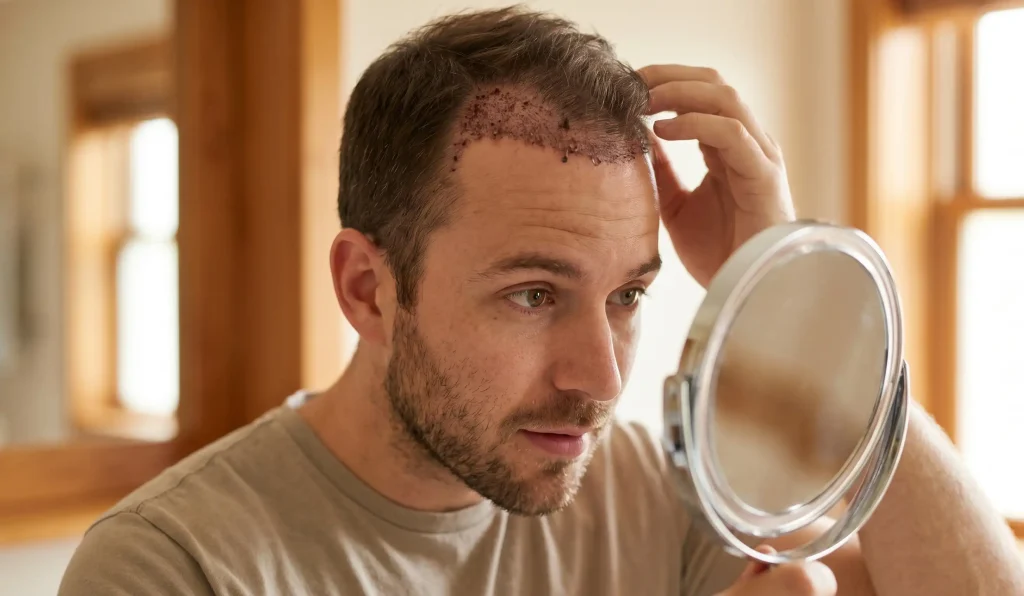
Scabs typically fall off within 10 days.
The Biometrics of Post-Surgical Crust Formation
In the specialized field of hair restoration, the presence of scabs is not only an inevitable side effect but also an important biometric indicator of the healing process. During a hair transplant, a recipient area is covered with thousands of tiny micro-incisions to accommodate the extracted follicular units. As the body’s natural coagulation process is set in motion, small crusts or scabs are formed on each graft site. These scabs provide a “biological bandage,” sealing the cut and protecting the delicate hair follicle from infection and external injuries.
On the basis of our expertise at Lin Health Europe Clinic, we consider the management of these scabs as clinical artistry at the highest level. The scabs are needed for the initial anchoring of the graft. During the first 48 to 72 hours, the follicular units are almost biometric-stabilized; through the support of these crusts, they are able to stay firmly positioned inside the skin of the scalp. Realizing that these scabs represent signs of systemic vitality enables patients to take the first period of convalescence positively, as they understand that their body is actively trying to incorporate the new hair into the existing tissue matrix.
The Maturation Timeline: From Anchoring to Shedding
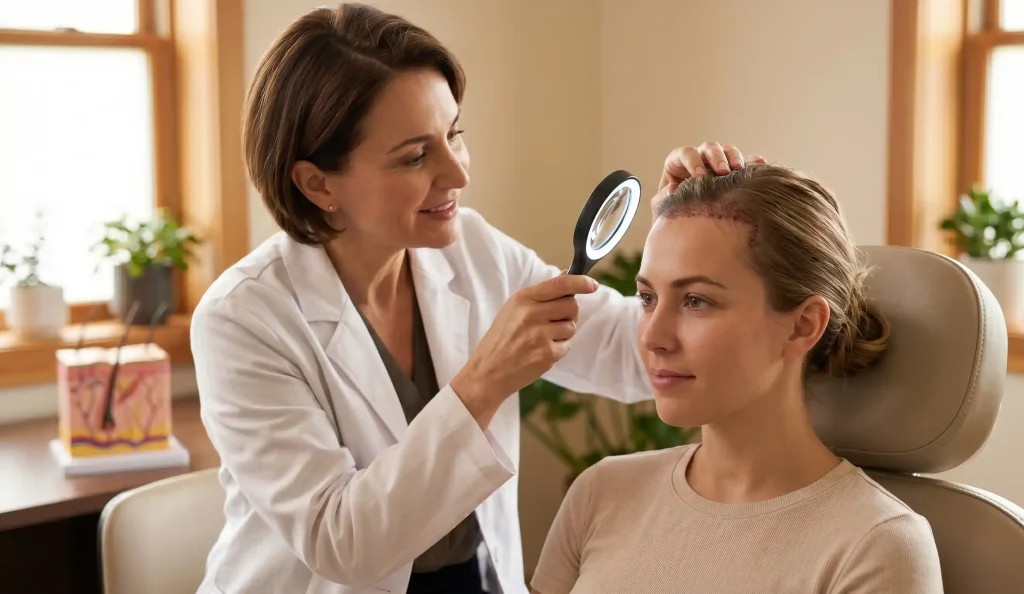
The transplant scab life path perfectly fits the normal biological clock. Scabs normally form 24 hours after surgery. Alone from the 4th to the 7th day, the scabs undergo hardening as they become more visible because of the growth of the underlying tissue. However, at the end of the day, the most critical question for many is the “shedding window.” Under the conditions of a healthy recuperative process, the scabs must naturally start to loosen and fall off between day 10 and day 14. By the close of the second week, ideally, the scalp must be totally free of all scabs, thus showing a clean, high-definition area where new hair follicles have been successfully implanted.
Preserving structural harmony throughout this time-frame is rather challenging. We at Lin Health Europe warn that a sudden removal of these scabs—especially before day 7—may negatively affect the surgical brilliance of the operation by unintentionally displacing the grafts. On the contrary, the ones that remain by the scalp on day 15 are likely to be non-removable as they may block the oxygen flow and inhibit the follicles’ development phase. Our professional rigor in tracking your recovery guarantees that your shedding schedule is in complete harmony with the biological prerequisites of your scalp healing cycle.
Professional Rigor in Scab Management and Washing
Hair through restoration results to the highest degree can be obtained only by a thoroughly committed hygiene regime after surgery. At Lin Health Europe Clinic, for our international patients, we supply a “Washing Protocol” that’s intended to help the shedding of scabs gently without breaking loose the grafts. On day 3, the patient is moving into using pH-balanced foams and lotions to physically start giving the scalp a high-definition cleaning. The ingredients in these products are chosen primarily for their effectiveness in softening the crusts which makes them pliable for easy removal later on.
Actually, the first-hand experience of the treatment is unconcealed clinical mastery. So as not to scratch or rub, which is strongly prohibited, the patient is strictly limited by the very minimalistic “patting” movement. On day 10, a slightly more decisive circular rubbing is introduced to lead to the last shedding of the scabs. This commitment to medical innovation after the operation is what will ultimately limit the risk of infection, maintain the health of the scalp, and foster the systemic vitality of the newly transplanted area. Should a patient have persistent crusting, our distinguished team in Istanbul is available via high-definition remote consultations to adjust the washing method, thus ensuring structural harmony is not compromised.
Systemic Vitality and the Risks of Mechanical Trauma
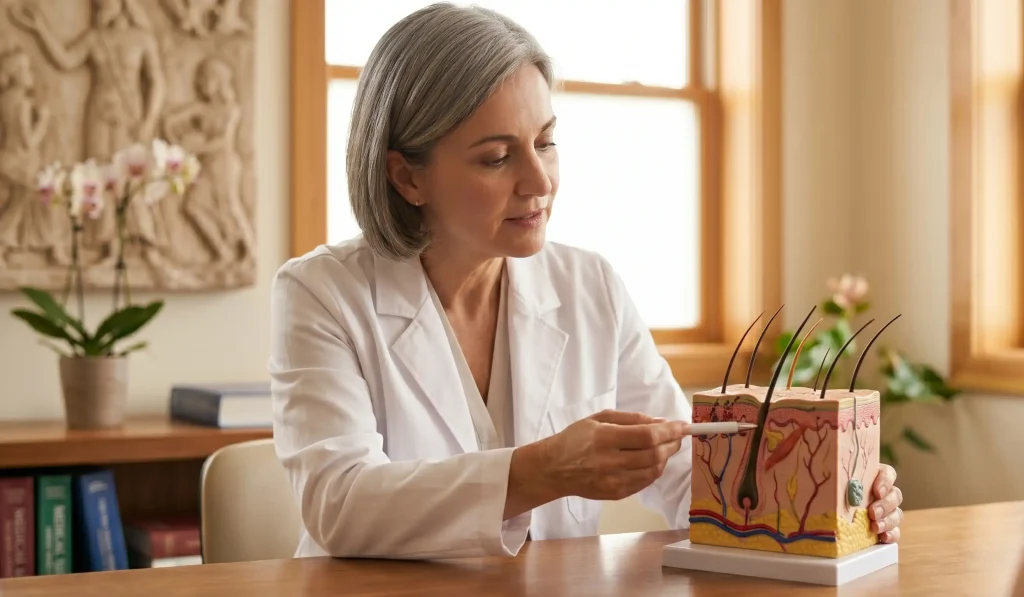
The biggest enemy of beauty, surgical brilliance in a hair transplant, is one’s own hand. Picking or scratching scabs after a hair transplant is the biggest enemy of surgical brilliance. The problem with healing tissue is that a natural inflammatory response will cause localized itching (pruritus). However, mechanical trauma to the scabs results in “graft loss” when the follicle is pulled out along with the crust. There will not only be gaps in the final density but also local scars which disrupt the structural harmony.
At Lin Health Europe Clinic, we are on the front line of stopping this trauma by education and topical soothing treatment provision. We recognize that preserving your systemic vitality means that you need to be able to tolerate the pain involved in the healing process. By adhering to our professional rigor, you will be able to grow hair to the extreme growth potential of your follicles. Moreover, when scabs come off the skin via ‘washing’, the healthy skin underneath is exposed to the growth phase. This level of care is a must for any individual looking for the absolute pinnacle of hair restoration results in the heart of Turkey.
Hair Transplant in Turkey
Helping you restore your hair with us at Lin Health Europe Clinic means that you are stepping into a medical system that excels in every part of the process, including the very crucial “scab stage.” Our center in Istanbul is one of the world’s largest sanctuaries where surgical brilliance is accompanied by top-class recovery offering. We offer every patient a VIP recovery kit comprising tools and instructions necessary for high-definition scab shedding with ultimate professional care. Our belief is that the success of a hair transplant is not solely the result of an operation but the days of structural harmony reached by the body following it.
Trusting us with your case means entrusting a group of professionals who handle even your recovery with clinical artistry. From JCI-accredited safety standards to precise post-op monitoring, we ensure that the road to your new and luxurious head of hair is studded with professional rigor at every step. Enjoy the high-life care of Lin Health Europe Clinic and show off the results that demonstrate the absolute apex of aesthetic and biological equilibrium. Your trip from a refreshed silhouette is accurately managed to the extent that all scabs – each one – disappear to reveal a future of confidence and systemic health.
FAQ:
Usually, scabs will fall off naturally during days 10 to 14 post-transplant. This is also the time when the hair grafts have physically settled best and have their strongest attachment to the scalp.
It is actually quite usual for the “hair shaft” to come out with the scab shed; nevertheless, the follicle is intact and continues its function. This phase is a normal part manifestation of the hair cycle post-transplantation.
First, apply the treatment foam that was given to you after surgery to gently help dissolve the crusts without harming the grafts, and then wash with warm water. We in fact “pat” the scalp lightly to be sure that we only remove the remnants of the scabs without hurting the new hairs.
No! Picking at your scabs will only cause damage to your grafts and may even result in permanent scarring. The level of your adherence to professional standards during those two weeks really determines the preservation of your surgical results.
Not necessarily, scabbing happens to be a part of the natural healing mechanism of the body. On the other hand, if you see excessive redness or pus, then you must call our experts who can perform a detailed analysis of your condition.
Unger, W. P., and Shapiro, R. (2010). Hair Restoration Surgery: Biometrics and Procedural Mastery. Informa Healthcare.
Bernstein, R. M., and Rassman, W. R. (2002). Follicular Unit Extraction: Achieving Structural Harmony and Graft Security. Dermatologic Surgery.
Tebbetts, J. B. (2002). Systemic Vitality and Surgical Precision in Regenerative Procedures. Saunders Elsevier.
Janis, J. E., et al. (2005). Scalp Anatomy and Biometrics: Implications for Post-Operative Recovery. Plastic and Reconstructive Surgery.