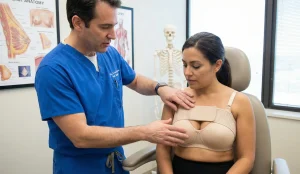

Fatigue, pain, and systemic symptoms reported.
Biometrics of Silicone Integrity and the Body’s Overall Reaction
Within the niche of breast aesthetics, the term “silicone toxicity” is used for the range of systemic symptoms that are thought to be caused by the body’s immune system response to foreign silicone material. Even though current cohesive gel implants are designed to last a very long time, the so-called “gel bleed” phenomenon may arise after a few years, with microscopic silicone particles escaping an intact implant shell. Biometrically, macrophages of the human body might recognize these molecules as threats and try to carry them out via the lymphatic system. This engagement can set off a long-term inflammatory chain reaction, throwing off the body’s internal structural balance and causing the body’s overall physiological system to go into stress.
Lin Health Europe Clinic, one of our main goals, is the overall health of our patients. That’s why we carry out very thorough tests of the implant shell integrity. Our experts leverage cutting-edge high-definition diagnostic tools to look for “silent ruptures,” thereby making sure that each patient’s biological health is controlled with clinical expertise and technical accuracy.
Recognizing the Major Clinical Signs of Silicone Toxicity

Those who suffer from what is commonly referred to as Breast Implant Illness (BII) describe a broad range of symptoms or warning signs severely affecting multiple organ systems at the same time. The next clinical symptoms are the most common ones: great chronic fatigue, impaired cognition, aka brain fog, and musculoskeletal aches that go on for a long time. Besides, neurology-related indicators such as sleeping problems, sudden-onset anxiety, and memory lapses are also biometric signs that a body system is in constant immune activation. Given that these symptoms are very nonspecific, a detailed clinical examination is needed to tell the difference between isolated implant failure and a general systemic response that affects the patient’s everyday living standards.
Being professional at Lin Health Europe Clinic, we perform an extensive screening method to recognize these subtle neurological and bodily signs very early. Cross-checking the reported symptoms with your surgery documents, our medical team in Turkey employs a medical basis to discuss the issues of toxicity.
Localized Problems and the Mammary Matrix Integrity
In addition to systemic effects, local situations such as intracapsular rupture or very tight capsular contracture are the main causes of silicone release. In case the implant shell gets damaged physically, the silicone level in the nearby area rises which, in most cases, leads to siliconomas or regional lymphadenopathy. Sometimes leaked silicone can be caught by a thickened, contracted capsule, but this is just a sign of an inflammatory reaction to the gel ‘bleeding’. That is why, first and foremost, safeguarding the mammary matrix integrity is a condition for blocking the further escape of silicone particles into the blood circulation that can raise systemic toxicity symptoms.
Lin Health Europe Clinic guides its clients in Istanbul through maintaining a green and clean mammary environment by safeguarding the normal biology of the tissue. At the same time, our doctors employ high-resolution ultrasound to examine the capsule-implant interface and make sure that the setting inside the breast remains uncontaminated, structurally reliable, and free of any local inflammatory factors.
Consequences for General Health, Immune System, and Energy
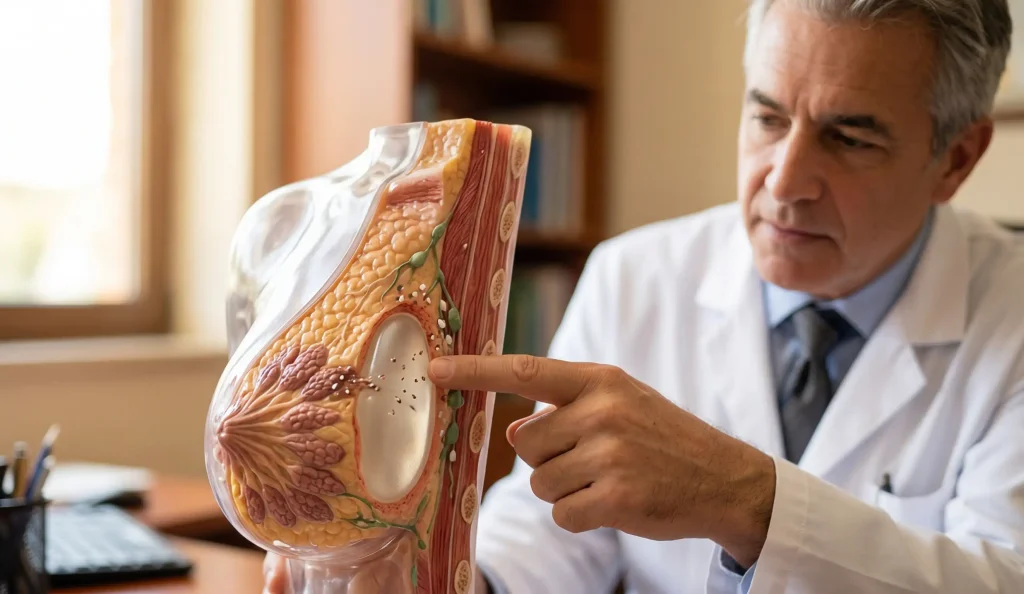
Keeping silicone in the human body for a long time makes people vulnerable to a well-known condition called Autoimmune Syndrome Induced by Adjuvants (ASIA). This condition happens when the immune system stays in a state of chronic activation. Such systemic illness can decrease the patient’s energy levels and make the patient more vulnerable to environmental allergies, hormonal problems, and even food intolerance. Research leads to the conclusion that the immune system’s response to the silicone surface may induce the formation of autoantibodies, which give rise to symptoms that are similar to recognized autoimmune diseases like Scleroderma. The global health restoration involves a clinical intervention, which is devoted to identifying the inflammatory agent and, at the same time, to supplementing the body’s natural methods of detoxification and recovery.
We are so proud of the surgical excellence that even the most complex cases involving the immune system and tissue biology are considered a playground for us at Lin Health Europe Clinic. We focus on the best preservation of healthy tissue during surgery as well as the synchronization of your post-operative healing process with your body’s exclusive biological needs for long-term health.
Lin Health Europe Clinic
Come to Lin Health Europe Clinic for the treatment of silicon toxicity and walk away a totally different woman, thanks to individualized care. For a lot of patients, the ultimate dream of treatment is the “en bloc” explantation, i.e. the removal of the implant and surrounding scar tissue capsule as one unit to make certain that no silicone residue remains. This operation demands surgical skill in balancing the physical and psychological requirements of the patient during the passage. Our clinic in Turkey is a world-class facility where technical expertise is intertwined with JCI-accredited standards of safety at the highest level, thus forming an integrated environment for individuals who wish to regain their body and mind in complete harmony.
By making a visit to Lin Health Europe Clinic in Istanbul, you put yourself at the disposal of a team of doctors who know well the essential relationship between implant biometrics and systemic health. Backed by the medical technology of the highest standard, our outstanding squad guarantees your transition toward a better, implant-free body shape with utmost care and professionalism in the main center of Turkey.
FAQ:
The rupturing of a silicone implant means the shell of the implant is physically broken while silicone toxicity describes the systemic symptoms (like tiredness, brain fog) that can happen even though the implant is not broken as the “gel” can bleed through the shell of the intact implant.
Well, yes. In fact, tiny traces of silicone can escape through the shell (gel bleed) which, in sensitive individuals, can cause an immune reaction and hence systemic effects.
This method involves the complete removal of the breast implant along with its entire fibrous capsule, done surgically by a thorough cleansing method. The objective is to remove all traces of silicone and the related inflamed tissues.
Patients may feel less “brain fog” and tiredness right after surgery, but it usually takes a few months for the body to completely get rid of the toxins and return to normal.
Silicone toxicity is one of the main biological mechanisms of BII and refers to the immune reaction to the presence of silicone materials.
Dijkman, H., et al. (2021). Silicone Particles and Systemic Vitality: A Biometric Study of Gel Bleed. Journal of Biomedical Materials Research.
Tebbetts, J. B. (2002). Systemic Vitality and Surgical Precision in Mammary Procedures. Saunders Elsevier.
Janis, J. E., et al. (2005). Thoracic Anatomy and Structural Harmony: Implications for Diagnostic Monitoring. Plastic and Reconstructive Surgery.
Adams, W. P. (2011). Breast Augmentation and Explantation: Professional Rigor in Clinical Mastery. Saunders Elsevier.