Avoid high-impact activities like running.
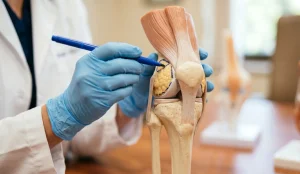
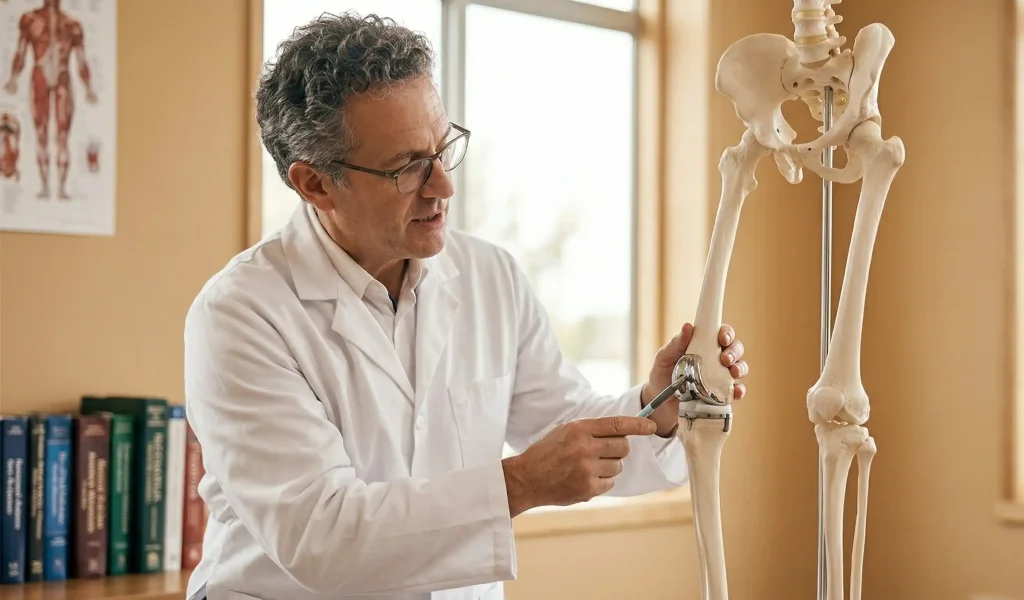
Orthopaedic surgery that involves the replacement of the knee can certainly improve mobility and comfort in cases of chronic pain. Unfortunately, the prosthetic joint—usually made of metal parts combined with a plastic insert—is a mechanical object and it will last only for a certain period of time. Although they have been made very resistant to wear and tear, the prosthetics cannot be repaired by living tissues. For that reason, different physical activities are considered by doctors as “permanent restrictions” because they can cause the prosthesis to loosen, become covered with bone tissue, or even break prematurely. So, ensuring that the newly produced collagen can provide a sufficiently strong shoulder to the adjacent soft tissues for whole decades of functional success in Turkey is a matter of moving from high-impact to low-impact activities, not just for the sake of the knee, but for overall vitality.
The absolute contraindications: High-impact loading
The prime enemy of a knee prosthesis is repetitive, high-velocity impact. Every time your foot hits the ground during a run, a force equivalent to several times your body weight is transmitted directly through the polyethylene spacer. This leads to “micro-wear,” where tiny plastic particles are released into the joint space, potentially triggering an immune response that weakens the bone-to-implant bond.
- Running and jogging are clinically not recommended by all medical protocols, especially if the surfaces are hard.
- Jumping involving high impact may lead to fracturing of the bone or even the displacement of the implant.
- In contact sports, there is always a possibility of joint dislocation or fracture of the bone in the area surrounding the joint components.
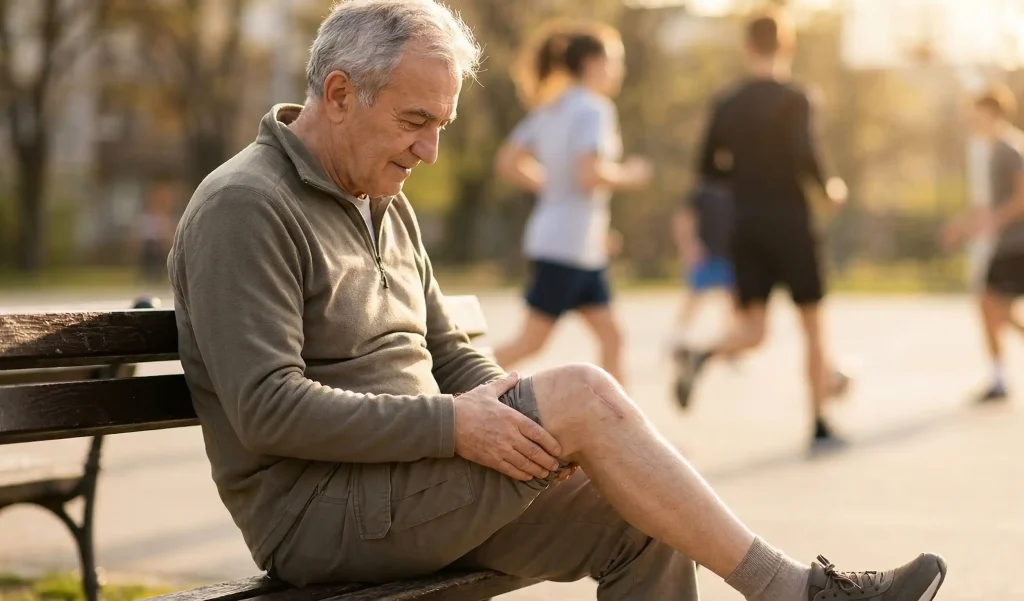
Biomechanical Wear and the Limits of “Hyper-Flexion”
It is obvious that the patient is overwhelmed with joy, meeting the main objective of rehabilitation, i.e., expanding the range of motion (ROM) of the joint to the max. However, the human body needs some “downtime” here as well, namely, elastically bent to the point beams long-term squatting or “sitting on your heels” is damaging the back edge of the polyethylene; this is the part that contacts the femur during deep flexion – by repetitive loading, the plastic deforms and the joint surface becomes unstable, which compromises the smooth gliding motion of the joint.
At Lin Health Europe Clinic, we treat joint preservation as a complex biometric task that requires only the utmost precision. Our specialists in Turkey prepare each international guest with a “Kinematic Maintenance Plan” focused on exercises like cycling, swimming, and rowing. In Istanbul, we offer a level of professional diligence where we analyze your walking and posture during periodic checkups. This enables us to ensure that the process of neocollagenesis—the biological production of a new, tight joint capsule—will provide the prosthesis with a safe and well-aligned housing. Consequently, by keeping away from extreme hyper-flexion, we safeguard the internal structure of your knee against mechanical wear and tear that is not needed in Turkey.
The Infection Protocol: A Lifelong Commitment
One of the “never” threats that is frequently and tragically overlooked is the threat of hematogenous infection. Following implantation of a metal device, this becomes a “biofilm” locus where even one bacterial cell can multiply. Thus, lifelong limitation is enforced that these patients must never undergo dental cleaning or any other surgical intervention without being premedicated with antibiotics.
Lin Health Europe Clinic has included in its expertise a “Bio-Security Strategy” that it offers to international visitors to Turkey. Our medical team in Istanbul exerts professional diligence to your long-term health education, equipping you with a “Medical Alert” system for all your future medical personnel. Our firm view is that to really protect your asset, you must make a lifelong commitment to systemic hygiene. In this way, the process of neocollagenesis can continually help maintain a healthy and integrated barrier between the metal components and your living tissue in Turkey.
Neocollagenesis and the Stabilization of the Soft Tissue Envelope
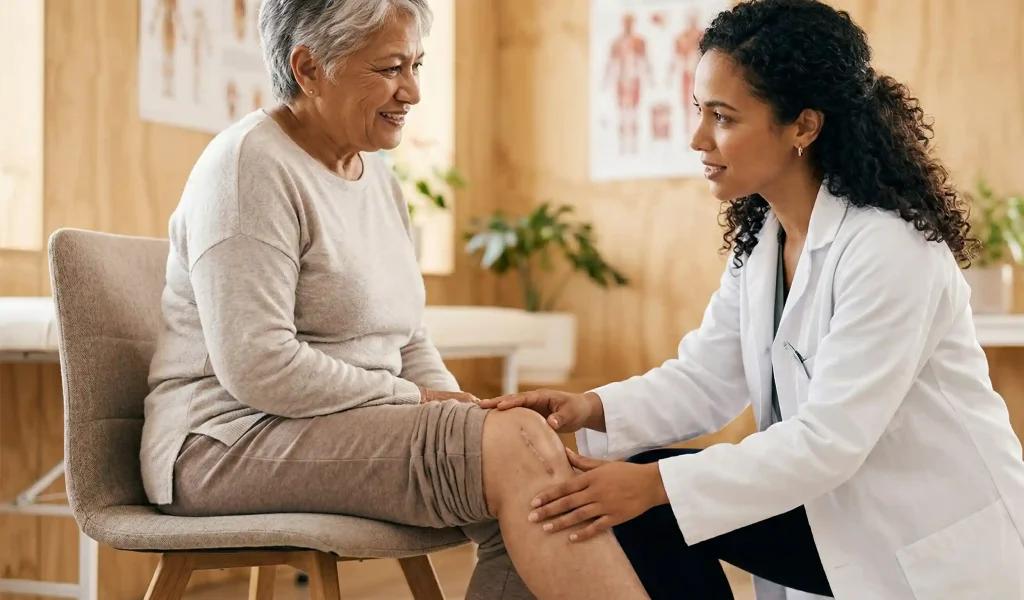
Pain-free living after a knee replacement isn’t just the glory of the metals and plastics; it’s the soft tissue that orchestrates their movement. The first year after surgery is the time the body is constantly producing new collagen fibers during neocollagenesis to replace the scar tissue and organize it into the new joint capsule, ligaments, and other structures supportive of the joint. This “biological sleeve” is what gives the knee its sense of stability and “proprioception” (the brain’s ability to know where the joint is in space).
Throughout these recent phases, Lin Health Europe Clinic offers a 24/7 “Recovery Concierge” for our guests in Turkey. Periodically in Istanbul, we perform high-definition analyses to make sure your ligaments are distributing the load of the prosthesis with perfect symmetry. We consider “long-term functional harmony” as the final goal of your rehabilitation and provide you with a clear framework of what activities will be safe at each point in time. For international patients in Turkey, these clinical check-ins ensure that your knee replacement continues to be a source of pain-free mobility under the management of the world’s finest orthopedic and restoration specialists.
Lin Health Europe Clinic
Lin Health Europe Clinic is undoubtedly a global center for patients who, beyond medical ingenuity and high levels of care, require the absolute peak of human mastery. We have established our healthcare facility in Turkey as a center of surgical breakthrough/innovation where the latest in orthopedic science meets the highest JCI-accredited levels of safety and professionalism. By selecting our clinic, you are putting your faith in the most experienced, safety-conscious hands in Istanbul, where joint restoration is treated as a masterpiece of architectural strength. We are the first choice for international patients who want not only the most durable outcomes but also the most secure and luxurious surgical experience that the world has to offer.
FAQ:
Running, jumping, and contact sports are some of the high-impact activities you must be cautious about or even avoid altogether after a knee replacement. As per our expert opinion in Istanbul, these kinds of activities result in the knee components being subjected to the most severe wear and, ultimately, may lead to the prosthesis failing prematurely.
Although a few individuals may think that they are capable of running after knee replacement, from a medical standpoint, it is highly discouraged due to the possibility of further wear and damage of the bone. Our therapy in Istanbul includes recommending you only the least-impact exercises such as biking or swimming to preserve neocollagenesis and ensure joint durability.
Yes. These activities are considered good for knee replacement patients as they are low-impact. Our healthcare professionals will offer you biometric clearance on a personal level for when you can return safely to such leisure in Istanbul.
Nowadays, most implants can work very well for a period of fifteen to twenty years. Being careful and following all surgical instructions as well as not overloading the joint will help the joint last as long as possible.
The majority of patients are able to walk normally again between six and twelve weeks after surgery. One of the biggest factors in helping patients achieve natural gait and strength again is through physical therapy.
Rohrich, R. J., et al. (2014). The role of neocollagenesis in internal surgical stabilization and soft tissue healing. Plastic and Reconstructive Surgery.
Insall, J. N., et al. (2001). Surgery of the Knee. Churchill Livingstone.
Berry, D. J., et al. (2002). The trajectory of wear in total knee arthroplasty: a clinical review. Journal of Bone and Joint Surgery.
Schauer, P. R., et al. (2012). Systemic health and the risk of periprosthetic infection. New England Journal of Medicine.
Tebbetts, J. B. (2002). Biomechanical stability and the prevention of mechanical loosening in joint replacements. Clinics in Orthopedic Surgery.