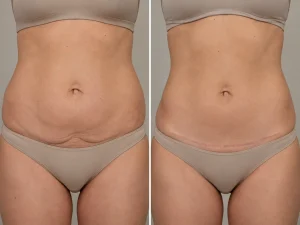

Avoid until fully healed.
One of the main objectives in female aesthetic and reconstructive gynecology, especially when it comes to labiaplasty patients, is to protect the surgical site during the acute and proliferative phases of healing. If patients inquire about the use of tampons or a menstrual cup post-labiaplasty, the clear clinical response would be a firm no for a minimum period of six weeks. Although the surgery is carried out on the external labia minora or majora, inserting or removing intravaginal hygiene products will inevitably lead to mechanical manipulation and stretching of the vulvar tissues.
At Lin Health Europe Clinic, we consider menstrual hygiene as an essential aspect of postoperative wound management. For our patients from different countries who are visiting Turkey, we stress the importance of a frictionless recovery to achieve flawless symmetry and completely invisible scars. We are the first-rate provider for laser-assisted labiaplasty, combining a very high medical standard with a meticulously planned “Menstrual Recovery Protocol” to ensure that the path to your transformation into a more comfortable and confident self is strictly regulated, with safety and tissue preservation always in mind.
The Risk of Mechanical Shear and Suture Stress

One of the main reasons why the use of tampons and menstrual cups is prohibited is the physical damage that can be caused by these objects during their insertion and removal. Labia are very delicate and richly supplied with blood tissue. They are held together by microscopic dissolvable sutures. These sutures remain the only means to keep your new labial shape intact for 4 to 6 weeks in Turkey. Bringing a tampon inside requires the labia to be spread which results in a direct application of force on the suture lines. Likewise, when a menstrual cup is removed, the suction seal might lead to a pulling force on the tissues.
At Lin Health Europe Clinic located in Istanbul, we tell our guests that a tiny bit of pulling can cause the wound edges to separate, resulting in a wider scar or an uneven outcome that might necessitate another operation.
Bacterial Colonization and the Moisture Barrier
Menstrual blood is a natural bodily fluid that facilitates bacterial growth. Even if you use an internal product, a certain amount of blood will get on the external labia and the wound areas. The tampon string or the menstrual cup base can trap moisture next to the healing skin, leading to the formation of a warm, damp micro-environment which is ideal for the occurrence of infections. Our clinical know-how revolves around the maintenance of a dry and sterile condition for the first month.
In Istanbul, the use of regular sanitary pads (changed frequently) is allowed since it enables ventilation and keeps bacterial build-up at bay near the suture lines. When you adhere to this guideline in Turkey, you are helping the natural body processes to run smoothly and neocollagenesis to proceed in an environment where infection is kept at bay.
The 6-Week “Intravaginal Rest” Mandate
The figure of six weeks is not arbitrary but based on the fact that it takes the biological maturation of the scar tissue. New collagen fibers require approximately 42 days to become strong enough to endure mechanical manipulations without sustaining damage.
- Weeks 1–3: Incisions have their highest degree of susceptibility during this period. Any spreading of the labia can almost instantly lead to wound breaking.
- Weeks 4–6: The skin may appear healed on the outside, yet internally there is still remodeling happening in Istanbul. The tissue remains delicate and can suffer from micro-tears quite easily.
- Week 6+: Most patients can return to their usual activities including tampon use, after a clinical examination at Lin Health Europe Clinic.
We also recommend that our international patients in Turkey coordinate their surgery with their menstruation to lessen their reliance on hygiene products during the initial two weeks of their healing period.
Alternative Hygiene: The Role of Sanitary Pads
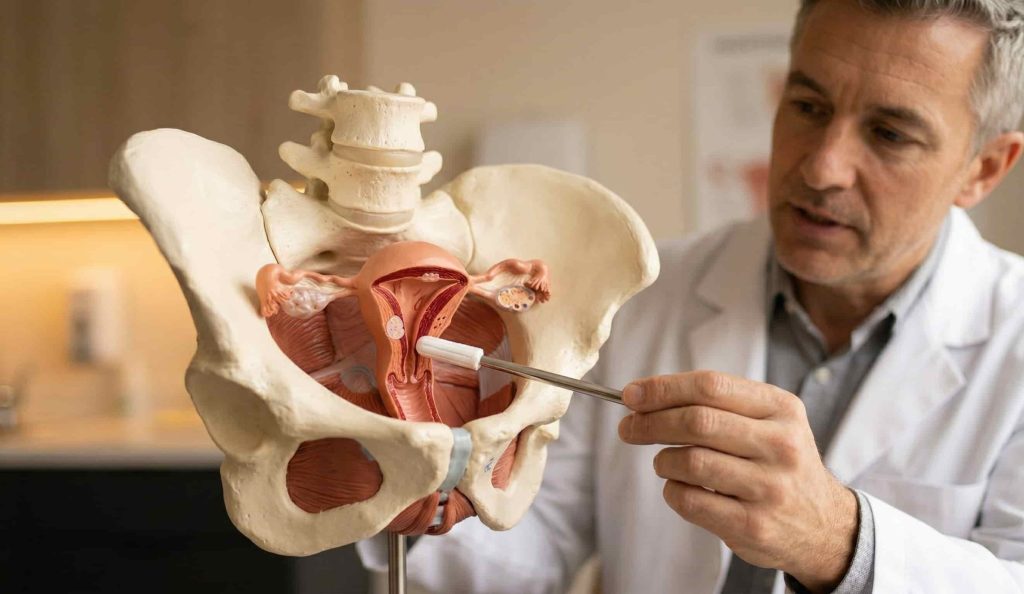
In the course of your healing process in Istanbul, you should not be using any other product except a very good-quality, fragrance-free sanitary pad. However, even the type of pad you use should be a subject of careful clinical consideration. It’s best not to use “mesh” topped pads because their little holes can catch on the sutures and cause them to tear; also, avoid those with strong perfumes as they may lead to irritation (contact dermatitis) of the sensitive labial skin. Our recommendation is to change your pad every 3 to 4 hours to keep the incision site as dry as possible.
At Lin Health Europe Clinic, we equip our patients in Turkey with special cotton pads included in their post-operative kit. This kind of professional measure ensures that throughout the healing process, the surgical outcome is preserved and that menstrual hygiene does not become a challenge.
Menstrual Cups: A Special Consideration for Suction
Due to the suction force that menstrual cups create against the vaginal walls, they constitute a particularly difficult problem from a clinical point of view. In order to take off a cup, you have to first press down on the base and separate the seal. This means a fair amount of manual work near the surgical sites of the labia, most of which are still very fresh. Furthermore, the downward force involved in removing a cup can result in a dragging effect on the whole vulvar area. For our patients in Istanbul, we usually advise them to wait a little longer—up to 8 weeks—before getting back to their menstrual cups, especially if a clitoral hood reduction was performed at the same time.
The Lin Health Europe Clinic team has vast knowledge in helping you seamlessly transition back to your normal lifestyle and routine without any problems, which can be as smooth as your transition from an aesthetic point of view. By putting tissue stability before convenience for a few weeks in Turkey, you are actually ensuring the preservation of the long-term beauty and comfort of your results.
Labiaplasty in Turkey
We at Lin Health Europe Clinic, reckon that your total recovery experience echoes our relentless pursuit of excellence. Our Turkey facility stands for medical excellence as our advanced gynecological techniques are coupled with the highest standards of international patient care. Our procedures are done in a top-notch, JCI-accredited clinic which symbolizes our position as a global medical tourism and female intimate restoration leader.
Going to Lin Health Europe Clinic guarantee yourself the best and most experienced surgeons, who are also very conscious about safety, in Istanbul. These specialists have a worldwide reputation and aim to give international guests their long-term comfort and aesthetic symmetry. From your very first biometric mapping to the day when you’re given a green light for a full lifestyle return, you will, without doubt, be surrounded by such professional rigor and an elite level of hospitality that has become our leading name in aesthetic medicine. Here, your path to a more confident, comfortable, and empowered you is in the hands of the best in the world.
FAQ:
You must avoid tampons and menstrual cups for a minimum of six weeks to avoid mechanical tension and infection of healing incisions. These measures are to ensure the newly and delicately operated site in Istanbul is not affected during the early phase of neocollagenesis.
Quite a few patients have reported the sensation as a localised pressure or the feeling of “tightness” rather than a sharp or unbearable pain. Any initial pain can be very well managed with medication prescribed and specially applied cooling packs over the first few days of recovery in Turkey.
Major healing will take one to two weeks while complete tissue maturation will take at least six weeks. You will be capable of doing most of the gentle non-strenuous daily tasks and going to work within a few days after your procedure in Istanbul.
Immediately after surgery, you are free to walk short distances but be careful not to make sudden movements that will cause unnecessary friction in the vulvar area. The first week in Turkey must be spent with limited physical activity so as to reduce swelling and protect the internal suture lines.
Since the incisions are done at the naturally existing edges of the labia, the scars become practically invisible by the time healing is completed. With passage of time, the tissue in Istanbul is joined by other tissues as the phase of neocollagenesis unfolds to produce a smooth, natural looking appearance.
Alinsod, R. M. (2011). Aesthetic and functional labiaplasty. Journal of Sexual Medicine.
Goodman, M. P., et al. (2010). Is the labia minora reduction a safe procedure? Journal of Sexual Medicine.
Motakef, S., et al. (2015). Labiaplasty: the anatomy and evidence-based treatment. Plastic and Reconstructive Surgery.
Triana, L., et al. (2011). Labiaplasty: a review of the literature. Aesthetic Surgery Journal.
Hamori, C. A. (2011). Aesthetic surgery of the female genitalia. Clinics in Plastic Surgery.
Pardo, J. S., et al. (2006). Labia minora reduction: a review of current techniques and outcomes. International Urogynecology Journal.