Safe when performed by specialists.
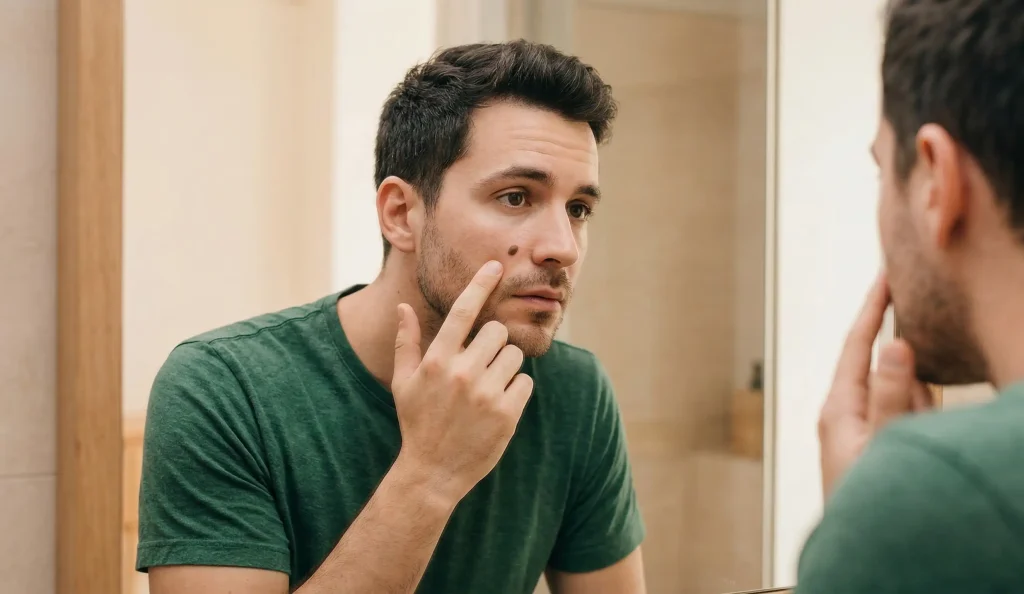
Mole removal or excision is one of the most demanded procedures in the field of facial plastic surgery and dermatological oncology, especially when it comes to melanocytic nevus (mole). The answer to whether mole removal on the face is safe for all people is layered: the procedure surgically or nonsurgical, is extremely safe, provided that the patient undergoes a very strict, evidence-based diagnostic protocol. Safety here, however, isn’t a given. It depends on the mole’s pathologic cell features, anatomical depth, and the patient’s skin phototype.
We at Lin Health Europe Clinic view removing a facial mole as a medical necessity first and a beauty enhancement second. When we have international patients who come to Turkey for treatment, we usually stress that a mole has to be medically confirmed and cleared before it can be cosmetically enhanced. We are a leading healthcare facility for advanced dermatological surgeries and our clinic demonstrates the highest degree of clinical rigor where every lesion is carefully evaluated for absolute safety against cancer, so your facial structures are handled with utmost human medical ethics.
The ABCDE Criteria and Oncological Triage
Safety first when it comes to mole removal is to get the pathology done. Mainly, a doctor can divide moles on the face into three groups: benign (harmless), dysplastic (in between), and malignant (cancerous, e.g., melanoma or basal cell carcinoma). So, using a cosmetic laser to get rid of a malignant lesion would be an unbelievable clinical error, not only because it would wipe out the cellular proof necessary for a biopsy that could save the person’s life but also because it might push cancer cells even deeper into the tissue.
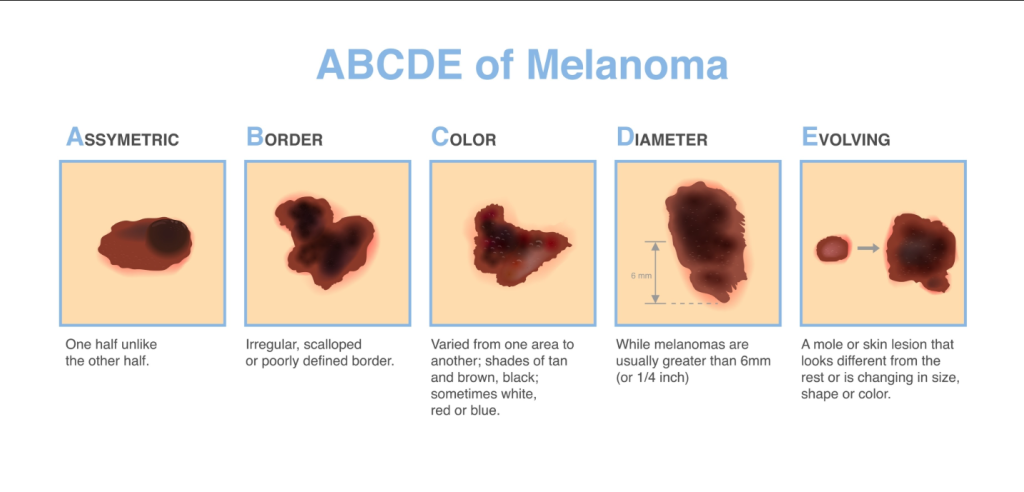
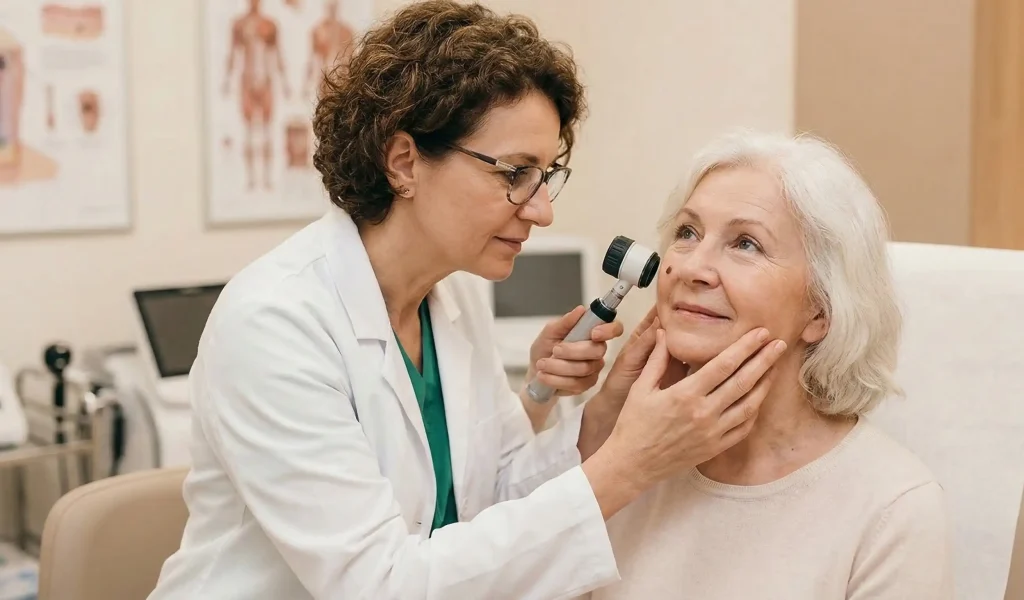
At Lin Health Europe Clinic, our board-certified dermatologists employ dermoscopy and the worldwide ABCDE method to classify each facial mole:
- A – Asymmetry: One half looks different from the other half.
- B – Border: The outline is irregular, notched, or blurred.
- C – Color: Colors are not the same all over and can have different shades of brown, black, red, or even blue.
- D – Diameter: Larger than 6mm (about the size of a pencil eraser).
- E – Evolving: Changing in size, shape, or color over a period of time.
If a mole shows one or more of the above features, its removal for purely aesthetic reasons is completely ruled out. In fact, a diagnostic excision is carried out, which shows that we are the world’s leading example of responsible aesthetic medicine.
Surgical Excision vs. Laser Ablation
Picking the right treatment option is what the entire safety of a treatment hinges on. The two leading methods—surgical excision and laser ablation—are actually quite different in terms of the clinical indications or helper function of a mole’s structural profile.
- Laser Ablation: Is only used for flat, superficial, and strictly benign nevi. The CO2 or the Erbium laser vaporizes the pigmented cells in the upper epidermis. Not only does it leave no surgical scar, but it also doesn’t give any tissue sample for laboratory testing.
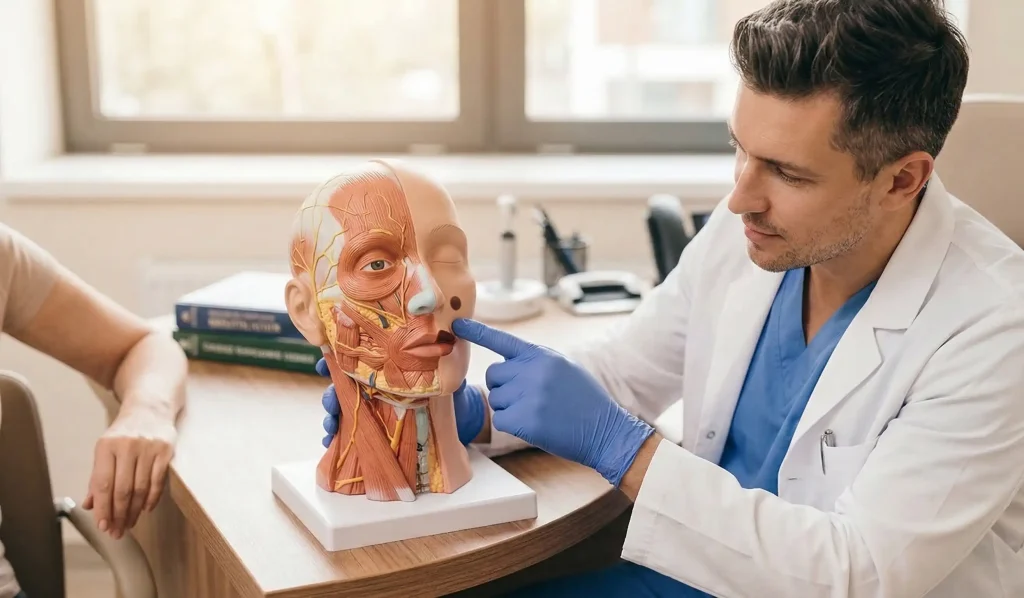
- Surgical Excision: A pathologic examination and removal by surgical excision are obligatory gold standards for dysplastic nevi, raised moles, or moles deeply located in the dermis and subcutaneous adipose tissue. The surgeon makes a circular incision around the mole to remove the entire cellular content. The wedge-shaped cut or micro-incision is closed by a very thin and delicate suture. This method eliminates the possibility of the regrowth of the lesion and provides an intact specimen for histopathological analysis.
The Fitzpatrick Scale and Pigmentation Risks
“Safe for all” is a clinical term with a very wide and complex meaning if viewed together with the variety of ethnic skin tones. The Fitzpatrick scale is used for skin classification based on skin color, genetic variants related to melanin, and tendency to burn or tan when exposed to ultraviolet radiation. People with darker skin (Fitzpatrick IV-VI) tend to have highly reactive melanocytes.
For these patients, the use of aggressive thermal lasers on the face can lead to a very high risk of Post-Inflammatory Hyperpigmentation (PIH)—the formation of a permanent, dark patch of melanin on the skin that occurs as a result of injury or inflammation. Such a condition is often more aesthetically handicapping than the original mole. The niche at Lin Health Europe Clinic in Turkey is in the reduction of these adverse effects by a combination of specially performed “cold” surgical techniques and the use of tyrosinase inhibitors in the topical area which guarantees that skin rich in melanin after the healing process comes out of the treatment with a perfectly uniform tone.
Tension-Free Closure and Scar Management
Being a very mobile anatomical site, after surgical excision of a mole, the physical safety or risk of hypertrophic (raised) scar formation is the main consideration. In order to get a perfect aesthetic result, the surgeon must make the micro-incision in line with the Relaxed Skin Tension Lines (RSTLs) that are naturally found on the face.
At Lin Health Europe Clinic, we can do our international patients in Turkey the honor of elite microsurgical closures provided at the highest level. All tension is removed from the surface skin by deeply anchoring the sutures into the structural fascia. We have a postoperative care plan for our patients that includes silicone gel sheeting and laser scar-fading therapeutic treatments during the phase of neocollagenesis so as to ensure the end result is a smooth, uninterrupted complexion.
Mole Removal in Turkey
At Lin Health Europe Clinic, our philosophy is that real aesthetic excellence stems from unwavering patient safety, diagnostic accuracy, and adherence to international medical standards. Our clinic in Turkey is a refuge of medical proficiency housed in newer, JCI-accredited hospitals that speak of us as a global leader in medical tourism and dermatological surgery.
Putting your trust in Lin Health Europe Clinic means that you are choosing the most skillful, board-certified hands in Istanbul. Our internationally renowned specialists place the highest priority on precise oncological diagnostics and perfect, invisible healing for every medical tourist. With us, your road to a clear, radiant profile is guided and managed by the best medical professionals in the world.
FAQ:
From the clinical perspective, it can be safe for the majority of patients after the mole has been diagnosed to either be a normal mole or melanoma. A removal method should be completely customized to the patient’s skin phototype and depth of the lesion in the area of the body for safety and to prevent scarring.
Lasers kill the cellular tissue of the mole. If a mole is dysplastic (atypical) or cancerous, using a laser makes a laboratory biopsy impossible and can leave dangerous cells behind in the deeper tissue layers. Lasers are strictly reserved for medically cleared, benign superficial nevi.
The ABCDE rule is a clinical diagnostic tool used to identify potential melanomas. It stands for Asymmetry, Border irregularity, Color variation, Diameter (larger than 6mm), and Evolving (changing shape or size). Any mole showing these signs requires surgical excision and a biopsy in Turkey.
Any technique that breaks the skin will result in a very tiny scar, but using ultra-fine suturing methods and making the incision along the natural contours of the face our surgeons at Lin Health Europe Clinic can make the healed area almost invisible even to the naked eye.
Darker skin (Fitzpatrick IV-VI) is very prone to Post-Inflammatory Hyperpigmentation (“dark spots”) after heat or trauma exposure. Our center in Turkey performs surgical excisions instead of thermal lasers, together with topical melanin-suppressors to help the skin heal more evenly.
Rigel, D. S., et al. (2011). Cancer of the Skin. Elsevier Health Sciences.
Alster, T. S., & Tanzi, E. L. (2003). Laser ablation of benign epidermal and dermal lesions. Dermatologic Clinics.
Ferris, L. K., et al. (2012). Clinical and dermoscopic evaluation of nevi. Journal of the American Academy of Dermatology.
Vachiramon, V., et al. (2012). Postinflammatory hyperpigmentation: a comprehensive overview. Journal of the American Academy of Dermatology.