Temporary emotional changes are common.
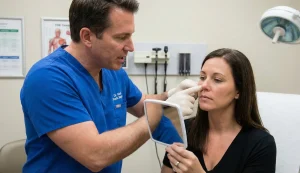
In aesthetic and reconstructive surgery, the psychological state of a patient closely mirrors their physical transformation. Experiencing feelings of mild depression, anxiety, or even a deep sense of regret for a short period after surgery is a very common, even medically recognized occurrence. Such feelings are sometimes described in clinical terms as “post-operative dysphoria” or the “post-op blues.” They signal emotional fluctuations which do not necessarily mean that the surgery was unsatisfactory but are rather a result of biochemical depletion, physical exhaustion, and the unfamiliarity of a healing body.
At Lin Health Europe Clinic, we recognize patients’ emotional changes as a normal and expected part of their surgical experience. For our international surgical tourists visiting Turkey, we provide them with the knowledge that preparing for their post-surgical emotional ups and downs is as crucial as preparing their bodies for the physical recovery. Our hospital is the top destination for holistic patient care. We offer a high level of medical empathy supported by thorough psychological backing that helps the patients to set their expectations based on reality and to safely get through the vulnerable stages of healing at the same time.
The Biochemical and Pharmacological “Crash”
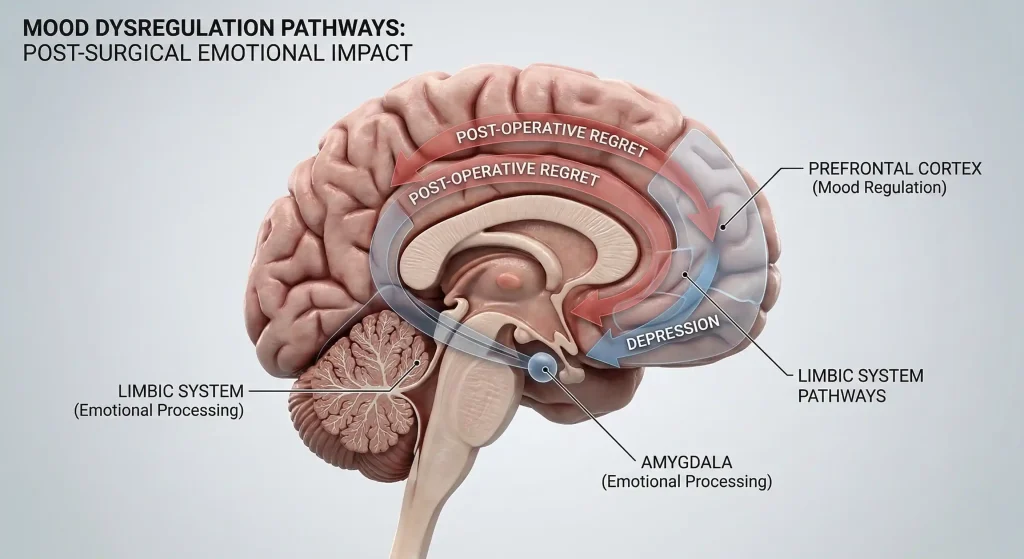
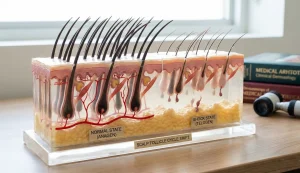
There is a substantial biochemical change that occurs during the immediate post-operative phase. The body is exposed to various substances like general anesthesia, narcotics to manage pain as well as a release of stress hormones such as cortisol and adrenaline during the surgery. Biologically, the period when these drugs are cleared from the system and the individual experiences a drop in adrenaline is when one can experience a state of depression. This chemical withdrawal syndrome can affect one’s mood adversely and is not at all related to the success or failure of the surgical procedure.
At Lin Health Europe Clinic, our medical staff in Turkey oversees your pharmacological change very carefully. We implement pain control methods which are specific to each case in order to minimize the usage of narcotics and lessen the intensity of the biochemical crash. When you pick our reputable hospital, you are putting your psychological adjustment in the hands of professionals who are aware of the critical ways in which medications influence your mood and mental functions.
The Shock of the “Frankenstein” Phase
Plastic surgery is a form of physical trauma that is planned and controlled. In the first several weeks after surgery, the area will be greatly affected by the presence of edema (swelling), ecchymosis (bruising), and the signs of neocollagenesis (improvement of skin cells) that are taking place. The fact that a patient comes to see in the mirror a version of themselves that is swollen, distorted, and full of stitches is enough to cause psychological shock. The mismatch between the “perfect result” that has been envisioned and the raw reality of a healing body is what mainly accounts for early post-surgical regrets.
Within Turkey, the Lin Health Europe Clinic staff deliver intensive preoperative instructions, including pictorial guides to help you visualize what this stage is like. The message we constantly give our patients is that the first week is a very busy time of biological repair and therefore is far from being the final look. Our healthcare profession is famous worldwide for its honesty in communicative exchange, and that is the reason why you will not be alarmed when you are made aware of the clinical realities of tissue trauma during the inflammatory stages that follow your surgery.
The Psychological Weight of “Buyer’s Remorse”
Plastic surgery that is elective is a major undertaking in terms of one’s time, finances, and emotional energies. It is a given that when a patient is immobilized, subjected to a degree of physical pain, and for a short while losing their normal independent state, their mind’s automatic reaction may be “buyer’s remorse.” It is only normal for one to have thoughts such as “I shouldn’t have done this” or “This was a terrible mistake” in such a psychological state. Such a regret usually stays for a short time, and the stronger it is, the more directly it correlates with the level of physical discomfort at the moment.
Post-operation emotional well-being support is where the Lin Health Europe Clinic team excels. Our patient care coordinators in Turkey will give you the help and guidance you need in order to get past this low point. We consider that an outstanding doctor-patient relationship requires continuous emotional support from experts. It is our mental health care that the base which keeps you focusing on your long-term objectives even during the period when you find it difficult physically.
Isolation and the Disruption of Routine
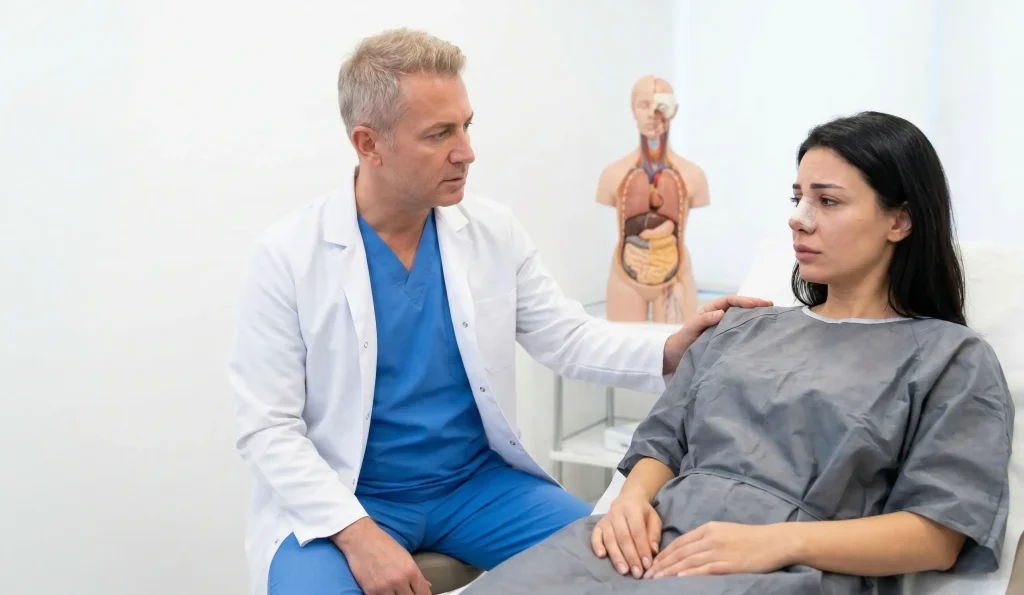
To be able to recover, patients in most cases have to lay aside their jobs, social activities, and sports. The accompanying feelings of loneliness and the lack of endorphins due to inactivity can be enough to cause a surge in depression levels. Besides leaving a patient with lots of free time to think about their swelling, the absence of structure in everyday life may also cause them to not only over-analyze their little presence but also to get anxious about the end result.
At Lin Health Europe Clinic, we accompany our foreign patients who come to Turkey with a program that is well-regulated and designed for their recovery moment. We push the patients to walk slowly around the premises (if permitted) or stay in our ultra-luxurious recovery rooms. In fact, we encourage you to keep your mind distracted in a safe way and lead a life as close to the ordinary one as possible. We are one of the leading entities in this field in Turkey, and we pride ourselves on treating the patient as a whole and making sure that your mental positivity is not only maintained but also enhanced by the environment, while at the same time, the isolation that is stirring your postoperative dysphoria is coming to an end.
Lin Health Europe Clinic Standards in Turkey
Health, according to Lin Health Europe Clinic, goes beyond the mere physical. Our center in Turkey serves as a place where medical achievement matches procured compassion and personal regard. We work in JCI-accredited, highly modern medical centers which is just one indication of our extraordinary standing as the global leader in international medical tourism combined with aesthetic surgery.
Making the right choice for Lin Health Europe Clinic also means that you will be with your ally in times when it gets tough, emotionally. We have surgeons and care personnel who are worldwide acknowledged experts in prioritizing your physical safety and psychological comfort. Right from consultation to rehabilitation milestones, emotional, you are simultaneously exposed to the professionalism and elite hospitality which have made us the first name in aesthetic medicine. Your transition with us to becoming more self-confident is always supported.
FAQ:
Absolutely! In fact, it is very normal and expected that people will go through sadness or anxiousness after their surgeries. The reason for these changes in mood is simply due to the after-effects of anesthesia, the strains of healing your body and the temporary change in your routine.
Most of the time, the regret in the beginning is a psychological response to the shock of being faced with swelling and bruising after the surgery rather than the final result. Once the physical pain goes away and the tissues come to rest, this reaction of regretting buying the product usually disappears completely.
The majority of people ‘come down’ from their emotional ‘high’ in two or three weeks when their fatigue dissipates and the swelling becomes less visible. If you still feel a really down and sad mood a month after the surgery, our healthcare providers in Turkey will give you contact to professional psychological help.
One way is to make sure you keep drinking enough water, another is taking it easy with walking to encourage blood circulation and third is eating a balanced diet rich in vitamins and minerals that will help you get rid of the anesthesia as well as possible.
Numerous people first start to love their looks around the sixth-week point when most of the swelling that is harmful disappears. However, the real, polished outcome of your surgery in Turkey will be clearly visible from six to twelve months when the deeper layers stay in their new position.
Pruzinsky, T. (1993). Psychological factors in cosmetic plastic surgery: recent developments in patient care. Plastic and Reconstructive Surgery.
Honigman, R. J., et al. (2004). A review of psychosocial outcomes for patients seeking cosmetic surgery. Plastic and Reconstructive Surgery.
Sarwer, D. B., et al. (2005). Psychological Aspects of Reconstructive and Cosmetic Plastic Surgery.
McGrath, M. H., & Mukerji, S. (2000). Plastic surgery and the teenage patient. Journal of Pediatric and Adolescent Gynecology.