True graft rejection is rare in hair transplants.
Patients often use the term “graft rejection” in hair restoration to describe no growth; however, in the medical context, true rejection is extremely unlikely due to the fact that a hair transplant involves autologous tissue – follicles taken from the patient’s own body. This means that the immune system cannot recognize such grafts as foreign and therefore cannot attack them. Nevertheless, factors like inflammation or scalp problems may disrupt the healing of transplanted hair follicles.
At Lin Health Europe Clinic, we strive to get the highest “take rate” of individual hairs by applying precise surgery and state-of-the-art graft storage. For people who go to Turkey for a transplant, it is very important to be able to distinguish a true biological rejection from “shock loss” and the non-growth due to the environment or the technique. We work hard to maintain the scalp as a well-nourished place where the transplanted subcutaneous adipose tissue and follicles can live forever.
Biological Basis of Graft Integration
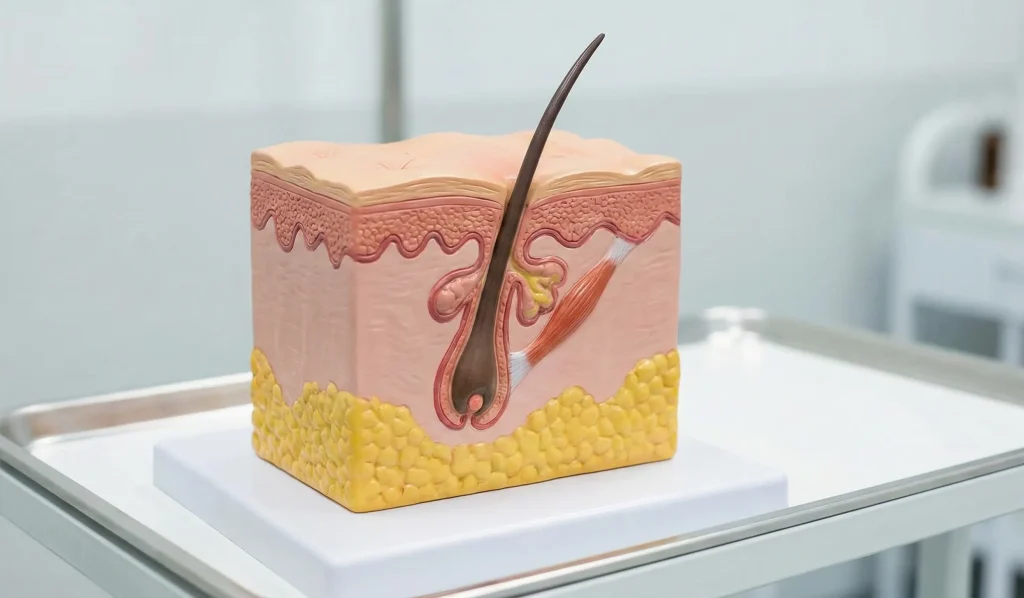
Hair transplant is successful when the newly implanted hair roots are quickly nourished with blood. This revascularization, as the building of new blood vessel connections is called, should be done no later than 48-72 hours after the transplant. A hair follicle that does not get enough oxygen and nutrients from the surrounding capillaries will not be able to restart the growth stage. In a clinical context, this isn’t “rejection” immunologically, but rather an inability to merge due to insufficient blood supply.
At Lin Health Europe Clinic, hair transplant in Turkey is done by experienced hands and implanting hair using techniques like DHI (Direct Hair Implantation), which helps to shorten the time hair follicles spend outside the body, thus at the same time lowering the stress on the hair bulb. Consequently, this greatly increases its survival rate. During channel preparation, careful preservation of the delicate vascular tissue allows the newly implanted hair immediate and firm access to body circulation.
Folliculitis and Localized Inflammatory Responses
Pts can even do an injection of intralesional steroids into the affected area, should the folliculitis be severe and resistant to treatment. Apart from folliculitis, there are also other conditions that present with similar signs and symptoms, that is why it is important to confirm if it is truly a case of scalp folliculitis. Usually, at 3-4 months post surgery, newly planted hairs begin to come out of the skin, launch of which at times may be accompanied by folliculitis.
We instruct our patients in Turkey on how to properly wash their hair after the operation so as not to feed the bacteria. The Lin Health Europe Clinic team is highly experienced in managing and preventing scalp inflammation; folliculitis is a common, albeit minor inconvenience, and proper care will ensure that it will not become a more serious issue. We keep a close track of your condition in our clinic to make sure that even minor scalp problems are taken care of in time, thus insulating your results from possible compromise.
Lichen Planopilaris and Autoimmune Interference
In contrast to organs and tissues of the donor, an autologous graft will not be rejected by the recipient since it is the “self”. Nevertheless, if there is an autoimmune disease present, the patient’s own immune system will be misled to attack the hair follicles, resulting in a condition called LPP (Lichen Planopilaris). The inflammation caused by the immune system in a case of autoimmune disease results in a process called cicatricial alopecia or hair loss due to scarring of the skin, which is irreversible.
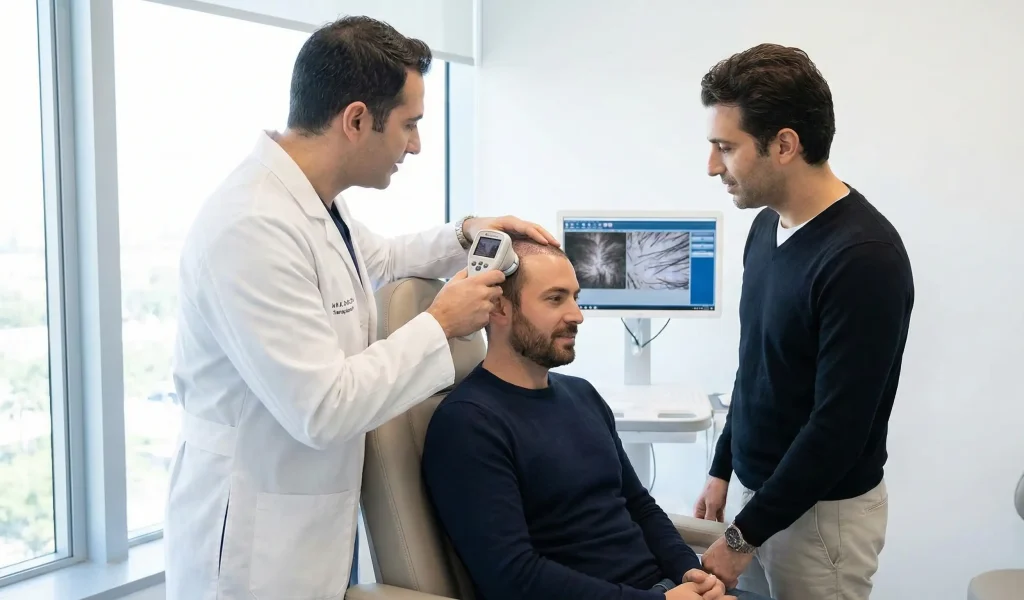
At Lin Health Europe Clinic, we perform a thorough preoperative scalp analysis to ascertain if there are any signs of active inflammatory scalp disease, thus providing the utmost safety to our patients in Turkey by avoiding a transplant during an immune flare which can result in poor graft survival. In addition to making sure the scalp is healthy, we also check if the hair loss is stabilized because these two steps drastically increase the chances of a successful long-term restoration.
The Impact of Scalp Vascularity and Edema
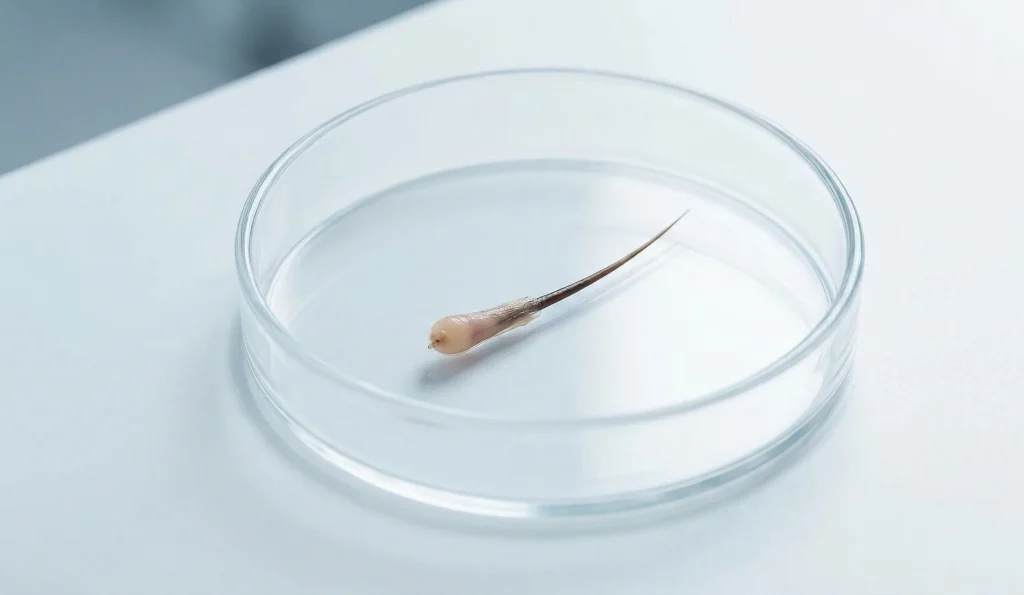
Besides that, the condition of the recipient site is of equal importance as that of the grafts. The scalp might not have enough blood flow due to factors such as heavy smoking, uncontrolled diabetes, and excessive swelling after the operation (edema). This can lead to a reduction in the “take” of follicles. If the scalp swells up too much, the blood vessels there will be pressed and the grafts will not be given the oxygen that they will need to survive the first few days out of their old environment.
Major swelling is well-managed using a postoperative care regimen tailored specifically for patients. With the help of anti-inflammatory medications, positional therapy, and lymphatic drainage techniques, the doctors at Lin Health Europe Clinic provide post-operative care that keeps the graft area healthy and most conducive to the success of the transplant.
Hair Transplant in Turkey
At Lin Health Europe Clinic, we see each hair follicle as a valuable living specimen. Our clinic in Turkey is equipped with all the necessary tools and run by highly trained personnel capable of accomplishing follicular preservation to the highest standards. We understand that anyone coming from outside the country will expect not just more hair, but also a surgery that is medically sound, safe, and that will leave them with a feeling of confidence in the long-term.
Our surgeons in Turkey have a vast knowledge of the latest methods for hair restoration, be it Sapphire FUE or DHI. We make sure our patients are healthy inside and out at least one year following their procedure by offering a comprehensive follow-up program. With Lin Health Europe Clinic, not only do you get a highly skilled surgeon, but also a clinic that understands the science behind hair survival and how to keep patients safe.
Frequently Asked Questions About Graft Survival
The most common cause is the bad handling of grafts or the lack of blood supply to the recipient area during the first several days. The team of doctors at Lin Health Europe Clinic applies state-of-the-art storage protocols to prevent this situation.
Shock loss is a sudden, temporary departure of non-operated hair or transplanted hair that occurs mainly due to the trauma caused by the surgery. According to Turkey practice, it’s an ordinary healing stage following which the hair regrows after about several months.
Hair from the facial area or the chest can definitely be used to increase the volume if the scalp donor area is restricted. This method is frequently employed at Lin Health Europe Clinic to get a more volumized scalp for patients in Turkey.
A hairline restoration usually requires a number between 1500 and 2500 grafts and this depends on how dense one wants to be as well as how deep the recession is. We at Lin Health Europe Clinic are very precise when calculating this for you in order to give a natural look, appropriate for your age, the frame of your face.
The shedding of hair that lasts a short period does not have an effect on the permanent hair follicles which still continue to live beneath the skin. After the initial surgical stress in Turkey is over, the hair starts growing normally.
Unger, W. P., & Shapiro, R. (2004). Hair Restoration Surgery.
Bernstein, R. M., & Rassman, W. R. (1997). Follicular transplantation. International Journal of Aesthetic and Restorative Surgery.
Parsley, W. M., & Perez-Meza, D. (2010). Review of factors affecting graft survival. Hair Transplant Forum International.
Jimenez, F., & Ruifante, E. (2010). Distribution of human hair follicles: anatomical and clinical relevance. Dermatologic Surgery.