Fat cells removed are permanent.
In the field of aesthetic plastic surgery, liposuction is one of the procedures most often misunderstood as a weight-loss method when, in fact, it is a body-contouring procedure. The transient removal of the adipose tissue gives instant satisfaction, but a considerable number of patients raise the question of how the body retains those results physiologically over 10 or more years. At Lin Health Europe Clinic, we explain how a liposuction procedure changes the distribution of subcutaneous fat cells permanently; however, it does not stop the metabolic processes of the body nor the natural aging of the skin.
The biological basis of suction-assisted lipectomy lies in the notion of adipocyte cellularity. A normal adult human body has a certain fixed number of fat cells. Liposuction physically extracts a particular proportion of these cells from a specific area. Because adipocytes generally do not regrow (hyperplasia) in adults, the result of the reduction in that particular area is permanent. Nevertheless, the patient’s energy balance (caloric intake vs. expenditure) and the behavior of the fat cells that are in the untreated areas determine the long-term beauty results. To a great extent, it is crucial for patients to comprehend the difference between hypertrophy (cell enlargement) and redistribution when they go for a body sculpting surgery to Turkey.
Adipocyte Hypertrophy and Weight Gain Dynamics

The most important consideration for the long run is the body’s way of dealing with excess energy storage after the surgery. If the patient is able to maintain a stable weight, the shape that the liposuction has achieved remains the same throughout life. However, if the patient’s diet is a hypercaloric one, the body will have to store the surplus energy. Since the reservoir of adipocytes that has been treated (e.g., the belly) is now empty, the body will locally and to an even greater extent in the case of the areas that have not been treated, send fat (triglycerides) to the cells that still exist.
This is an explanation for adipocyte hypertrophy. A cell can increase its volume by up to four times (400%). While the treated area will always be smaller relative to the untreated areas than it was pre-surgery, significant weight gain can obscure the definition. In addition, clinical studies point out that when a patient puts on more than 10% of his/her body weight, there might be an increase in fat in the untreated areas, such as the upper arms or the visceral cavity. Consequently, liposuction is like a “reset” of the body’s proportions, a way to start anew, but it does not guarantee protection from obesity in the future.
Visceral Fat Redistribution Risks
One aspect that is of medical concern is the tendency to store fat preferentially as visceral adipose tissue after excessive weight gain following liposuction. The visceral fat, unlike subcutaneous fat (that is extracted during the operation), is inside the abdominal cavity, near the liver, the intestines, and other organs. It is metabolically active and is associated with insulin resistance and a higher risk of heart disease.
Various studies demonstrate that after liposuction, in the case where a patient gains weight, a larger percentage of that new fat might be deposited as visceral fat simply because the capacity of subcutaneous storage has been diminished. It is not the liposuction that is directly causing this, but the metabolism’s way of adapting to a positive energy balance. This is proof of how vital lifestyle modification is. We, at Lin Health Europe Clinic, always advise our patients that to preserve the results of their investment, they should try to keep their body mass index (BMI) stable and, thus, avoid the shift in fat storage mode that leads to visceral fat accumulation, something that liposuction is not able to treat.
Skin Elasticity and Dermal Elastosis
Their appearance after liposuction greatly depends on the quality of the skin envelope. The operation being over, the skin initially uses its natural elasticity to retract and take the shape of the new, lesser volume. Still, over time, every individual experiences dermal elastosis—the wear and tear of collagen and elastin fibers caused by aging and UV exposure.
It is only a decade after the operation when a person discovers that the fat has not come back, but the skin has become loose and wrinkly in the area that has been treated. This is the case, especially if the lower abdomen or inner thighs have been the areas of interest. This is not at all the discontinuation of fat removal. Cellular aging is by far the natural course of things. As a matter of fact, patients whose skin naturally lacks tone right from the start are more susceptible to this weakening in the longer term. They might have to resort to non-surgical and surgical interventions.
Metabolic Rate and Energy Expenditure
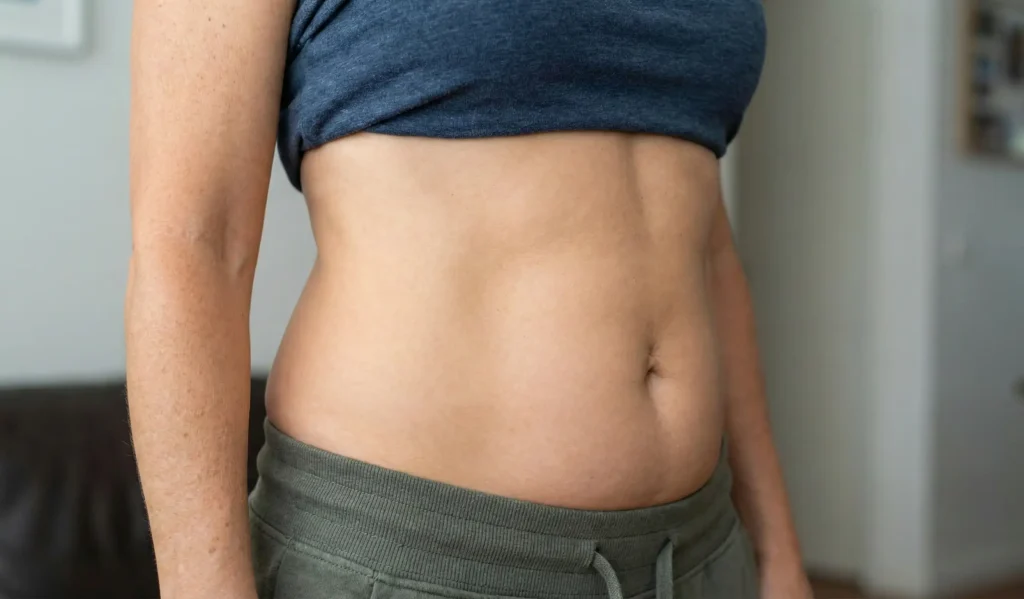
Many people believe deep down inside that the removal of fat cells lowers the body’s basal metabolic rate (BMR) and, therefore, it becomes easier to gain back the weight. Nevertheless, clinical studies demonstrate the opposite. In comparison to lean muscle, subcutaneous fat is relatively metabolically inactive. Hence, the extraction of two to three liters of fat does not bring about a drastic change to the number of calories the body consumes at rest.
On the other hand, this shrinkage of the body can have effects on the psyche, which in turn impacts the level of physical activities. Patients who have lost weight and feel happier with their bodies tend to walk more and, therefore, keep their metabolic health at a good level for the long term. In contrast, those who fall prey to the “license to eat” phenomenon, i.e., they claim the freedom to eat whatever they want and in whatever quantities because they think of themselves as being immune to weight gain, overeat to such an extent that they are no longer able to keep their metabolic set point. Thus, one can only reckon on long-term success through changes in one’s behavior and not only through surgery.
Liposuction in Turkey
At Lin Health Europe Clinic, our understanding of liposuction is that it is the start of a long-term partnership with your body rather than a one-off solution. Lin Health Europe Clinic is stationed in Turkey, and the team is committed to educating the patients on how to take care of themselves adequately after the operation for such a long time beyond the initial recovery. We carry out VASER liposuction, which is one of the most advanced surgical techniques, that apart from its other advantages, allows the patient stability by the production of collagen that is induced during the procedure and the absence of which usually causes the loosening of the skin.
At the same time, we emphasize the point that a real long-term harmonious result is firmly grounded on the interaction between the patient’s ability and willingness to exercise discipline and the surgeon’s precision. To international patients who are going to have the operation and maintain the new body contour for decades, we prepare nutritional and physical guidelines that will be effective. In this way, a positive outlook towards old age and the changes in weight with Lin Health Europe Clinic is a way of life, and it is not only about enjoying the results because the fat cells are removed, even though the body continues to evolve.
Frequently Asked Questions About Long-Term Liposuction Results
Liposuction will remove fat cells permanently, and these cells will not grow back. However, the remaining fat cells in the area can still swell if you put on a lot of weight.
Liposuction doesn’t move fat to other parts of your body. When you gain weight, your body will save the fat in the areas that were not treated because the treated area cannot store as much fat as before.
As we get older, our skin loses its natural ability to stretch because of the reduction of collagen. You may still find that the area where the fat was taken has some sagging skin or wrinkles after a few decades, even though the fat has been permanently removed.
There is no problem with getting pregnant or having a baby after liposuction. Your skin will stretch during pregnancy and usually will go back to its normal state after you give birth.
No, cutting down on subcutaneous fat won’t drastically reduce your basal metabolic rate. The primary factors influencing your metabolism are your muscle mass and how active you are, rather than your fat mass.
Hernandez, T. L., et al. (2011). Metabolic and endocrine responses to large-volume liposuction. Obesity.
Swanson, E. (2011). Prospective outcome study of 360 patients treated with liposuction, lipoabdominoplasty, and abdominoplasty. Plastic and Reconstructive Surgery.
Matarasso, A., & Kim, R. W. (2001). Abdominal contour surgery in the massive weight loss patient. Seminars in Plastic Surgery.
Fodor, P. B. (1994). End-assisted lipoplasty. Clinics in Plastic Surgery.