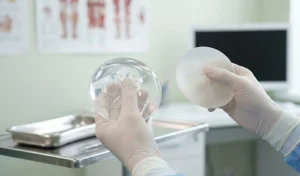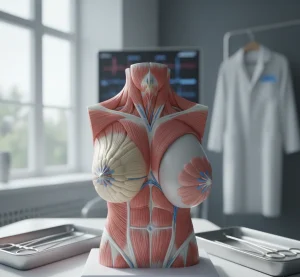
Risks increase with rupture or shape changes.
It’s a familiar story in the field of cosmetic surgery. A young woman in her early twenties gets breast implants and is thrilled with her newfound confidence. Her plastic surgeon most probably cautions her that implants are not lifetime devices and casually mentions the “10 to 15 years” guideline. However, things get hectic. The woman starts a career, has kids, and years fly by. Suddenly, she is 50 years old and she can’t help wondering if it is even safe to have medical devices in her body that were implanted so long ago. Momentarily, she might feel a bit scared and soon after she asks herself: “What would happen if I never replace my breast implants?”
At Lin Europe Clinic, we have numerous consultations with women who are firm believers of the “if it isn’t broken, don’t fix it” method. Of course, it is completely fine not to change your implants solely based on the time factor—as implants do not suddenly become harmful after a certain time period but deciding to never replace them is defying both physics and biology. Although a few very fortunate women are able to live their whole lives with their original implants without any problems, the statistical truth is that an implant becomes increasingly likely to fail mechanically or develop aesthetic problems as it is left inside the body for longer.
The Physics of “Shell Fatigue”
If you want to get to the bottom of the issue of why keeping implants indefinitely is a risky option, you have to regard the implant not as a part of the body but rather as a manufactured item. If you think about your car tires, they wear out eventually even if you never drive carelessly and don’t get any tyre puncture. The rubber will deteriorate after a while, due to friction, changes in temperature, and the mere passage of time. Breast implants undergo the same sort of process referred to as “shell fatigue”.
In fact, your implants are being pressed and bent every single time you walk, embrace a friend, sleep on your stomach, or engage in sports. It is a well-known fact that repeated bending damages polymer materials and, similarly, after 20, 30, or 40 years of repetitive bending, the silicone covering will be weakened. In the event you choose to never replace your implants, the shell’s capacity to withstand stress will eventually be compromised. With saline implants, this will be a very obvious and harmless event: the valve breaks and the water leaks out and you will be without breasts once in the morning. However, it is not totally clear what the consequences of the “forever” mindset are for silicone implants.
The Danger of the “Silent Rupture”
The greatest danger of the never changing silicone implants is undoubtedly a silent rupture. Unlike saline, contemporary silicone gel is dense and cohesive. As a result, the mass does not flow when the shell eventually gives way after years of use; it just stays where it is. It is quite possible that you will not experience pain and there will be no change in the shape of your breast. For years, you might even go about with a ruptured implant without realizing it.
By opting not to replace and check your implants (MRI or ultrasound), shortly a ruptured implant may even pose a much more difficult problem to deal with. Generally, the silicone gel migrates at a very slow pace over an extended period. It can infiltrate the tiniest spaces of the scar capsule and, in very uncommon instances, it can spread to the lymph nodes in the armpit. This will lead to silicone granulomas—lumps of inflamed aggravated tissue that are quite often resistant to surgery and that can cause severe pain. Getting your implants exchanged the first time can be sacrificed for a complex reconstructive surgery due to this reason if you keep on deciding not to change them.
The “Snoopy Nose” Effect: Aesthetic Aging
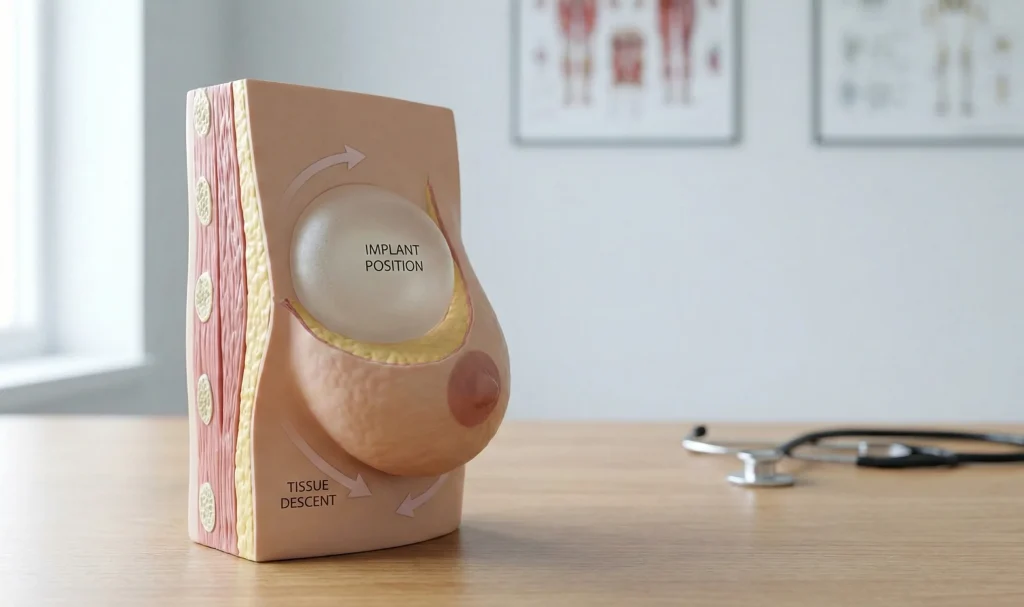
Let’s say you are one of those few women whose implants do not rupture over 40 years, still, there is another factor that matters: your own aging body tissue. While your implants are not affected by gravity, your skin is.
Implants are constant in their weight and shape. With age, the natural breast tissue becomes thinner, the skin loses collagen and elasticity, and as a result, the natural breast tissue sags due to gravity. The implant, however, most of the time stays in the upper part, being held in place by the scar capsule. It is the situation when the so-called “double bubble” or “Snoopy nose” comes into being. The implant protrudes from the chest wall as a shelf while the natural breast tissue droops off it.
By never performing implant replacement or adjustment, you basically are left with the volume of breasts of a person who is 20 years old but with the skin envelope of a 60-year-old. Only rarely can the result be considered harmonious. The majority of women who keep their implants for a very long time eventually seek surgery not because they have a problem with the device but because the aesthetic mismatch has become so blatant that it cannot be covered with clothes.
Calcification: Turning Soft to Hard
A further outcome of the “forever” ideology is the stiffening of an internal bodily reaction. A tight pocket of scar tissue surrounds every implant. After many years passed, this living tissue can get calcified. Hence, the body deposits calcium crystals, which turn the previously soft and flexible scar tissue into a hard shell resembling an eggshell.
This is generally the final stage of an outdated implant. There can be a scenario in which a woman completely neglects her breast implants for 30 years but, sooner or later, the implants will become extremely hard and cold to the touch, and whatever discomfort may even turn into pain. In this way, the body is isolating an old foreign object. Even though this is not a condition that threatens the life of the woman, it can make mammograms harder and coitus less pleasant.
The Verdict: Monitor, Don’t Ignore
So what is the solution? Is it true that one has to undergo surgery right after the expiration date of his/her warranty? Certainly not. However, you are not allowed to have a “set and forget” attitude. On the condition that you do not want to replace your implants preemptively, you must be committed to active surveillance. This includes ultrasound or MRI scans, which will gradually check the shell’s state.
At Lin Europe Clinic in Istanbul, Turkey, we are experts at handling the breast implants’ life cycle. Our many international patients who have been with us after their implants for 20 or 25 years are often quite ready to swap their old devices for new and safer ones, or have their breast implants removed and raised. In addition, the surgeons at our disposal are skilled at removing old, calcified capsules (capsulectomy) and dealing with silent ruptures, thus making it possible for you to start afresh.
Turkey has become widely recognized as the country to come for these revision procedures because of the combination we offer between high-tech diagnostic imaging and our advanced surgical techniques, all in a patient-friendly environment. No matter whether you want to hold on to your implants for another decade or replace them immediately, what really matters is that you are fully informed. Don’t let “never” become ”neglect”.
Frequently Asked Questions
You may not be aware that your implant has ruptured if it is a “silent rupture”. The chances of silicone migrating to the lymph nodes and capsular contracture are also increased. Visually, the implants will most probably appear to be a mismatch to your aging body over time.
Physically it could be done, but statistically the chances are that over 40 years you will have had a complication of some kind. The chances of rupture increase by approximately 1% each year.
No, silicone and saline shells do not dissolve. They probably degrade over time and eventually crack, but the material stays in your body until you get it out surgically.
You don’t have to rush to the hospital immediatey. However, it would become more dangerous if you left it for several years. The silicone may escape into the adjacent tissues, which will result in the formation of scar-balls and tissue inflammation that are very difficult to get rid of.
Yes, it is actually a very popular choice. Nonetheless, since your skin has been stretched for 20 years, it is almost a certainty that you will need a breast lift (mastopexy) performed simultaneously to remove the extra skin and to reshape your breast.
Food and Drug Administration. (2020). Breast Implants: Local Complications and Adverse Outcomes.
Handel, N., et al. (2006). Long-term safety and efficacy of polyurethane foam-covered breast implants. Aesthetic Surgery Journal.
Hillard, C., et al. (2017). Silicone breast implant rupture: A review. Gland Surgery.
Spear, S. L., & Baker, J. L. (2011). Classification of capsular contracture after prosthetic breast reconstruction. Plastic and Reconstructive Surgery.