Liposuction is generally less painful.
The Nature of Surgical Pain and Tissue Trauma
If you are contemplating body contouring surgery, being educated about the expected level of discomfort post-operatively will play a major role in how smoothly you recover. To some extent, each person’s threshold pain tolerance differs; however, one fact that is quite evident after having an operation, the level of pain depends mainly on the extent of structural changes and the type of surgical manipulations involved in the process including major tissues’ removal and deep muscles’ work.
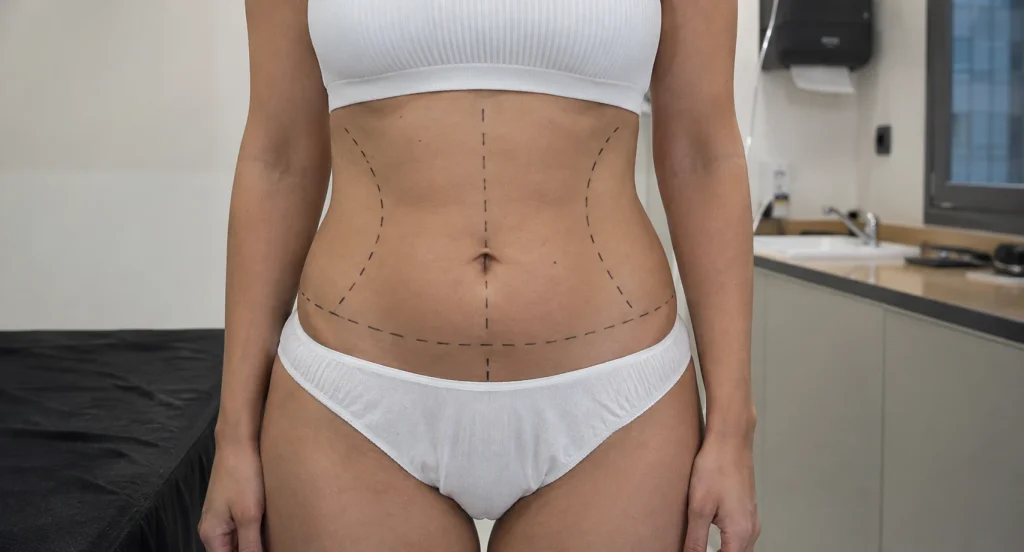
Liposuction can be described as a procedure that minimizes a lot of the pain. On the one hand, we can imagine liposuction as a surgery that removes localized fat deposits through small incisions; there is very minimal disruption of the skin and underlying muscles. On the other hand, abdominoplasty, or simply tummy tuck, is a much bigger surgical procedure that involves the removal of a considerable amount of skin and tissue, the tightening of the abdominal muscles, etc. Due to the fact that tummy tuck is a big reconstructive plastic surgery procedure, there is a lot of cutting, and the wound will be longer; hence, the patient is going to experience significant pain and discomfort both during waking up and after the recovery period, which can be longer than that of liposuction.
Liposuction Discomfort: Deep Bruising and Muscle Aches
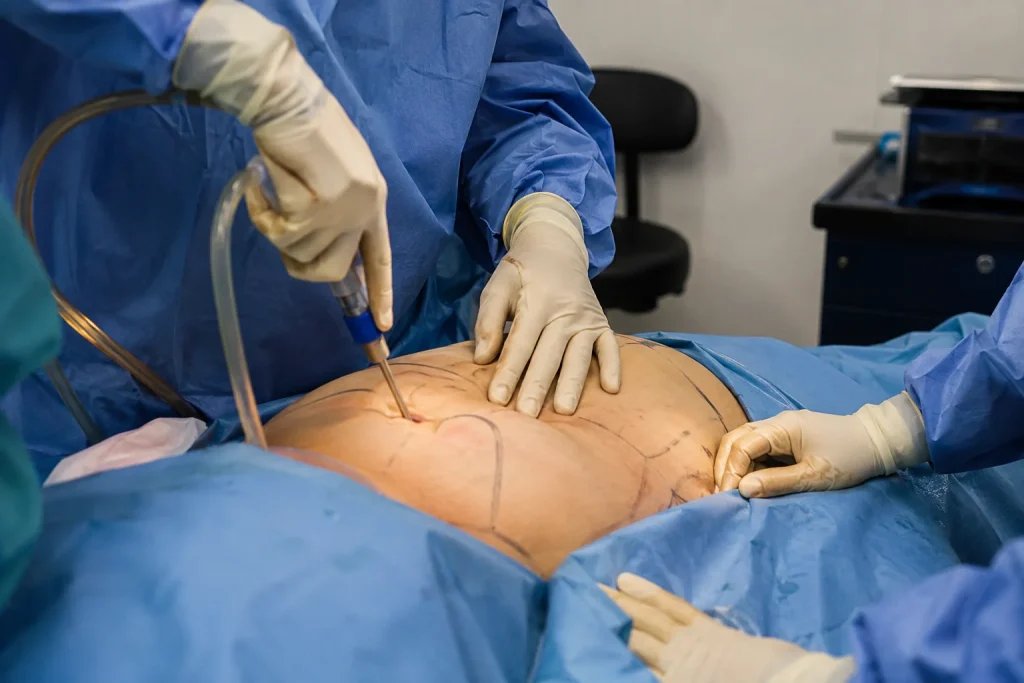
Understanding how liposuction would feel in terms of postoperative soreness could be compared to getting a very thorough gym workout. By making small incisions into your skin, your surgeon is able to move the cannula between the fat layers, which results in breaking up fat cells to be removed. The fat is removed through tiny incisions; therefore, the surgeon is able to work the fat out while minimizing cutting and stitching.
The abdominal muscles are not affected at all by the liposuction surgery; therefore, the pain resulting from the operation is very rare. Most patients say that the liposuction recovery feels like a very deep bruise (especially if done to the thighs!) or like the type of pain experienced after a super intense, long-duration exercise where very heavy weights were used. This type of discomfort is felt in different regions and is quite dull, and patients say it peaks the first three to five days, especially when doing things like bending, stretching, or getting up from a lying position, but it decreases rather fast and can be managed only with rest and normal over-the-counter painkillers.
Tummy Tuck Discomfort: Muscular Tension and Incisional Pain
Absolutely different in terms of the level and the manner of pain is the case of a tummy tuck recovery because this procedure is essentially an abdominal repair that includes not only the removal of skin but also the repair of muscles to restore a tighter and flatter lower abdomen. What really causes the most uncomfortable sensations after a tummy tuck is not the main long surgical cut from one hip to the other that you’re going to see. Surprisingly, to some extent, the biggest source of pain post-tummy tuck is actually internal.
Specifically, it is after the surgeon has reconnected the separated muscles (a procedure called rectus abdominis plication) that a powerful feeling of tightness, pressure, and the sensation of being pulled in a particular direction develops every time the muscles in the core are contracted. During the first several days, you’ll feel quite an uncomfortable ache when doing very simple things like coughing, laughing, getting up, or even trying to get straight upright. Because of that, tummy tuck patients will find out that they have to walk hunched over for a while in order not to place any strain on the newly repaired abdominal muscles. This will make those few days before the tummy tuck recovery gets easier a lot physically demanding and, hence, more painful than a liposuction procedure.
Preserving Structural Integrity and Post-Operative Boundaries
Very strict post-operative behavior rules need to be followed for individuals who want nothing less than the best surgical results combined with the utmost safety during the recovery period. On the one hand, the very big abdominal wounds you will get after a tummy tuck are going to be healed with the aid of the formation of firm collagen and fibrin bonds. On the other hand, in the case of liposuction, where a lot of internal pathways have been made between the fat removal sites, which also need to be protected, the same mechanism is in place. However, both types of healing are critically dependent on completely avoiding any mechanical stress being placed on the newly repaired tissue in the form of walking, bending, etc., that may lead to shifting the tissue around and resulting in pain from tissue irritation.
In order to prevent your healing body from pain while you are trying to heal yourself after a surgery, it is recommended to wear an abdominal compression garment or medical-grade binder for the first 4 – 6 weeks. These kinds of garments will help prevent fluid buildup (seromas), which may happen without dead space, and most importantly, they will help decrease pain by preventing tissues from touching or jarring during movement. Additionally, the post-operative care of a tummy tuck involves sleeping in a “beach chair” position while bending the knees, i.e., a flexed posture, which is a bit strange to get used to, but it is vital for preventing a lot of pain from getting on the incision areas through physical strain from standing straight in the first week or two.
Liposuction vs Tummy Tuck
The choice of going for a tummy tuck or simply undergoing liposuction is not an easy one. However, at LIN Europe Clinic, we can say that we are a place where every detail of plastic surgery has been covered so well and with such high standards of care that your face, deep muscle repairs, liposuction-abdominoplasty, and body soft-tissue changes can be transformed into an absolutely great midsection without any worry. We believe only the right environment, equipped with the best equipment and an experienced team, has the power to combine thorough clinical expertise with warm, empathetic care to deliver a surgical plan without compromises.
We have set up LIN Europe Clinic in Turkey not only to cater to the needs of local patients but also for international visitors who seek the most beautiful transformation of their bodies without compromising their physical security and integrity. The reason why LIN Europe Clinic has gained a very strong reputation in advanced body sculpting is mainly due to the fact that we have an unmatched combination of medical staff whose expertise is at the forefront and a caring atmosphere for patients. It is in this calm and welcoming space that our patients find the best care for their health plans in strict line with the very latest, globally accepted patient safety regulations.
FAQ:
Liposuction definitely gives the least discomfort compared to a tummy tuck procedure. That is basically because, unlike a tummy tuck, liposuction just extracts the fat; there is no cutting or any tightening of the muscles. As a result, the recovery time for liposuction is quicker, and there are very few instances of serious pain.
Most people say the pain from liposuction is not sharp at all. They say the sensation is a deep muscular pain that is similar to a severe muscle workout or a very heavy bruise that has gotten deep into the muscle.
This is due to the fact that a tummy tuck involves repairing the stomach muscles that are separated (diastasis recti repair). This ‘corset’ from the inside tightens up a lot when you get up, laugh, cough, or even just when you move your body. The result is pain and tightness that is felt in these areas that can be very sharp.
The period between the 3rd and the 5th day after being hospitalized is when you will feel the most uncomfortable with your tightness. By day seven, you’ll still have some minor pain but you can go about your daily routines more comfortably, as your posture will be much straighter by that time.
A medical-quality abdominal band, when used after surgery, will help hold tissues tightly in place, thereby eliminating or preventing painful movement. This results, in the case of both surgical procedures, in a remarkable decrease in the level of pain to the patient by minimizing the pulling of the internal stitches whenever the tissues move around.
Gunter, J. P., & Rohrich, R. J. (1987). Management of abdominal wall laxity, pain mitigation in diastasis recti repair, and subcutaneous tissue sculpting. Plastic and Reconstructive Surgery, 80(2), 161-173.
Toriumi, D. M. (2006). Structural body contouring: Comparing surgical invasiveness and post-operative pain profiles between liposuction and excisional abdominoplasty. Facial Plastic Surgery Clinics of North America, 14(4), 289-301.
Rohrich, R. J., et al. (2014). Advanced postoperative care, deep fascial tissue elevation, and pain management protocols in body contouring. Aesthetic Surgery Journal, 34(5), 587-595.