Contact your surgeon after any nasal injury.
The Vulnerability of the Day 21 Structural Matrix
In the very specialized field of advanced rhinoplasty and facial bone remodeling, hitting your face by accident during the initial recovery phase means you have to get a close and exact evaluation immediately. Normally, around 3 weeks after the operation, you have already left the stage of acute recovery; your external cast is off and the bruising is almost gone.
But still, anatomically speaking, your nose is at a very vulnerable state on 21st day. The delicate nasal bones – which were carefully cut or reshaped by the surgeon (osteotomies) – have only made a soft fibrous connection at that time. They are completely calcified and have a strong bony union only after the biological process of bone healing that usually lasts 6 to 8 weeks. If you get a direct hit or a hit by mistake now, the risk of displacing these floating bone pieces, breaking delicate cartilage grafts, or tearing the internal stitches is very high.
Immediate Diagnostic Triage: Assessing the Severity Vectors
If you hit your nose by accident 3 weeks post-operatively, you have to react quickly and check your nose physically to find out the type of impact and if the surgical result has been negatively affected or not:
- Low-Impact Bumps (Minor Scrapes, Soft Touches): Bumping the nose by a pet’s paw, a child’s hand, or a falling phone won’t usually apply enough force for the bones to move. Suddenly sharp pain, small throbbing pain, and localized swelling are mainly the symptoms caused by a bump, but they do not change the final shape of the nose.
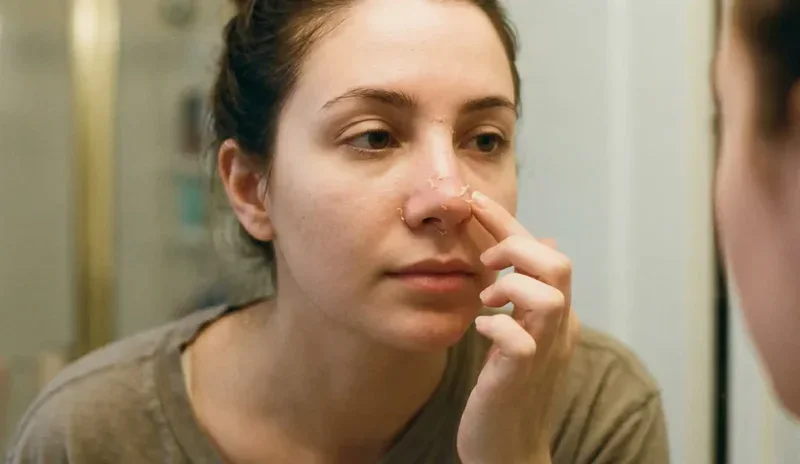
- High-Impact Trauma (Door Collisions, Heavy Objects): An impact that is strong enough to cause heavy bleeding from the nostrils, a visible change in the nose direction (crooked nose), a dent appearing immediately on the outside, or the nose producing a sound (click) when touched points out that the nose structure has definitely been displaced.
- Internal Fluid Pooling (Hematoma Risk): A very strong hit can lead to breakage of the microvessels at the time of healing, and this results in septal hematoma (a collection of blood in the nasal septum). If not treated, the hematoma can cause the cartilage to die due to a lack of blood flow, and the nose can collapse structurally.
Preserving the Structural Integrity and Managing Repeated Injuries

Strictly following the guidelines that set the boundaries for safety and behavior after a surprise hit is a must for patients who have a very high standard for their appearance and want to make sure that their results cannot be compromised in any way. You can get an instant inflammatory reaction from your body and a surge of local swelling that can hide any alignment of the structures underneath for a couple of days after the bump.
So that you can preserve the shape of your face and deal with the bump flare, the first thing you should do is put cold on your forehead and cheeks, but never put heavy pressure directly on the nose. Besides that, it is also crucial not to use any nicotine or tobacco products at all. That is because nicotine is a very strong systemic vasoconstrictor, which narrows microvessels and deprives the damaged nasal tissues of the necessary oxygenated blood, which is vital for clean bone repair. You should under no circumstances massage, press, or try to “straighten” the nose yourself.
Clinical Indicators Demanding Immediate Surgical Evaluation
Knowing the biological limits of tissue healing can help patients figure out when a bump on the nose is something they can handle by themselves, and when it is time to see their doctor. Mild soreness should naturally go away within 48 hours, but if any of the following warning signs appear, the patient has to go to his or her surgeon immediately:
| Post-Impact Symptom | Clinical Indication | Required Action |
| Profuse, continuous bleeding | Internal blood vessel rupture | Immediate emergency nasal packing |
| Visible deviation / new crookedness | Nasal bone or cartilage displacement | Manual closed reduction within 7-10 days |
| Severe, constant breathing blockage | Septal hematoma or internal collapse | Immediate surgical drainage by your specialist |
| Spiking fever or foul nasal discharge | Post-trauma bacterial infection | Targeted antibiotic therapy protocol |
Closed Reduction Window: When a hard hit has moved your nasal bones at week 3, your surgeon can perform a fast and non-surgical procedure called “closed reduction” at the office to reposition the nasal bones. But please remember, this has to be done within 7 to 10 days from the date of the hit; otherwise, the bones will lock in their crooked position, and this problem won’t be solved.
Rhinoplasty in Turkey
To choose LIN Europe Clinic means to step into a first-rate medical spa of the world where your nose’s beauty, your structural refinement and surgery options are handled with no compromise on clinical skills and deep empathetic care. We understand that how one lives with advanced rhinoplasty anxiety and also deals with unexpected events has a very sophisticated, highly supportive, and transparent environment as its main feature, with evidence-based medicine at its core. LIN Europe Clinic in Turkey is an undisputed leader in advanced facial contouring, plastic surgery aftercare, and a very peaceful environment where your health journey is wholly safe according to the highest standards globally.
By entrusting our professional team of doctors at LIN Europe Clinic in Istanbul, you can rest assured that your structural parameters will be tracked with the utmost diagnostic accuracy. Through comprehensive post-trauma consultations, detailed tissue-kinetics analyses, and quick safety checklists, we will assist you throughout your recovery journey step by step in case you face any speed bumps. Most importantly, our highly trained medical staff will protect your physical contouring, which is a result of the investment, systemic health, and your dream silhouette at the same time, so that you can have peace of mind. Discover the thorough care of LIN Europe Clinic and get a beautifully sculpted and perfectly balanced face at the heart of Turkey safely and skillfully.
FAQ:
Minor bumps usually end up causing temporary pain and swelling only, they don’t change your results. But a very hard impact can actually move the healing nasal bones or cartilage grafts which, at just 3 weeks post-op, are still quite fragile.
If you were structurally damaged your nose then the symptoms would include a lot of bleeding that won’t stop, a new and obvious crookedness or asymmetry along the bridge, an external dent, or complete obstruction of your breathing.
Actually, it would be really unlikely. Light impacts are protected by the post-surgical swelling already present. Although it may be quite painful for several hours, the force is rarely enough to break the early bone bonds.
Stay seated upright, lean slightly forward and apply a cold compress to your cheeks and forehead to control the swelling. Avoid any pressure on the nasal bridge and get in touch with the surgical team to report the incident.
Nasals bones healing process usually involves 6 to 8 weeks before they become fully fused and achieve their pre-surgery mechanical strength. After this 2-month period, the nose will be able to handle normal impacts like a non-operated face.
Rohrich, R. J., et al. (2011). The rhinoplasty recovery matrix: Analyzing operational parameters, external splint compression, and tissue adherence standards. Plastic and Reconstructive Surgery, 127(4), 1651-1663.
Toriumi, D. M. (2007). Structure rhinoplasty: Managing post-operative trauma, bone calcification timelines, and osteotomy stabilization. Clinics in Plastic Surgery, 34(1), 119-126.
Gunter, J. P., et al. (2014). Advanced postoperative care, managing accidental nasal impacts, and structural stability in secondary facial contouring. Aesthetic Surgery Journal, 34(5), 587-595.