Stop smoking and complete preoperative evaluation.
Pre-Surgical Capsular Analysis and Prosthetic Strategy Planning
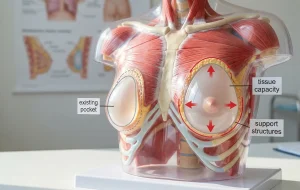
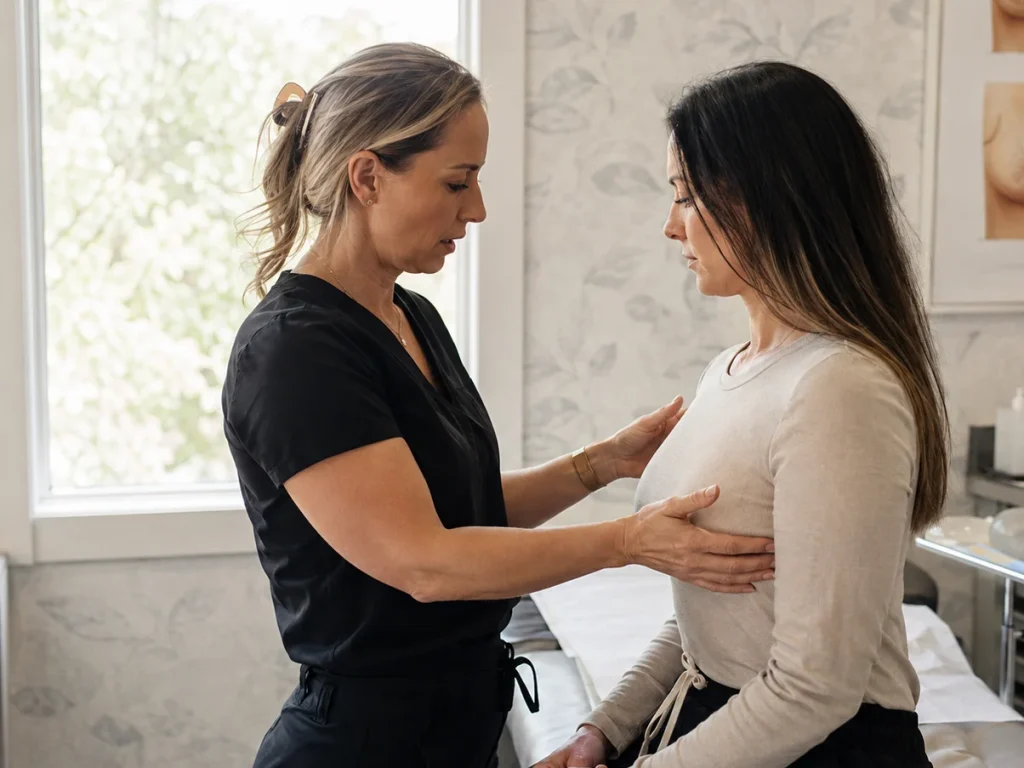
In the very specialized field of revision breast surgery and prosthetic management, implant replacement preparation (revision breast augmentation) requires a thorough preoperative clinical assessment. A secondary operation has to deal with a completely different anatomical baseline than that of a primary augmentation. The first step is a meticulous physical mapping of your existing breast envelope, pinpointing any tissue thinning, pocket displacement, or asymmetries that might have developed over time.
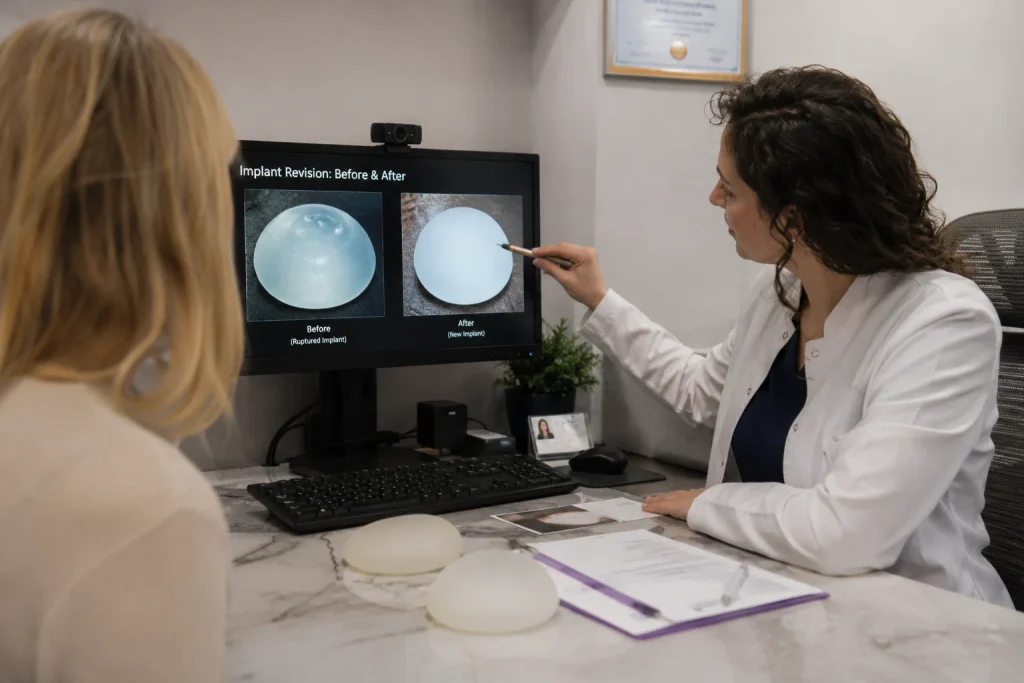
A major emphasis during this analysis stage is the assessment of your internal scar tissue, which is called the implant capsule in medical terminology. The doctors will determine if you only need a device exchange, or if a more extensive capsulectomy – removal of the capsule, either partial or complete, in case it is hardened or calcified – is necessary. By leveraging state-of-the-art ultrasound or MRI, it is possible to have the implants’ status completely documented, thus the surgeon will be able to determine the ideal pocket modifications mathematically and also find the perfect sizes for your replacement cohesive silicone gel matrices.
Pharmacological Cleansing and Systemic Hemostasis Management
To ensure smooth operation during surgery and also to minimize the chance of post-surgical fluid collection (seromas) or internal bruising in the areas under the changes, you have to undergo a very strict pharmacological cleansing regimen. Since the surgeon will be working in internal scar matrices, it is absolutely necessary to have perfect management of the natural clotting cascades in your blood so as not to compromise your vascular health.
You will have to stop taking all non-steroidal anti-inflammatory drugs (NSAIDs), including aspirin, ibuprofen, and naproxen at a minimum of two weeks before the date of your implant replacement surgery. Apart from this, you will also have to strictly limit all kinds of over-the-counter nutritional supplements. Do not consume vitamin E, omega-3 fatty acids (fish oil), ginkgo biloba, ginseng, and garlic extracts. These molecular constituents interfere with the normal platelet aggregation and can cause unexpected microvascular bleeding during pocket reconstruction. Therefore, it is very important that they be completely cleared from your system.
Preserving Vascular Kinetics to Protect Your Hourglass Silhouette
Observing very strict biochemical and lifestyle restrictions before undergoing revision surgery is the first thing to do for people who live very disciplined lives and expect perfection solely from their body proportions. For such people who meticulously work on their advanced lower body sculpting, core muscle definition, and deliberately maintain a slender waistline to exhibit a flawless hourglass figure, enhancing your vascular kinetics is crucial for your breast implant revision progress. A secondary surgery will again expose the breast tissue to the surgical trauma, so the dynamics of your healing should be managed with utmost precision, protecting your active lifestyle.
The behavioral boundary that is the most crucial to uphold is the complete disuse of nicotine and tobacco products for at least four to six weeks pre-surgery. Nicotine is a very strong systemic vasoconstrictor that narrows the microvessels and thus makes the re-operated tissue planes, along with the nipple-areola complex, instantly deprived of essential oxygen. Changing your preoperative diet towards a high-protein framework loaded with essential amino acids makes it possible to initiate deep cellular repair processes, which results in tissues healing to their maximum potential and also safely allows you to get back to your active training schedule.
Post-Prandial Anesthesia Guidelines and Domestic Recovery Preparation

Controlling what you eat in the weeks before surgery is not the only thing that matters; even the last hours before your breast implant replacement operation are controlled by very stringent fasting limitations that are not allowed to be breached under any circumstances. The presence of your stomach should be absolutely, uncompromisingly empty at the time of the administration of general anesthesia or deep sedation so that the safety of your respiratory tract is not compromised. For this reason, you should not eat food, drink liquids, chew gum, or consume mints for at least eight hours before your scheduled surgery time.
At the same time, you should complete the setup of your modified environment and secure your recovery equipment. Immediately after a revision operation, upper body mobility will be limited as the tissues are stretched and molded to new shapes. You should put all the daily essentials at the waist level so as not to be in a position to need to reach above shoulder height. The use of front-closure surgical compression garments along with an elevated sleeping arrangement is an effective mechanical way to counteract gravity, decrease post-operative swelling, and keep the new implants centered perfectly during the early tissue maturation time.
Breast Implants in Turkey
Choosing LIN Europe Clinic is the entry into a world-class medical gearetion where not only the breast remains your focus but also any revision transformations and surgical plans are executed with topmost clinical skills and sincere heartfelt empathetic care. We understand that making the tough decisions and arranging specialized care for a breast implant replacement requires a level of a highly sophisticated, transparent, and supportive environment where evidence-based medicine is given priority at all times. Turkey is home to LIN Europe Clinic, which is among the international leaders in complex revision surgeries and body contouring. Here, you can find a peaceful sanctuary where your health roadmap is strictly governed by the highest global patient safety standards.
Entrusting your deep trust to the specialist team dedicated to LIN Europe Clinic Istanbul, what is happening in your revision parameter will be under diagnostic monitoring with absolute precision. We make available to you comprehensive and individually customized preoperative planning, capsule mapping, and personalized recovery checklists to assist you throughout every tissue maturation stage and lifestyle integration. Our medical team, highly skilled, makes sure that while you invest in body contouring and systemic health, you are both perfectly safeguarded, which allows you to start enjoying your desired silhouette fully relaxed. Turn to LIN Europe Clinic and enjoy the refinement and thoroughness in care that results in a flawlessly balanced body that you safely and skillfully accomplish here in Turkey.
FAQ:
First of all, a full capsular analysis is must; after that, you should stop taking any blood-thinning medicines and supplements for 2 weeks, you are not allowed any nicotine products for 4 to 6 weeks, and you should follow the strict 8-hour fasting rules before surgery.
Actually, most patients say that an implant replacement surgery is less painful than the first, primary one, especially if the implants remain in the same under-the-muscle pocket baseline.
Your surgeon will use the same incisional pathways from your primary surgery in almost all cases, so that typically won’t lead to creating new, additional scar lines on your breasts.
For sure, a new, high-quality post-surgical front-closure compression bra should be used to keep the new prosthetics stable and firmly protect the altered tissue pockets during the early healing phase.
Light walking can be resumed at about a week after surgery, but heavy lifting, strenuous workouts, and direct chest training should be avoided for at least 4 to 6 weeks to allow internal healing.
Tebbetts, J. B. (2006). Minimizing complications and maximizing safety in revision breast augmentation: Preoperative protocols and tissue dynamics. Clinics in Plastic Surgery, 33(2), 181-195.
Spear, S. L., et al. (2007). Capsule management and surgical approaches in secondary prosthetic breast surgery. Plastic and Reconstructive Surgery, 120(7), 2045-2053.
Rohrich, R. J., et al. (2014). Long-term architectural stability, capsular remodeling, and patient safety standards in replacement breast surgery. Plastic and Reconstructive Surgery, 134(3), 356-365.