
Children can have otoplasty after age five.
Auricular Cartilage Development and Biological Milestones
So much time and energy are spent in pediatric plastic surgery and craniofacial reconstruction techniques on deciding the best time for an otoplasty (ear reshaping or pinning) that it basically boils down to the determination of when the cartilage is mature enough. If we compare the ear to other parts of the face that continue to grow and change shape during the teenage years, then the ear is developed quite rapidly in the early years.
According to studies on human morphology, the ear attains about 85% to 90% of its adult size and proportion already between ages 5 and 6. At this stage, the auricular cartilage has gained enough stiffness, thickness, and resilience to be able to perform the retentive sutures permanently without the risk of the tissue tearing. If the operation is done before the cartilage maturation is finished, there is a significant biological risk of interfering with ear growth, so early childhood is the best physiological stage for the procedure.
The Psychological Framework and Social Timelines
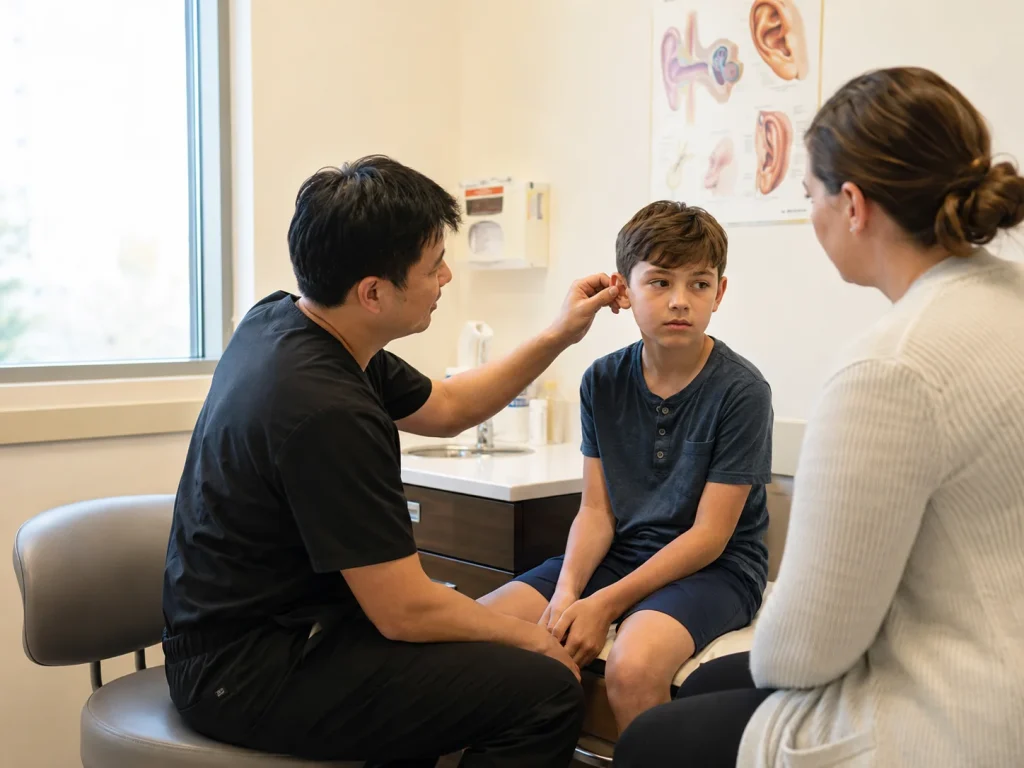
Psychosocial considerations also play a very important part in the decision of when to do a pediatric otoplasty. When children first enter social groups like kindergarten or primary school, they start to spot differences not only in their own features but also in those of others, and there is the social factor of peer pressure.
Doing the otoplasty around the ages of 5 to 7 enables parents to fix the problem of protruding or uneven ears before the child runs the risk of getting teased by peers or suffering from social exclusion. This also gives the child a strong psychological boost, as they will start school years with increased self-confidence and a harmonious appearance. Dealing with the issue of the protruding ear at this moment means preventing any long-lasting body image problems from developing, which is a very forward-looking step for the child’s social adaptation.
Preserving Pediatric Tissue Kinetics and Post-Operative Safety
Strictly limiting the child’s activities during the very early stages of healing after the operation is necessary in order to achieve the aim of maintaining the new ear structure in the long term. Families who are really committed to giving their children a perfect recovery should be aware that, to some extent, it is the child’s behavior that determines their cognitive progress. Children are very lively, and it is quite common that, e.g., rubbing or hitting the healing ears, a child causes the internal Mustarde or Furnas sutures to rupture, a hematoma to form, and/or the blood circulation necessary for survival of the tissues to be compromised.
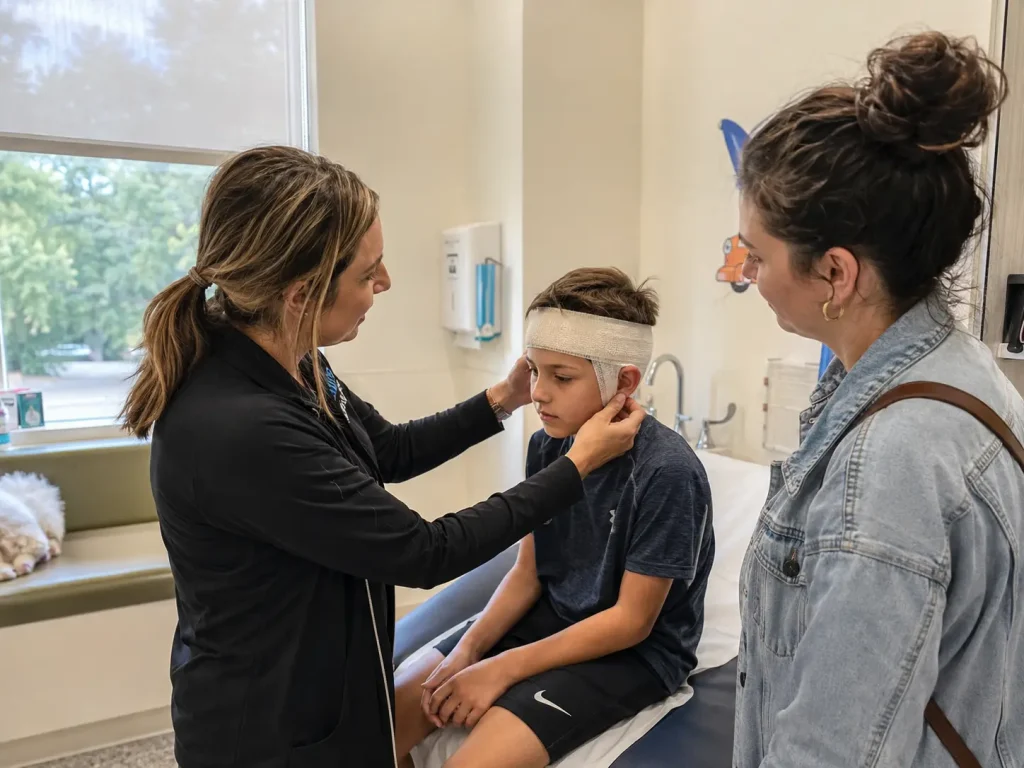
Therefore, in order to keep the cartilage in its newly set position, parents have to really want to let their child stay away from roughhousing, contact sports, and playground activities for four to six weeks at least. Also, the child has to be made to wear a supportive, soft compression headband when in bed. This mechanical barrier prevents all friction against the pillow, and at the same time, the ears are kept from bending forward during sleep, which is essential for the underlying tissue framework to heal in a structurally efficient way.
Anesthesia Optimization and Patient Cooperation Thresholds
Doing a pediatric otoplasty surgically requires skill in managing anesthesia and assessing whether the child is going to be able to cooperate with the medical personnel. While adult otoplasty is mostly done under local anesthesia with light sedation, general anesthesia is the safest way to go for children under 12 years.
The use of general anesthesia can guarantee that the child is still and comfortable during the operation that lasts between one and two hours, thus enabling the surgeon to handle the cartilage with the utmost precision. When children grow older or enter adolescence (about 10 to 12 years), they can tolerate a local anesthesia situation much better. When a child shows a great willingness to cooperate and is really determined to undergo the procedure, the surgical team can change the protocol and make the experience very smooth and free of stress.
Otoplasty in Turkey
LIN Europe Clinic is not just a place where surgical procedures are done; it is a haven of medical expertise where your child’s facial aesthetics, pediatric care, and surgical pathways are handled with the highest levels of clinical mastery and empathetic care. We understand that preparing a child both emotionally and physically for a procedure is a highly delicate process that requires transparency, support, and a focus on evidence-based medicine, above all else. LIN Europe Clinic in Turkey is recognized worldwide for its advanced facial remodeling and cosmetic aftercare, and it also provides a tranquil environment where your family’s health journey is regulated strictly by the highest global patient safety standards.
By entrusting your child’s surgical and recovery criteria to our team of highly skilled professionals at LIN Europe Clinic, Istanbul, we guarantee that your child’s surgery will be monitored with full diagnostic accuracy at all times. Our offerings include thorough, customized pre-operative instructions, pediatric consultations, and healing checklists specially designed to educate you through every step of your child’s tissue maturation and lifestyle integration. Along with our highly experienced medical professionals, you are assured that your cosmetic investment and your child’s overall health will be safeguarded fully, thus enabling you to relax and concentrate on your goals. Get to know the elegant, comprehensive services of LIN Europe Clinic and create a highly balanced work of art, safely executed in Istanbul, Turkey.
FAQ:
Otoplasty can be performed on a child as young as 5 or 6 years old, provided that their ear cartilage has grown to a size and structure approximate to that of an adult.
Certainly, otoplasty is a safe and common procedure that can even be done as an outpatient surgery for children. It is typically done by a facial plastic surgery specialist, and general anesthesia is used.
The reason for the delay until the child is 5 years old is that the ear cartilage must be sufficiently strong and thick to support the internal permanent sutures without risk of tissue tearing.
All incisions are made in the natural, deep folding behind the ear, and thus any scars will be invisible.
The majority of children are able to go back to school within a week after their surgical dressing is taken off. They should, however, avoid any contact sports for about a month.
Mustardé, J. C. (1963). The correction of prominent ears in children using simple inverted mattress sutures. British Journal of Plastic Surgery, 16, 170-178.
Gosain, A. K., et al. (2002). Auricular development and critical timing for pediatric otoplasty: An anatomical and psychological analysis. Plastic and Reconstructive Surgery, 109(5), 1669-1676.
Furnas, D. W. (1968). Correction of prominent ears by concha-mastoid sutures in the pediatric population. Plastic and Reconstructive Surgery, 42(3), 189-193.