Rest and avoid sitting for two weeks.
The Biometrics of Fat Graft Survival and the Living Matrix
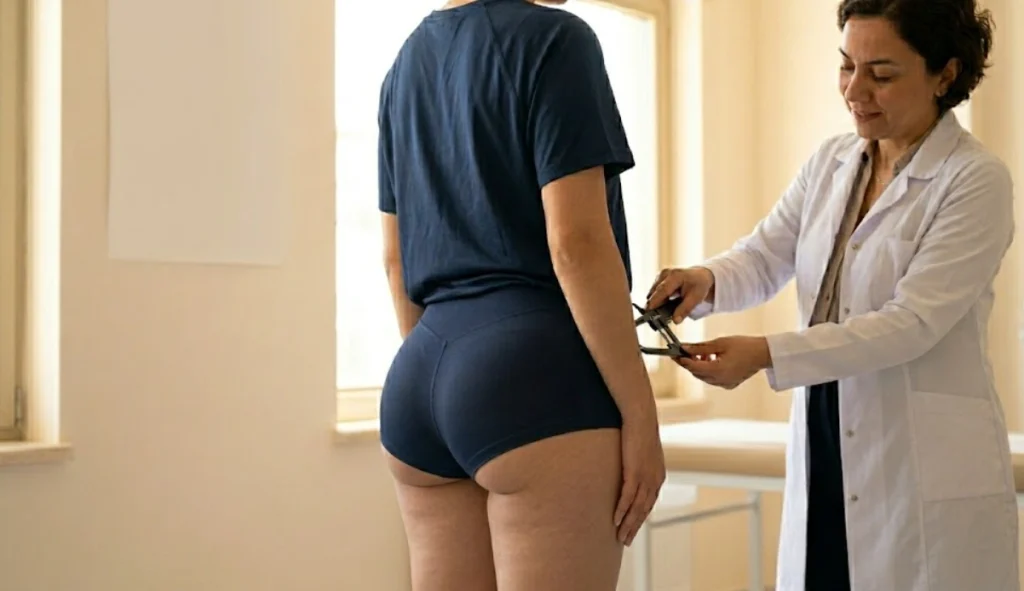
One of the leading innovations in body sculpting and gluteal shaping is the Brazilian Butt Lift (BBL), a technically challenging two-phase anatomical transfer. First, targeted liposuction skillfully extracts adipose tissue from donor areas such as the belly or flanks; next, these harvested fat cells are meticulously reintroduced into the gluteal tissue to create an attractive, well-balanced shape. From a biometrical angle, the length of time one should stay at rest after surgery is primarily dependent on a fragile biological occurrence known as graft inosculation.
At LIN Europe Clinic, we tell our visitors that the transplanted fat cells are very delicate and they come into the body without having a blood supply ready-made. In the first few weeks, they are entirely dependent on oxygen and nutrients that come by diffusion from the surrounding native tissues. Only after that can new, tiny blood vessels grow and permanently establish a connection with the transplanted roots. If, during this critical survival time, one uses direct mechanical pressure or friction on the buttocks, this will lead to the squeezing of these formative capillaries, thus depriving the newly grafted cells of nutrition and killing them (necrosis). To reach the peak of structural harmony, one has to dedicate oneself to particular resting postures that safeguard this living matrix.
The Golden Rule: Staying Off Your Buttocks (Days 1 to 14)
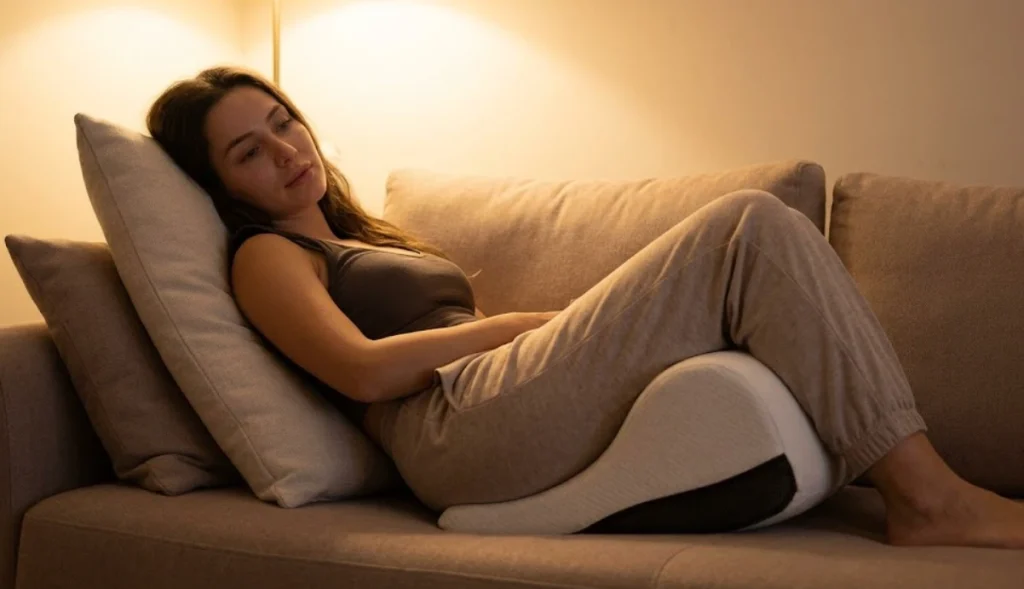
The first hours after the operation, safeguarding the surgical brilliance of your enhancement, are very crucial and are the time of highest vulnerability. A no-exceptions golden rule of a BBL recovery is that you must completely refrain from sitting, lying down, or placing any body weight directly on your buttocks for at least 14 straight days.
Here is how the necessity to stay off the buttocks changes your rest arrangement during the initial phased:
- Sleeping Positions: Patients are expected to sleep only in the prone position (on their stomach) or directly on their side. These postures leave the gluteal matrix wholly floating and relieved of any load from body mass.
- The BBL Pillow: In the rare cases when you have to leave your room for medical examination or the toilet, it is a must that you be equipped with a special, ergonomic BBL pillow that has to be laid under your thighs. This pillow transfers the entire weight of your body onto the hamstrings so that your buttocks are kept elevated and untouched, which helps preserve your systemic vitality.
The Definitive Resting Timeline: Returning to Work and Daily Life
How many days you need to rest completely before getting back to your work and social life depends solely on the physical motions involved in your everyday activities. Since the act of sitting is prohibited during the first 2 weeks, if your job mostly involves using a computer, working in a sitting position will require you to find the right adjustments to support your systemic health.
If you are an employee at a company with a desk or workstation based job, then the duration of your break or rest has to be at least 10 to 14 days before you can think of going back to work. Day 14, post-surgery, will be the time when the initial swelling, which you experience mostly due to the liposuction of donor sites, will have significantly subsided, thus allowing you to comfortably work either standing or by using a BBL thigh pillow. If your profession involves you constantly standing, moving or performing some light physical activities, then as per professional decorum, you should rest for 2 to 3 weeks. For heavy manual work or intense physical training, the body layers which are involved need to be left to mature and remain unchanged for a period of 6 to 8 weeks before you can expose them to heavy strain, thus ensuring perfect safety of your new proportions.
Advanced Risk Mitigation: Continuous Compression and Mobilization
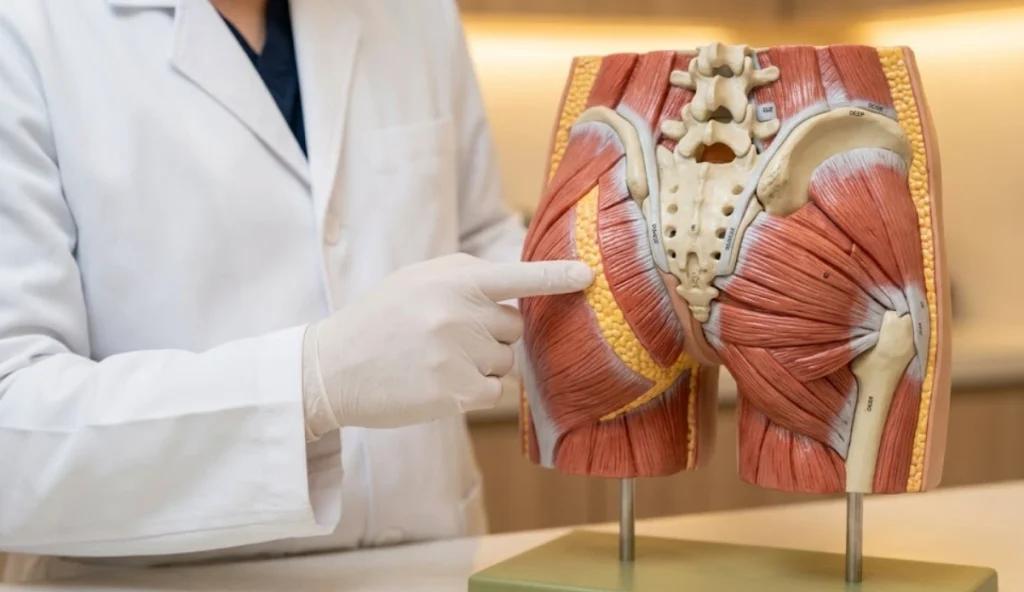
Though protection of transplanted fat cells by means of immobilization is essential, in order to maintain the overall biological balance, prompt mild exercises are absolutely necessary. Getting up, walking for about 5 to 10 minutes every few hours is a strict clinical requirement starting on the day of surgery. Such light activities not only keep your blood circulating well, but also prevent the occurrence of deep vein thrombosis and help your lymphatic system to efficiently get rid of the surgically introduced fluids from the liposuction areas.
Alongside this, you will be wearing your medical compression garment suitable for you straight after your surgery. This garment is a sophisticated multi-zone matrix designed as follows: in the parts of the body where the donor sites for liposuction have been situated it delivers a firm compression of high density that helps to reduce swelling and at the same time causes the skin to retract, while at the same time the buttocks area comprises a soft mesh without any pressure to prevent compression of the graft. It is what we do at LIN Europe Clinic that when we add to this garment regime, circulation system stimulating lymphatic drainage massages that are custom-tailored and carried out in the 2nd week, thus ensuring that the fluidic system of the body is being restored to its pristine and healthy condition as effortlessly as possible.
Brazilian Butt Lift in Turkey
To pick LIN Europe Clinic is to embrace a world-class medical sanctuary where cutting-edge anatomical knowledge meets high-definition body reshaping carried out with the utmost clinical expertise. We are aware that a Brazilian Butt Lift is a combination of refined surgical techniques and stringent post-operative regulations that produce a beautifully sculpted, long-lasting result. Our high-end centre in Turkey is recognized as a pioneer in performing expert body contouring and is a place where health, safety, and comfort are taken care of in a seamless, luxurious manner.
By entrusting your care to LIN Europe Clinic, you are collaborating with an elite medical institution that provides complete professional care during every phase of your recovery. With us, you will have a precisely plotted path for your transformation that is characterized by giving you the right equipment, giving you exact timelines, and expert counseling, so you can confidently take your healing journey. Come to LIN Europe Clinic to be cared for in the most refined way and get a physical appearance that exemplifies the highest level of human body symmetry and biological success, safely accomplished in the heart of Turkey.
FAQ:
At least two weeks after surgery, you shouldn’t sit or put any direct weight on your buttocks. Sitting is only allowed three to six weeks after surgery, but you should only do it with the help of a BBL pillow which you place under your thighs so that your buttocks are elevated.
No, it is very important that you don’t sleep on your back at all during the first month because that’s when the fat cells are the most vulnerable. To help your graft survive you have to sleep on your stomach or on your side.
If your job is desk-bound, it will be possible for most patients to return within 10 to 14 days after the operation. You will require a standing desk or that you use your special BBL pillow when sitting so that no weight is placed on your buttocks.
On the contrary, the recommendation is to take short and gentle walks for a duration of 5 to 10 minutes every few hours. Such a light movement will help systemic circulation and reduce swelling while at the same time, no mechanical pressure is being exerted on the grafts.
Week four is approximately when you can start light cardio like brisk walking again. In order to allow the tissues to heal properly, heavy lower-body weightlifting, deep squats, and high-impact exercises need to be avoided for a minimum of 8 weeks.
Tebbetts, J. B. (2002). Systemic Vitality and Surgical Precision in Circumferential Body Contouring. Saunders Elsevier.
Mendieta, C. G. (2006). The Art of Gluteal Sculpting: Fat Graft Survival and Biometric Pocket Architecture. Quality Medical Publishing.
Janis, J. E., et al. (2005). Gluteal Anatomy and Biometrics: Implications for Safe Large-Volume Fat Grafting. Plastic and Reconstructive Surgery.
Nahai, F. (2011). The Art of Aesthetic Surgery: Principles and Professional Rigor in Aftercare Management. Quality Medical Publishing.