Yes, rapid weight loss increases gallstone risk.
Further Understanding the Bile Saturation and Rapid Fat Metabolism
In the field of metabolic repair, the link between bariatric surgery and gallstone formation is a recognized clinical fact during the journey to a sculpted body. Rapid weight loss—the main aim of bariatric surgery—sets off a strong and lengthy fat breakdown phase from a biometric point of view. As the body draws on fat reserves to meet the new energy deficit, the liver has to handle a huge load of fats, thereby releasing large amounts of cholesterol into the bile.
According to Lin Health Europe Clinic, this sudden and continuous flood may break down the natural balance of the gallbladder quite drastically. Bile that is overloaded with cholesterol loses its liquid quality and a few cholesterol monohydrate crystals start to form. Eventually, the accumulation of these crystals results in the development of gallstones or cholelithiasis. Such a change in biochemistry is a necessity for one’s body to move to a more refined state, only it demands that you keep track of your systemic health very carefully between six and twelve months of intensive weight loss, since this time frame corresponds to the highest metabolic stress of the biliary system.
The Role of the Digestive System and Gallbladder Function

Reaching digestive system harmony after surgery is about much more than reducing the stomach volume; coordinating the working pattern of the gallbladder as a bile reservoir is equally important. Often, post a stomach reduction, the cut down in both caloric density and fat component of the diet leads to a significantly lowered gallbladder contractility, which poses a secondary problem in terms of biometrics. Under usual conditions, CCK hormone is released by the small intestine in response to the ingestion of fats, which leads to the release of bile through the bile duct by triggering the contraction of the gallbladder. However, the reduced frequency with which the gallbladder is triggered to release bile might possibly be one of the effects of consuming smaller, highly processed meals post-surgery.
When bile is kept for a long time in the gallbladder, it turns very concentrated, thus generating “biliary sludge,” which is the first sign of stone formation. From a health perspective, not being able to move the bile properly is the major biometric threat to your systemic health. In our Istanbul retreat, we uphold professional rigor in counseling our patients regarding the timings and portions of meals and ensuring that good fats are constantly part of the diet.
Cutting-Edge Medicine: Drug-Based Prevention Strategies
In order to safeguard the systemic health and overall well-being of our patients, we employ the most advanced medical technology in the treatment of the biliary system. Many of our clients are required to follow a structured treatment with Ursodeoxycholic acid (Ursodiol) during the initial, most intensive phase of high-definition weight loss. The drug works to reduce the amount of cholesterol in bile and to dissolve the crystals before they can become solid stones, since it is a potent biometric stabilizer.
Going down this path shows a clinical expertise which is capable of handling difficult metabolic changes within the whole digestive system. It is through the stabilization of the biological balance of the bile acid pool that the risk of the post-operative gallbladder problems that could jeopardize your weight loss is negated. The professional care at Lin Health Europe is of a level that also involves the monitoring of your blood biometrics and liver function, so that nothing is left to chance.
Risk vs. Prevention in terms of Biometrics
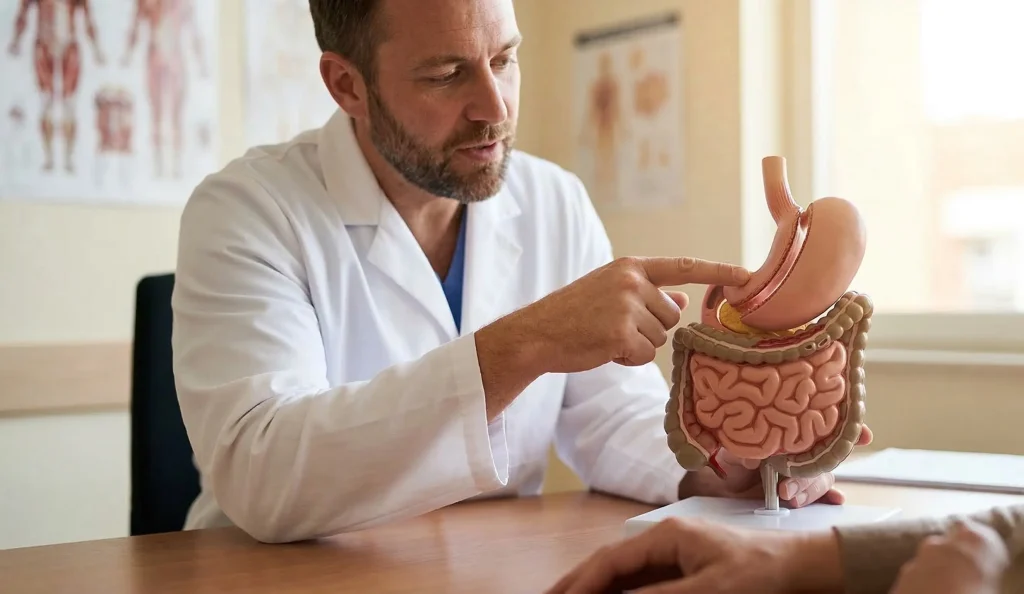
To effectively manage your metabolic changeover, a thorough knowledge of how the major surgical outcomes and these secondary biological effects interrelate is necessary. Ideally, one would want to get to the highest level of weight loss without the biliary system losing its working capacity at the same time. Through the combination of taking medications and following a nutritional plan, we keep the entire upper gastrointestinal tract in structural harmony.
| Biometric Variable | Impact on Gallbladder | Clinical Management |
| Rapid Weight Loss | Increases cholesterol saturation in the bile. | Pharmacological support (Ursodiol) for 6 months. |
| Low Caloric Intake | Reduces hormonal CCK signaling and motility. | Balanced nutritional pacing and lipid monitoring. |
| Bile Stasis | Promotes the development of biliary sludge. | High-definition hydration and activity protocols. |
| Systemic Vitality | High demand on liver processing and detox. | Absolute pinnacle of vitamin and mineral support. |
With professional care, these elements can be controlled so that your systemic health stays strong throughout your body reshaping. Lin Health Europe Clinic is a beacon in preparing complete charts which tackle both the beauty and the functionality needs of bariatric healing, making sure that every biometric signal is geared towards a wholesome and lively existence.
Stomach Reduction Services in Turkey
When you decide to have your surgery at Lin Health Europe Clinic, you are opting for the best facilities worldwide that will oversee your bariatric path in an extraordinary way, leaving nothing to chance as far as your quality of life is concerned. We understand that a stomach reduction is not just an operation but an opening to a more joyful and self-assured life, therefore we wish to make your health, physical appearance, and fitness at their maximum. Lin Health Europe Clinic in Turkey performs surgical excellence combined with high-definition recovery methods for the preservation of your biological balance through each phase of the weight loss journey.
Opting for Lin Health Europe Clinic is a vote of confidence in a healthcare system that is at the top of the game when it comes to combining a scientific understanding of the body with the highest level of patient safety. We look after your path with professional rigor to make sure that the outcomes you get are permanent, healthy, and in complete structural harmony. The sophisticated medical support offered by Lin Health Europe Clinic is available to you from the very first visit to the stabilization of your metabolism for the long term, allowing you to live a life that is a perfect representation of clinical excellence.
FAQ:
The reason is that when you lose weight quickly, your body burns a lot of fat, and the liver will produce more cholesterol and release it into the bile. This biological change can alter the balance so that cholesterol becomes solid and forms stones.
Previously, a few surgeons simultaneously performed a cholecystectomy (removal of the gallbladder) with a bariatric operation.
Sharp pain in the upper right side of the abdomen along with nausea or other signs of a decrease in the overall energy level are the most usual symptoms, especially after having a meal.
It is necessary to take bile acid stabilizers if prescribed and also to maintain a high level of hydration. Besides that, one should strictly follow the best nutritional guidelines given by our team of clinical experts.
No. Even though the probability of getting a biometric is statistically more when there is a rapid loss of weight, many patients do not get the stones at all with the help of professional care and medical intervention.
Tebbetts, J. B. (2002). Systemic Vitality and Surgical Precision in Metabolic Procedures. Saunders Elsevier.
Mechanick, J. I., et al. (2019). Clinical Practice Guidelines for the Perioperative Nutritional Support of the Bariatric Surgery Patient. Endocrine Practice.
Janis, J. E., et al. (2005). Anatomy and Biometrics: Implications for Biliary Healing. Plastic and Reconstructive Surgery.
Nahai, F. (2011). The Art of Aesthetic Surgery: Principles and Professional Rigor in Bariatric Aftercare. Quality Medical Publishing.
Shiffman, M. L., et al. (1991). Gallstone Formation After Rapid Weight Loss: Biological Balance and Prevention. Annals of Internal Medicine.