No, it preserves natural expression.
Of all the facial cosmetic surgeries, facelift is the procedure that most concerns patients, especially due to the fear of possibly losing their “core identity.” One of the main causes that patients refuse to have the surgery is their fear of not recognizing their new face after the operation. They might change their smile, or the shape of their eyes, or even have a permanently “surprised” look after the surgery, but they keep asking themselves whether those changes would ultimately be so great that they end up being totally unfamiliar-looking to themselves.
In fact, the clinical response to these concerns is that if the facelift is performed skillfully and in a modern manner, it will never alter your main expression. It will only take away the deflated and sagging parts of your face that are hiding your true expression. On the contrary, a facelift done using an old method, leading to excessive skin stretching, would definitely hamper your facial movements and change your natural look without you realizing it.
We consider structural facial rejuvenation as a means of anatomical preservation at Lin Health Europe Clinic. For our patients visiting Turkey from abroad, we highlight the fact that it is the muscles beneath your face that determine your identity, and not your skin. Our clinic is the top choice for the proficient execution of Deep Plane and SMAS (Superficial Musculoaponeurotic System) face lifts, wherein your tissues are repositioned with absolutely zero tension, guaranteeing that you will look precisely like yourself—only more refreshed, radiant, and younger by ten years.
The Biomechanics of Expression and Mimetic Muscles
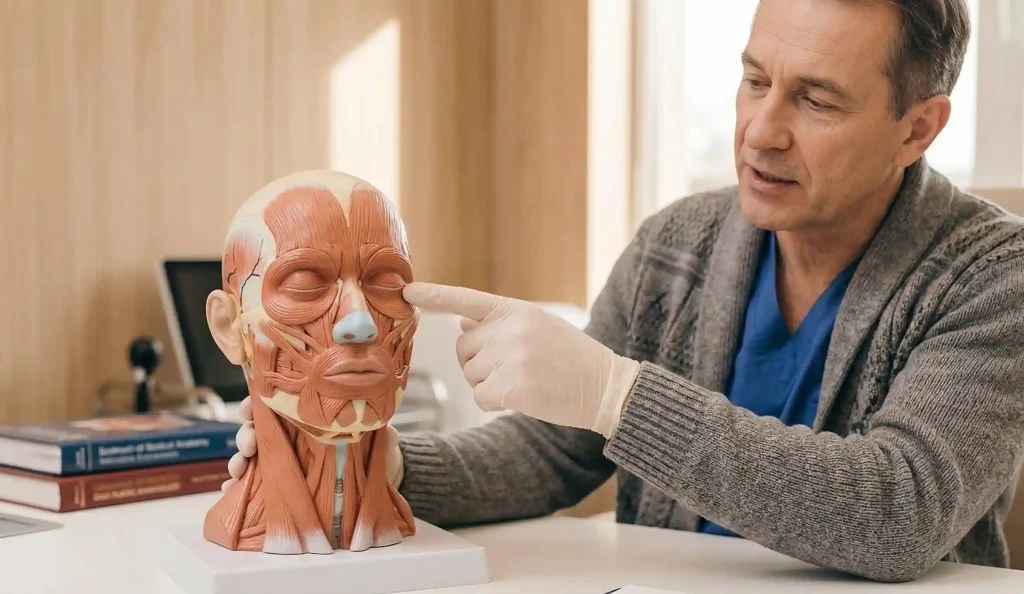
Facial expressions can only be preserved after a facelift if the surgeon understands the fundamentals of the muscle system responsible for forming these expressions. The facial muscles that govern our expressions — such as when we smile, frown, or squint — are called mimetic muscles. The particularity of these muscles is that they are directly connected to the skin from the inside.
On doing a “skin-only” facelift, the surgeon will end up pulling the skin so tight over the mimetic muscles. This tension works as such a restraining cage that these muscles get entirely hampered in their ability to contract. Therefore, the smiling face will be characterized by an unnatural, flat, and tight expression (which is known as the “Joker smile”). Our surgeons at Lin Health Europe Clinic, Turkey, never use skin tension as a method. By raising the inner layers, the surface of the skin results in being completely soft and easy to handle, thus your facial muscles remain free to perform all their functions without interference.
Deep Structural Repositioning vs. The “Pulled” Look
The ‘done’ or cosmetically-altered face is mostly identified by the presence of horizontal tension. As we grow older, gravity pulls our face downwards vertically, so the only correct lifting to restore it would be in the upward vertical direction.
The team at Lin Health Europe Clinic, Turkey, is proficient in the Deep Plane face lift. It is a sophisticated face-lifting procedure that consists of cutting the ligaments that hold the deeper structures of the face in place and lifting the entire layer, including the SMAS, the mimetic muscles, and the fat tissue under the skin (specifically the malar fat pads) as one consolidated piece. Since the deep structures are the only ones bearing the entire lifting force, the original facial proportions are preserved and expressions can function smoothly and naturally without any hindrance.
Temporary Neuropraxia: The Acute Healing Phase
It is perfectly normal that your face does not look or feel quite ‘you’ immediately after the face-lift procedure. Your face will be stiff, tight, and feel unfamiliar for the first few days after surgery. This is simply the human body’s natural reaction, gearing up for healing, and is mainly due to two reasons: a very high level of swelling and temporary neuropraxia.
This neuropraxia is a transient condition where facial nerves responsible for sensation and movement get “stunned” temporarily as a result of the surgery and the local anesthesia application. Smile may look a little weird, and the heaviness or numbness in the cheek area will be some of the sensations you will likely experience during the first few weeks post-op. One of the strong suits of Lin Health Europe Clinic is thorough patient education. We inform our foreign patients in Turkey about this stage and make sure they know that after the swelling goes down and the tissue begins to undergo neocollagenesis, complete, lively nerve function and normal facial expressions return.
Preserving the Periorbital Identity (The Eyes)
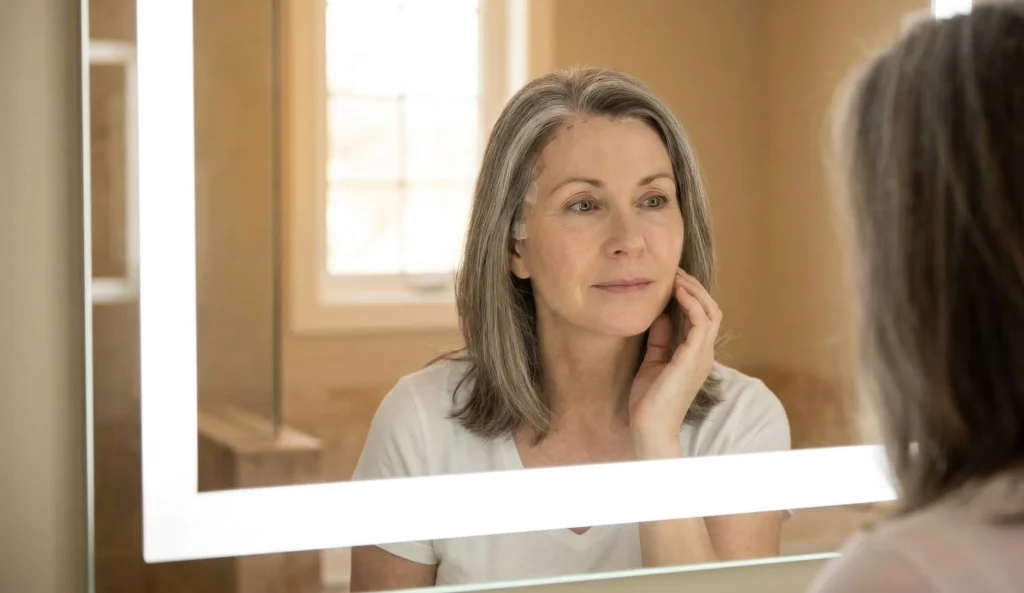
A facelift mainly works on the midface area, jawline and neck. However, a combination of facelift with blepharoplasty or brow lift can increase the potential change in the patient’s expression, if not done with utmost care and precision. Too much skin removal from the upper eyelid or very high raising of the brow are the reasons for a harsh and “starting” look that changes a person’s very capability to express emotions.
We regard the periorbital region with great respect to the anatomy and at Lin Health Europe Clinic, when we combine these surgeries in Turkey, we resort to extremely gentle and tissue-sparing techniques. Our main goal is to restore your natural, resting brow arch and to keep the specific shape of your palpebral fissure (eye opening). We maintain a commitment to overall facial balance so the spirited energy of your eyes is a wonderful match to your newly rejuvenated jawline.
Face Lift in Turkey
At Lin Health Europe Clinic, we hold the highest opinion of surgical skill, that it can actually make the surgeon’s work totally invisible. Our Turkey location is also a haven for medical excellence that operates closely with JCI-accredited, ultra-modern hospital facilities. Our position as a global leader in international medical tourism and elite facial plastic surgery is clearly reflected.
Being a part of Lin Health Europe Clinic family means you have the choice of being treated by the most competent and board-certified hands in Istanbul. Our facial specialists with worldwide recognition put structural integrity and exact anatomic reality at the top of their priorities when dealing with guests from all over the world. Right from the first step of your 3D biometric analysis, till the final moment when you smile naturally again, beautifully, you will go through the level of professionalism and exceptionally warm hospitality that made us a very well-known name in the field of aesthetic medicine. We are the very best globally at managing your journey towards a new, refreshed and authentic self.
FAQ:
Not necessarily. A modern face lift done properly should just restore the position of your facial tissues to their locations of 10 to 15 years ago. It does not change your bones, nor the muscles responsible for your facial expressions. You will still be you, only refreshed and revitalized.
The “windblown” appearance comes from old surgical methods when the surgeon very tightly pulled the skin in a horizontal direction to the point where it looks unnatural and the wrinkles are flattened. At our clinic in Turkey, we use the Deep Plane method, by which the lifting of the muscle layer is done vertically, so the pulled look is completely eliminated.
Right after surgery, your smile might seem stiff, tight, or a little one-sided because of swelling (edema) and temporary nerve injury. Your natural, lively smile will be completely back once the healing is done.
Usually a facelift can only alter the expression of the lower two-thirds of a face and doesn’t touch the eyes. However, if you’d also do a brow lift or eyelid surgery in Turkey along with your face lift, then our surgeons will use very precise, minimal tissue-removing methods to make sure that your eyes are bright and harmonized, but not fundamentally changed.
Tightness will be one of your feelings mainly in the jawline, neck and the areas behind your ears for some weeks. You will start experiencing it the most during the first 14 days, It will soften gradually as the inside healing is happening. Usually the totally natural “soft” touch of your face will be back between 3 to 6 months after the surgery.
Mendelson, B. C. (2001). Surgery of the superficial musculoaponeurotic system: principles of release, vectors, and fixation. Plastic and Reconstructive Surgery.
Stuzin, J. M., et al. (1995). The anatomy and clinical applications of the buccal fat pad in facial plastic surgery. Plastic and Reconstructive Surgery.
Aston, S. J., & Thorne, C. H. (2005). Contemporary rhytidectomy. Clinics in Plastic Surgery.
Jacono, A. A., & Parikh, S. S. (2011). The minimal access deep plane extended vertical facelift. Aesthetic Surgery Journal.