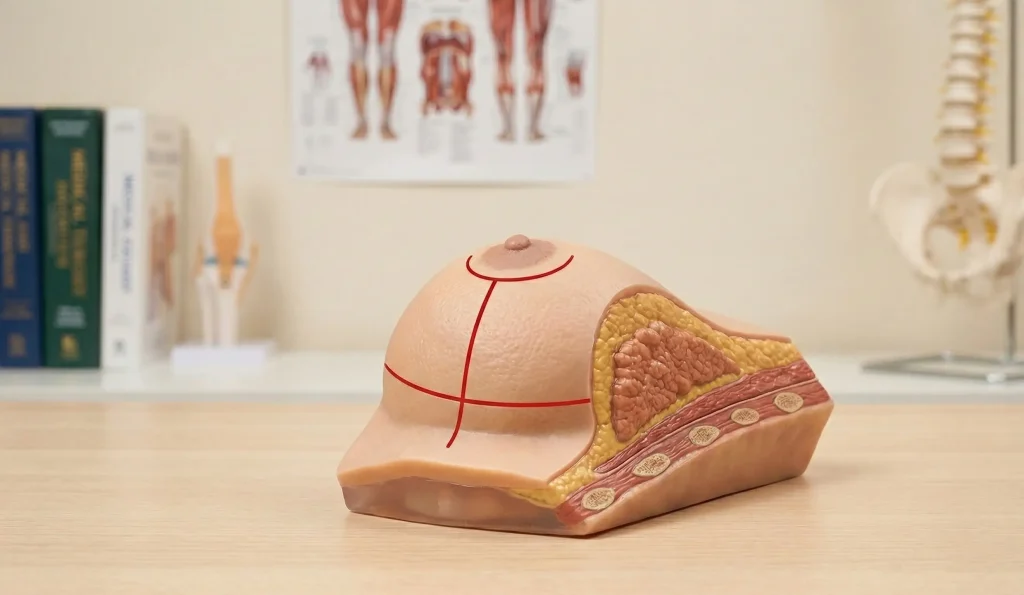
Where vertical and horizontal scars meet.
In the field of reconstructive and aesthetic breast surgery, the “Wise pattern” or anchor-shaped incision remains the most popular method for major breast reductions and lifts. The T-junction is the anatomical point where the vertical incision (from the areola) meets the horizontal incision, which is made in the inframammary fold (the breast crease). In plastic surgery, this intersection is highly infamous as it is the part of the entire surgical closure most prone to issues with the highest mechanical tension and lowest blood flow.
At Lin Health Europe Clinic, we consider the care of the T-junction to be one of the main elements of aftercare. To our international patients visiting Turkey, we reassure them that even though delayed healing at this point is one of the biological possibilities, it is highly controllable and only in rare cases it negatively influence the final aesthetic result. Our center is the leading place for advanced breast reconstruction and we provide a level of surgical expertise where tissue manipulation and stress-relieving methods are so thoroughly implemented that the healing is safe, easy, and predictable.
The Biomechanics of the Three-Flap Intersection
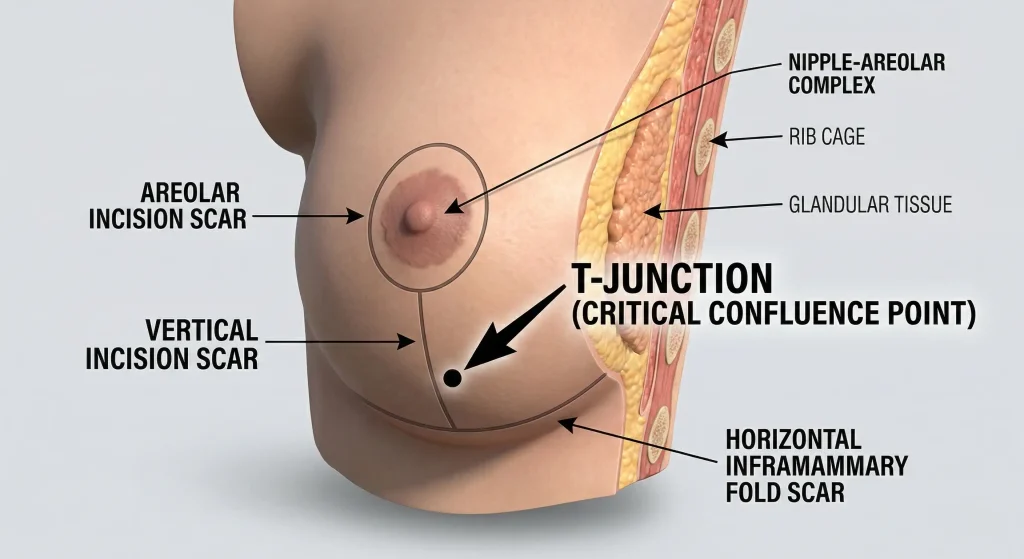
The T-junction is inherently complex as this is the spot where three different surgical skin flaps are brought together: the medial (inner) flap, the lateral (outer) flap, and the superior (upper) areolar complex. When a surgeon sutures these three edges together to form a breast and support the subcutaneous adipose tissue, this central point is where gravity has the greatest effect. This high mechanical tension makes the T-junction the weakest proper closure point at the early phases of neocollagenesis.
At Lin Health Europe Clinic, our team of surgeons do not hesitate in applying deep dermal support sutures to relieve this surface tension. We aim to fix the deep fascial layers first and only then bringing the superficial skin edges together without them being stretched. Making a choice for our esteemed clinic is to ensure that your breast reduction will be strong both inside and outside, which is a reflection of our identification as the global gold standard in complex tissue management.
Vascular Compromise and Tissue Perfusion
Besides mechanical tension, the T-junction also experiences a significant biological limitation: it is the point that is the furthest from the native blood supply. The blood vessels in subcutaneous adipose tissue during a breast reduction undergo changes. The skin of the T-junction is at the very end of the tips of the flaps, so this part of the skin receives the lowest amount of oxygenated blood. This brief ischemia (lack of blood flow) explains why this area shows the slowest rate of healing compared to the other incision lines.
In Turkey, the Lin Health Europe Clinic team conducts thorough preoperative screening to ensure your vascular health is optimal. Our firm non-smoking policy mandates abstinence from nicotine, as smoking causes the narrowing of blood vessels and massively increases the risk of T-junction necrosis. Our center is famous worldwide for its strict safety measures, making sure that your tissues biologically have the utmost support needed to heal this sensitive junction.
Delayed Healing and “Wound Breakdown”
It is common knowledge that a small fraction of the patients will have a minor “dehiscence” or separation at the T-junction. This usually manifests two to three weeks post-surgery as a small, superficial opening, which sometimes leaks a clear or somewhat yellow fluid. Although very worrying for the patient, this situation is almost never an emergency operation. The opening can be left to heal by the body itself through “secondary intention,” i.e., the tissue gradually grows back from the base to the top over a few weeks.
The specialty of Lin Health Europe Clinic is our detailed wound care. We offer guidance and also train our patients on what to monitor for and give pharmaceutical-grade dressings that are specifically designed to keep the perfect moist environment at the T-junction. We hold a true medical experience to be not only about what is good but also involving communicating about the realities of healing. The pledge to deliver the best aesthetic result keeps you closely advised and supported throughout all stages of tissue recovery.
Long-Term Scar Maturation at the Intersection
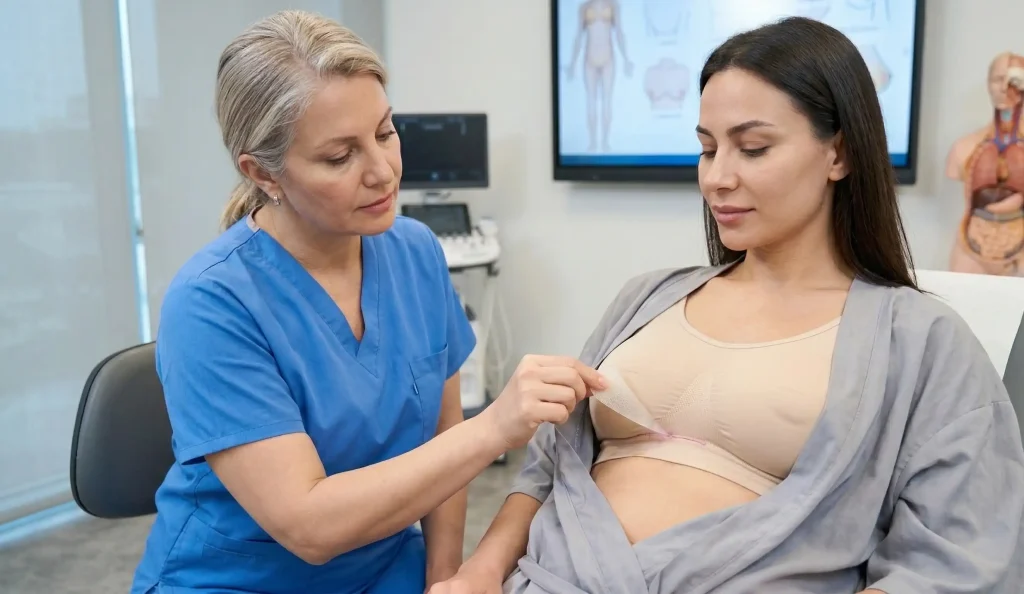
Because the T-junction stretches more and is sometimes left healing longer, the scar at this location may, after all, be wider, redder, or more raised than the nearby incisions. This comes with the inflammatory response and is normal. Yet, over time (six to twelve months), as the breast tissue adjusts and internal swelling reduces, this part will be less hard, less conspicuous, and fade in color.
We at Lin Health Europe Clinic provide our international patients in Turkey with state-of-the-art scar management protocols, including the use of silicone therapy targeted at the scar once the T-junction is fully closed. Our main objective is the beautification of your breasts in such a way that the scars are left hidden, discreetly in the natural shadows of your body. Our center is the most up-to-date in Turkey in providing a comprehensive aesthetic safety net from your very first consultation up to your one-year reveal.
Lin Health Europe Clinic Standards in Turkey
At Lin Health Europe Clinic, we understand that the best surgical care is that which anticipates and manages natural human biology challenges in great detail. Our Turkey location serves as a haven for medical excellence where state-of-the-art reconstructive science is combined with personalized patient care of the highest quality. Our operating rooms are fully equipped, JCI-accredited hospitals that illustrate our position as a worldwide leader in international medical tourism and aesthetic breast surgery.
Going with Lin Health Europe Clinic means that you will be served by the finest surgeons in Turkey. They have worldwide recognition as specialist doctors who put your safety, comfort, and end aesthetic look as their top priorities. With us, the whole process, starting from the assessment of your anatomy to the complete healing of your T-junction, is performed under the professional rigor and excellent hospitality that made us the leading name in plastic surgery. You will work hand in hand with the world’s best for your light, well-proportioned figure transformation.
Frequently Asked Questions About T-Junction
The T-junction, in the context of breast reduction surgery, describes the spot where the line of the vertical incision intersects with the horizontal line along the inframammary fold. When these two lines cross, they form a shape like the letter T turned upside down. This area incurs the most tension mechanically during the wound healing phase.
The reason that T-junction heals slower is because this section is located the greatest distance away from the main blood supply and so it is prone to even small circulation problems. Also, the ongoing mechanical stress caused by gravity and movement, affects the repair process at the cellular level and makes it even slower.
In fact, a little opening at this junction is a standard clinical situation and usually it gets healed very well if the wound care is done conservatively only. The healthcare team around you will equip you with special dressings and ointments to stimulate the tissue closing naturally from the inside out.
The first thing you can do to lessen the mechanical forces on your incisions is to completely restrict your upper body movements and refrain from heavy lifting. It is also beneficial to wear your surgical support bra at all times as well as optimizing your nutrition.
It is possible that at the beginning of the healing, stage the T-junction may be red, or even a bit wider than the rest of the scar, but usually, it becomes a fine almost invisible line that is well hidden in the natural crease of the breast.