Usually 3,000–5,000 grafts for full coverage.
In hair restoration surgery, figuring out the number of hair grafts needed to treat a patient is a result of in-depth clinical calculations. These calculations take into account the patient’s degree of blotchy hair loss, the size of the recipient area, and the donor zone’s condition. Although patients often say “full head”, from a medical perspective, it includes restoration of the hairline, mid-scalp, and the vertex (crown). To have a natural appearance of density, not only the number of follicles but also the distribution and direction must be correct.
At Lin Health Europe Clinic, we teach that more grafts don’t necessarily guarantee better results. The goal is to achieve the highest density visually without compromising the donor area—the hair-bearing part at the back and sides of the head. Patients planning to travel to Turkey may find it helpful to understand how their surgeons will evaluate their baldness level using the Norwood Scale and determine the restoration needs based on the number of follicular units available in the donor zone.
Understanding the Norwood Scale and Calculating Recipient Area
Estimating the number of grafts needed can be best done with the Norwood Scale measurement, which shows different stages of male pattern baldness. For example, a patient losing hair at Norwood Stage 2 (small hairline recession) may not need more than 1,500 hair grafts to restore the hairline, while a Stage 6 or 7 patient (massive hair loss) might require a big number of 5,000 to 6,000 grafts if he wants to cover the whole scalp again. Only after measuring the area of bald scalp in square centimeters can the doctor decide how “many hairs per cm²” are needed to cover the scalp completely.
Speaking of the density of a healthy scalp, it’s about 60-100 follicular units (FUs) per cm². However, in a hair transplant, the aim of the surgeon is to create an “illusion” of 40-50 FU/cm², which is enough to no longer be able to see the scalp through the hair. As a team at Lin Health Europe Clinic, we are performing a detailed mapping of different sections in Turkey so that the limited donor hair is used for the areas most visible to the eye, such as the hairline around the face.
How Much Can the Donor Area Provide? Plus, Maintaining Follicles’ Health
Briefly, the donor area is where your hair grows naturally, infrequently losing hair. It has a fixed number of grafts, and to be more precise, a lifetime restriction is placed around 6,000 to 8,000 “good” grafts for an average human scalp. Besides, if a doctor carries out a very aggressive extraction of grafts within just one session (also known as “mega-session”), it may result in “over-harvesting”, which means that following a certain period, the surgery spot would look bland and spotty. The clinical dilemma here is how to meet the requirements of the recipient area without damaging the donor site too much.
Backed with the experience and skills of our Turkey doctors at Lin Health Europe Clinic, they perform DHI (Direct Hair Implantation) or Sapphire FUE by using these new methods and equipment to avoid unnecessary trauma during the extraction stage. These technologies permit you to choose the grafts that have more than one hair (FU with 2, 3, or 4 hairs). This commitment to finding the most effective follicular units (FUs), that is, the ones that have more than one hair, enables us to offer patients great “hair density” while using fewer “grafts”, thus still being able to shield the donor area and at the same time give the patient a full look.
Hair Transplantation: A Priority Map of the Frontal Hairline vs. The Crown
Restoration of a bald scalp is not evenly distributed since the front hairline and the “temple peaks” are the areas that most people notice first. Indeed, the front line and sides of the head define the face. These locations will require greater follicle numbers per square centimeter and the employment of single-hair grafts for a delicate and natural transition between the futhermost field of hair and the forehead skin. On the other hand, the vertex (crown) is a round area which generally takes a very high number of grafts from 2,000 to even more hack because of its large size and the fact that this part of the scalp has spiral hair growth pattern which demands special attention.
When the degree of hair loss is beyond a certain threshold, a hair transplant covering the entire head in Turkey is done as two separate operations. The first operation concentrates on the frontal two-thirds of the scalp which will with no doubt, rejuvenate the whole face instantly. Afterwards, the second operation, another 12 months later will take care of the vertex area. At Lin Health Europe Clinic, we also apply such a method that not only prevents overwhelming the scalp blood supply but also guarantees each newly transplanted follicle has the highest possible survival rate in its new environment.
Follicle Survival and Neocollagenesis
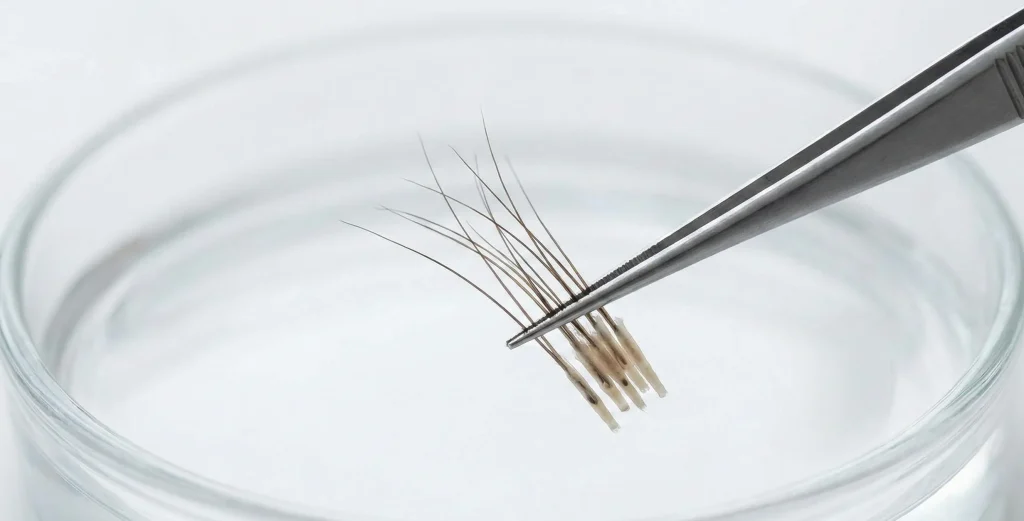
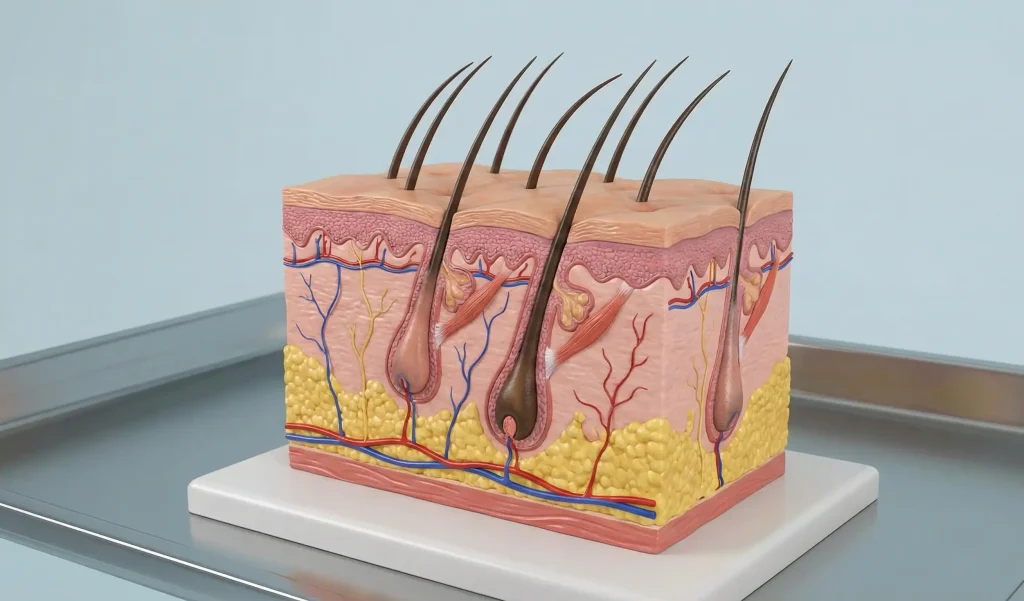
In fact, the “full head” of hair transplant’ outcome largely relies on the percentage of hair follicles that remain alive after transplantation. Post extraction, a follicle is “in deep waters” since it loses its native environment, which then requires re-implantation at its new location as soon as possible to help it retain its metabolic health. In the meantime, state-of-the-art clinical procedures are about keeping hair grafts viable for a considerable time by storing them in a cold, specially formulated nutrient solution that closely resembles the natural environment around the hair bulb, i.e., the subcutaneous adipose tissue.
Besides setting down in their new home, triggering a repair process in the scalp, including the making of new collagen fibers and greater blood vessel formation, the hair follicle grafts are also indirectly supported by restoring the blood flow, hence, helping their “take”. Our team at Lin Health Europe Clinic in Turkey makes use of latest apparatus that create very small holes in the scalp with minimal damage to the tissue around. As a result, not only does the recipient site heal faster but also it benefits from an environment that provides stability and is rich in nutrients, which hair follicles require to start their new cycle after transplantation.
Hair Transplant in Turkey
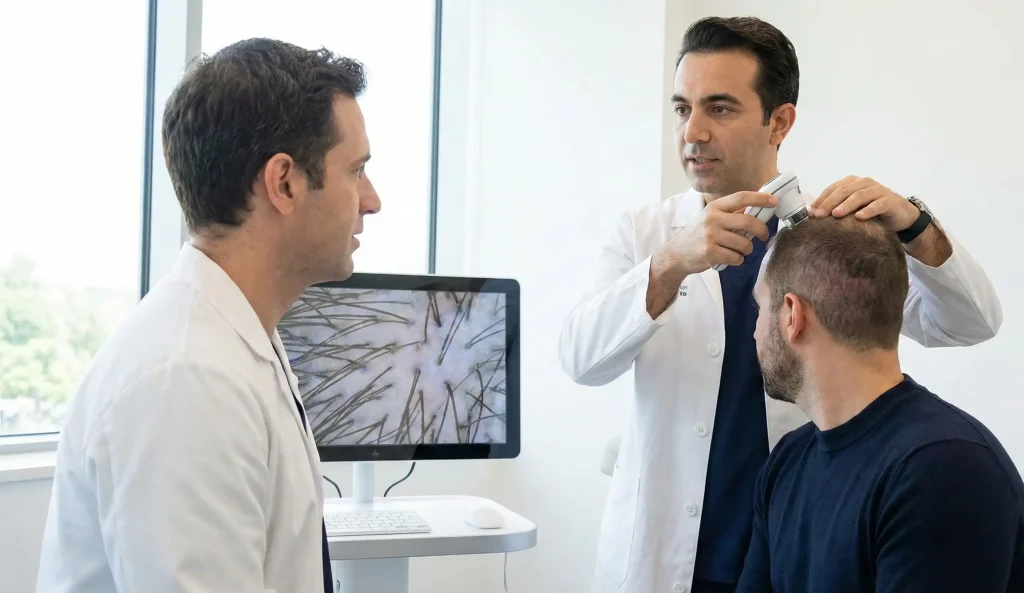
At Lin Health Europe Clinic, the transformation of hair through surgery is regarded as both a medical treatment and an architectural masterpiece. With our Turkey branch, we are committed in delivering high hair density results saving also the health of the donor area in the long run. Through a 3D computer scalp scanning analysis technology, we extend the offer of very precise graft numbers count to our foreign patients, thus ensuring total transparency and clinical accuracy right at the first meeting.
Moreover, our surgical personnel are so proficient in graft placement techniques that, undoubtedly, each hair will be directed at an angle that blends with the natural hair growth pattern on your scalp. We take care of you comprehensively after the operation by hand-holding you through the step-by-step hair washing instructions and also guiding you through the right diet type for your hair to grow healthily. You can avail of a medically advanced treatment method that can restore not only your hair but also your confidence for a lifetime when you book your trip for a hair transplant at Lin Health Europe Clinic in Turkey.
Frequently Asked Questions About Hair Transplant Grafts
The answer depends greatly on how much hair you have lost and the density of your donor area. Usually, patients who want overall coverage need somewhere between 4,000 and 6,000 grafts for one or two sessions in Turkey.
From a medical point of view, 5,000 grafts would be a very large “mega-session”. However, at Lin Health Europe Clinic, we only carry out such procedures if the patient’s donor area is in good condition to endure the extraction.
If you’ve Norwood Stage 7 loss, you probably won’t have enough donor hair to cover 100% density. Our surgeons in Turkey will first bring out your hairline, so they can work on the best visual frame for your face.
Yes. Beard hair is usually the next best donor to scalp hair in terms of being able to supplement thinning areas, especially the vertex. It is highly resistant to androgenetic hair loss and yields great volume for hair transplant patients in Turkey with limited scalp donor hair.
In a typical transplant, the target would be 40 to 50 grafts per square centimeter. This density combined with that from your existing hair would look very natural, and also ensures that each follicle has a sufficient blood supply to survive at Lin Health Europe Clinic.
Unger, W. P., & Shapiro, R. (2004). Hair Restoration Surgery.
Bernstein, R. M., & Rassman, W. R. (1997). Follicular transplantation. International Journal of Aesthetic and Restorative Surgery.
Norwood, O. T. (1975). Male pattern baldness: classification and incidence. Southern Medical Journal.