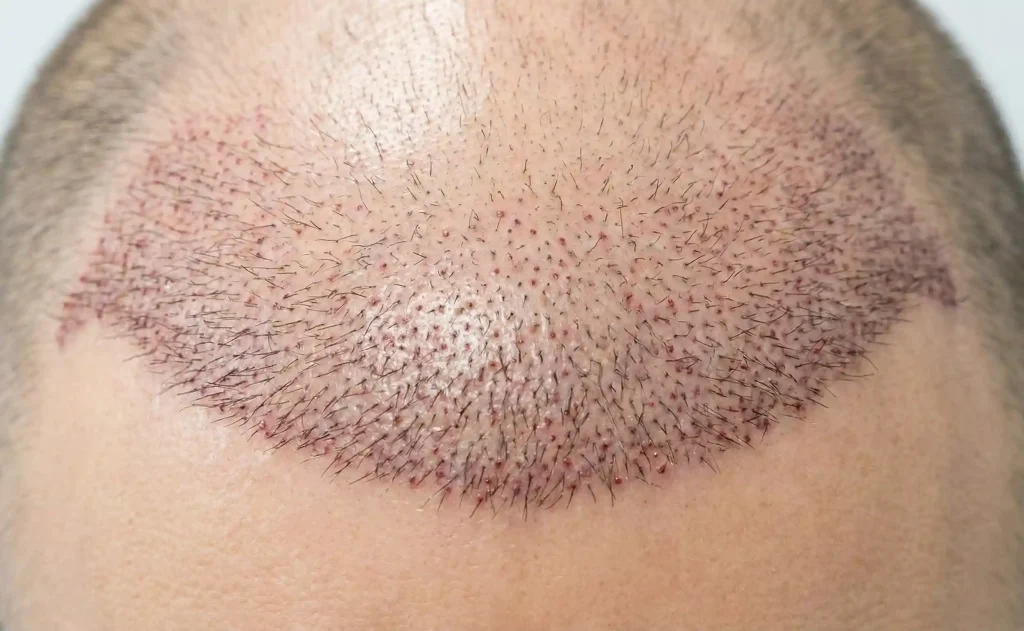
A FUE transplant using sapphire blades for precise incisions.
In the rapidly changing area of trichology and hair restoration surgery, shifting from Follicular Unit Transplantation (FUT) to Follicular Unit Extraction (FUE) significantly lowered patient morbidity. Yet, the latest and most important clinical breakthrough has not been in the extraction method but the implantation phase: in particular, the use of sapphire FUE blades. The traditional FUE method uses steel blades to make recipient channels where hair follicles are implanted. Although this does work, steel, unfortunately, gets microscopically dull during the procedure, which can cause higher tissue resistance and more trauma.
Sapphire FUE is a futuristic technological advancement in which the cutting tool is made of a single crystal of synthetic sapphire. This material, hardness-wise, is only behind diamond, which allows for the creation of an extremely sharp, V-shaped blade. At Lin Health Europe Clinic, we see this as a minimally invasive percutaneous procedure. The clinical goal is to minimize the skin trauma, lower the inflammation perfectly, and increase hair follicle implantation density. Replacing fossil fuel with gemstone, the surgeon can open the channel with a much higher degree of precision, which is the key factor determining the final angle, direction, and density of hair growth.
The Physics of Incision: Sapphire vs. Steel Blades
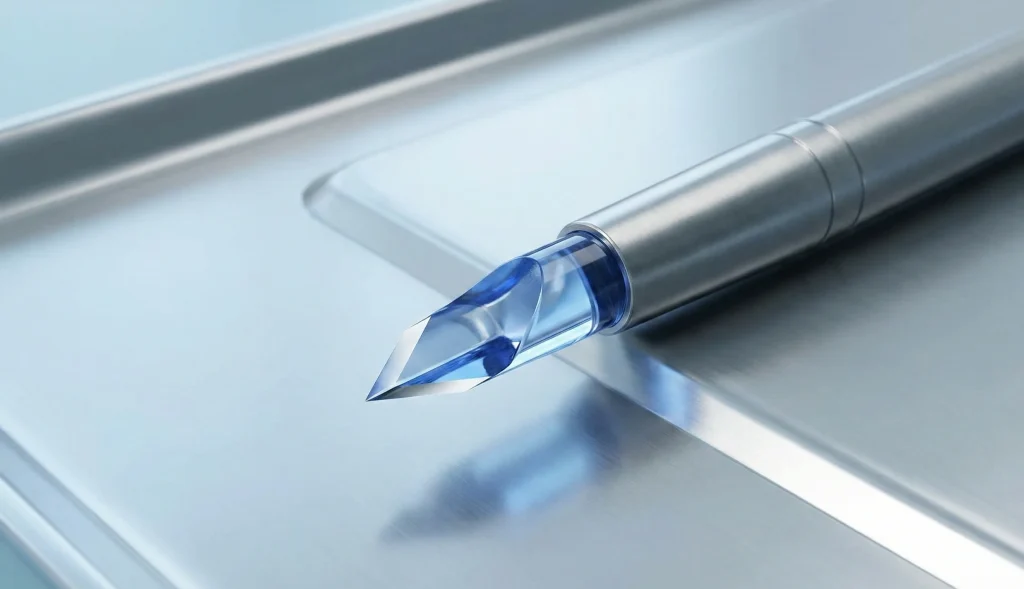
The main thing that makes the difference in a sapphire FUE operation is the shape and sharpness of the tool used for incision. The usual steel blades have a U-shape. When you make thousands of micro-channels (in one session, you may do 3,000 to 5,000), the blade steel loses its sharpness at the edges. This blade dulling makes the surgeon apply more forces to the scalp to cut it, resulting in a “micro-tearing” of the tissue instead of a clean cut. The skin and muscle injury caused by this trauma increases the release of histamines as well as other inflammatory mediators.
On the other hand, due to their crystal structure, sapphire FUE blades preserve their sharpness throughout the operation. The incision they make has a different V-shaped pattern. Thanks to this geometric accuracy, injury area becomes smaller while the graft channel created is still deep enough to be used. This is best represented by much less post-operative edema (swelling) and a lower chance of necrosis (tissue death) due to blood vessel obstruction. In addition to that, the sapphire’s smooth surface also has anti-bacterial properties, thus theoretically reducing the risk of folliculitis occurring during the skin healing after surgery.
High-Density Implantation and Angulation
Among various difficulties in a hair transplantation, the one that is most concerning with density is making it look natural. Natural hair density stands between 70 and 100 follicular units per square centimeter. Steel blades interfere with this due to their thickness and vibration during the cutting. They limit how close the channels can be without merging (confluence). The fact that the distance between these microchannels becomes too small when machete is dull can be helped at least in part by the skin bridge which is holding these channels open.
The sapphire FUE method does away with this problem. The thin sapphire tip permits closely spaced openings—sometimes, depending on the donor supply, achieving densities or even greater. Besides this, the sapphire blade’s stiffness also gives better angulation control over the channel. This is very important for the front hairline, where the hairs normally come out from the scalp at a very acute angle (about 15-20 degrees) and follow a certain flow direction. This method’s main clinical benefit is the capability of packing grafts tightly without cutting the blood supply of the inter-follicular skin bridge.
Accelerated Tissue Repair and Retention
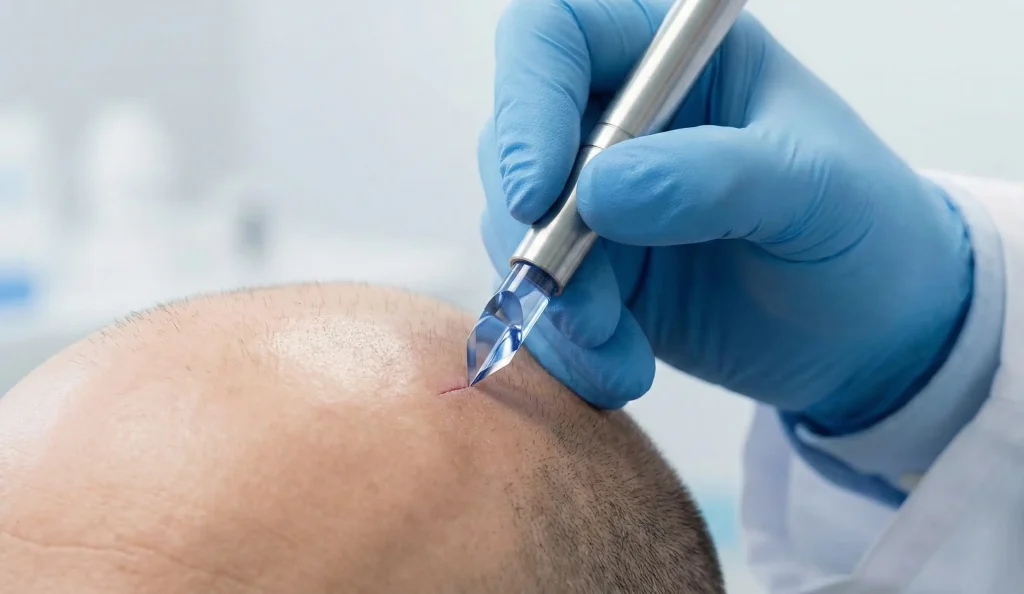
What happens after a hair transplant in terms of the healing process depends on the extent of the trauma to the recipient site. In sapphire FUE, the cuts are nicer and tiniest, thus the healing process starts from primary intention. Because the skin edges of the V-shaped channel pull less than those of a steel U-shaped incision, the wound closes at a faster rate. As a result, crust (scab) formation time gets shortened and the surface re-epithelialization of the scalp is accelerated.
As far as graft survival is concerned, sapphire FUE channels provide a “snug” environment for the follicular unit. The canal is perfectly sized for the follicle, which ensures that the latter will not roll, shift, or get “popped out” during the post-operation. Such a solid graft fixation facilitates revascularization, which is the reconnection of the transplanted follicle to the recipient blood supply. When the graft gets firm contact with the surrounding dermis, the diffusion of oxygen and nutrients becomes more effective, that is why the overall survival rate of the transplanted hair is increased.
Minimizing Fibrosis and Scarring
Whenever the skin is cut, the resultant scar is a by-product of collagen laid down to mend the wound. Unless the scarring is really close to the surface or deep, this usually is not a major problem. Sapphire FUE uses an incision that gives the skin a plane of cleavage, significantly reducing the post-operative fibrosis/scarring. Unlike steel slits, where you may get the “pitting” or “cobblestoning” effect, the scar formed after sapphire tends to be smooth.
Especially for dark-skinned patients and those who tend to get hypertrophic scarring, this is quite a breakthrough. Minimal disruption of skin preserves the subcutaneous vascular plexus and thus contributes to the scalp being a healthy and flexible tissue. For people who come to Turkey for restorative surgery, the possibility of a barely noticeable scar at the donor site can be a great psychological relief. This ensures that the hair transplant is so natural looking that even with short hairstyles it is impossible to spot where a surgical procedure has been done.
Sapphire FUE Hair Transplant in Turkey
Starting a hair restoration journey is a decision aimed at changing the face of your life forever, and Lin Health Europe Clinic is committed to providing a world-class patient experience to the international clientele coming to Turkey. Besides the technology, the skill of the surgeon is also a very important factor that we take into consideration. The use of high-quality sapphire FUE blades is ensured by our surgical team, so our patients can enjoy the minimized trauma and increased density potential of the technology.
Being a medical facility certified by an official accreditation body, Lin Health Europe Clinic observes the highest standards of sterilisation and safety. Our surgical teams received specific training for the safe and efficient use of sapphire blades, which are quite different from the traditional steel instruments. From the first meeting to the last shampoo and follow-up, our thorough care plan is meant to allow most of the grafts to survive. We combine modern sapphire FUE technology with artistic hairline design to produce a result that no one will be able to tell has been surgically produced.
Frequently Asked Questions About Sapphire FUE Hair Transplant
Indeed, sapphire blades use has the advantage of allowing sharper, more precise incisions which lead to less tissue damage. This usually means quicker healing and higher density as compared to steel blades.
Not at all, the scalp is numbed completely as the operation is done under local anesthesia. Patients might only feel a little pressure but no pain during the incision.
Patients usually resume their normal light activities between the third and fifth days after surgery. The tiny scabs on the scalp completely come off in about ten days.
Turkey is well equipped with quality medical infrastructure and has a pool of highly skilled surgeons who not only specialize in the standard but also the advanced techniques like sapphire FUE. Apart from that, the cost of treatment is still very reasonable compared to the rest of the world for patients seeking world-class care.
The success rate is very high, as scalp graft survival rates commonly exceed 90% when carried out by competent personnel. The sapphire method enhances graft survival by providing follicle units with a tightly fitting socket.
Rassman, W. R., et al. (2002). Follicular unit extraction: minimally invasive surgery for hair transplantation. Dermatologic Surgery.
Bernstein, R. M., & Rassman, W. R. (2005). Follicular unit transplantation: 2005. Dermatologic Clinics.
Garg, A. K., & Garg, S. (2018). Donor harvesting: Follicular unit excision. Journal of Cutaneous and Aesthetic Surgery.
Unger, W. P., et al. (2011). Hair Transplantation. 5th Edition. Informa Healthcare.