Yes, it can reduce fatty breast tissue.
For women who suffer from macromastia or overly large breasts, a major surgical breast reduction has been the go-to method. Undergoing a breast reduction is, needless to say, the most effective way of dealing with heavy, large breasts; however, the procedure is invasive and leaves the patient with an anchor-shaped scar as well as a few weeks of recovery. For this reason, a very common question we get from the patients at our Lin Health Europe Clinic is: “Why can’t you just suck the fat out?”
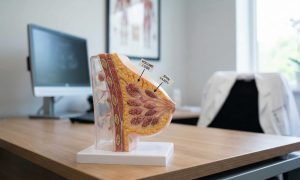
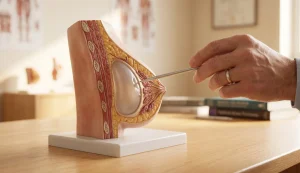
The answer is yes, but there are several important issues to consider as well. Breast liposuction, also referred to as “Scarless Breast reduction,” is a legitimate surgical treatment, but it is not a universal solution. The breasts, unlike the stomach or thighs, are a very complex organ made up of glandular tissue, fibrous connective tissue, and fat. Therefore, liposuction will only help you get rid of the fat. The gland tissue will remain, and the skin won’t be tightened. Hence, whether or not liposuction will be a good solution for your case will depend on your specific breast tissue’s fat-to-gland ratio and your desire for lift versus reduction.
The Composition Challenge: Fat vs. Gland
The biology is what decides the outcome of breast liposuction. Breast tissue in younger females is generally glandular, dense, and firm which is the milk-producing tissue. This kind of tissue is very difficult and cannot be detached with a cannula. If a young woman with very dense breasts decides to go for liposuction, the doctor will most probably only be able to take out a very small amount of volume, as the glandular tissue, which is heavy, will remain untouched.
Nevertheless, postmenopausal women or those who have experienced a large fluctuation in their weight will find the breast tissue “turning to fat” or “fatty involution.” The gland tissue shrinks and the space is filled with fat. In such cases, or if the woman simply has genetically fatty breasts, liposuction can go a long way. We can take away 50% or more of the breast volume with small incisions and the chest will be significantly lighter. However, if your breasts are firm and perky, it is very likely that a straightforward liposuction will not decrease their size noticeably since there just won’t be enough fat to work with.
The Gravity Problem: Reduction Without Lift
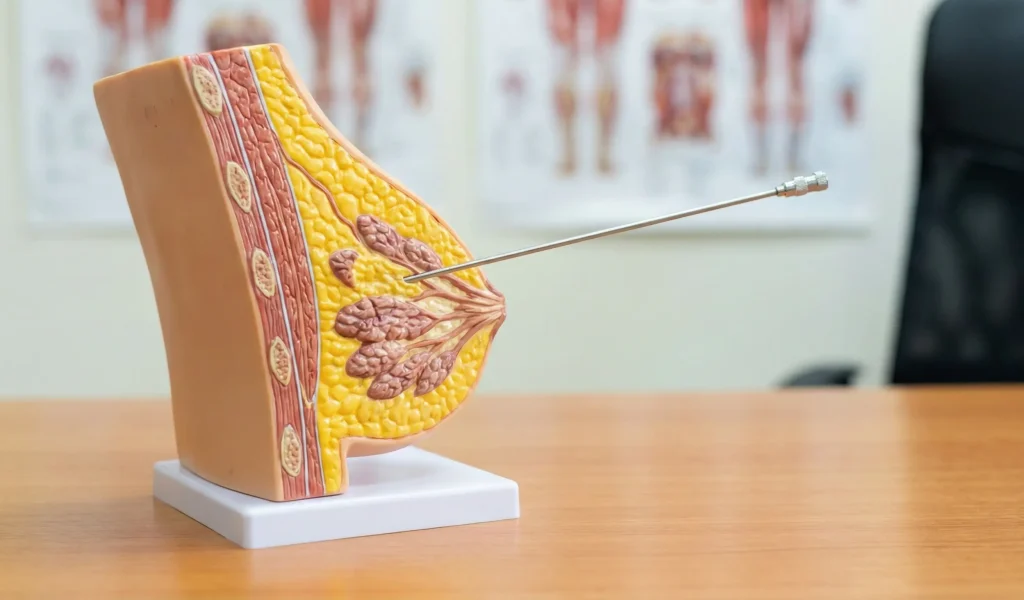
Breast liposuction won’t take care of the sagging breast issue, so you shouldn’t think it is a substitute for a traditional breast lift. With the help of a breast reduction surgery, the doctor removes the excess skin and then he/she can reposition the nipple-areola complex higher on the front thoracic wall to get the desired result. Liposuction acts by “deflating” the breast, and so, the skin remains unchanged in size.
Once the internal volume is reduced through liposuction, a patient with heavy ptosis or nipples pointing downward will, actually, look like she has more “empty” breasts that are prone to sagging even more, which is why the “saggy” effect might be heightened. The optimal candidate for breast liposuction is one with good skin elasticity. Once fat is taken out, the skin should be able to snap back and wrap around the reduced volume. Skin that has been stretched and is now thin or scarred (striae) is usually not able to retract on its own, and thus, the advice we often give patients is to combine liposuction with J-Plasma technology for stimulation of tissue tightening or to get a traditional lift if a good aesthetic outcome is required.
The Role of VASER in Fibrous Breasts
The breast fat is also intertwined with a very dense, finely branched, and yet very sturdy network of connective tissue known as the Cooper’s ligaments which provide the breast with its outward shape and internal support. Therefore, we hardly ever use mechanical liposuction in this area which can be very traumatizing and requires a forceful thrusting action that will result in severe bruising and swelling.
Very often, to comfortably and effectively peel off the fibrous fat layer, we use VASER liposuction. The reason why VASER is so good for treating fibrous areas is because of its ultrasonic energy that selectively liquefies the fat cells into oily droplets without destroying the blood vessels, nerves, and connective tissues. This way, we can very efficiently “die” the fat cells that are tightly held in a fibrous network; hence, we can gently “wash” the fat out of the fibrous matrix. In addition to this, if the connective tissue is preserved, the breast will maintain its natural shape.
Breast Asymmetry Correction
Aside from the benefits of surgically reducing one or two breasts, breast liposuction has been great in correcting asymmetry, too. One breast is unevenly larger than the other in many cases, which causes both mental and physical problems such as difficulty in fitting into clothes. The solution if you perform a full surgical reduction just on one side does not work because doing so can be too much and you get a completely different scar pattern.
With a little surgical procedure of breast liposuction, the prominent breast can be “brought down” to the size of the smaller one. We take out the fat in very precise amounts as we measure the volume of fat in milliliters before and after the operation. So, this procedure allows us to perfectly match the two breasts without making long incisions on the larger breast and leaving the natural feeling, touch, and nipple sensation intact which is one of the most important aspects for younger patients who are breastfeeding.
Recovery and Scarring Benefits

Liposuction of the breast has a far less painful recovery compared to traditional reduction, which cannot be denied. Performing a surgical breast reduction means making incisions around the areola, at the front of the breast, and sometimes along the crease (anchor scar). The process requires wound care for weeks and the restriction of all activities.
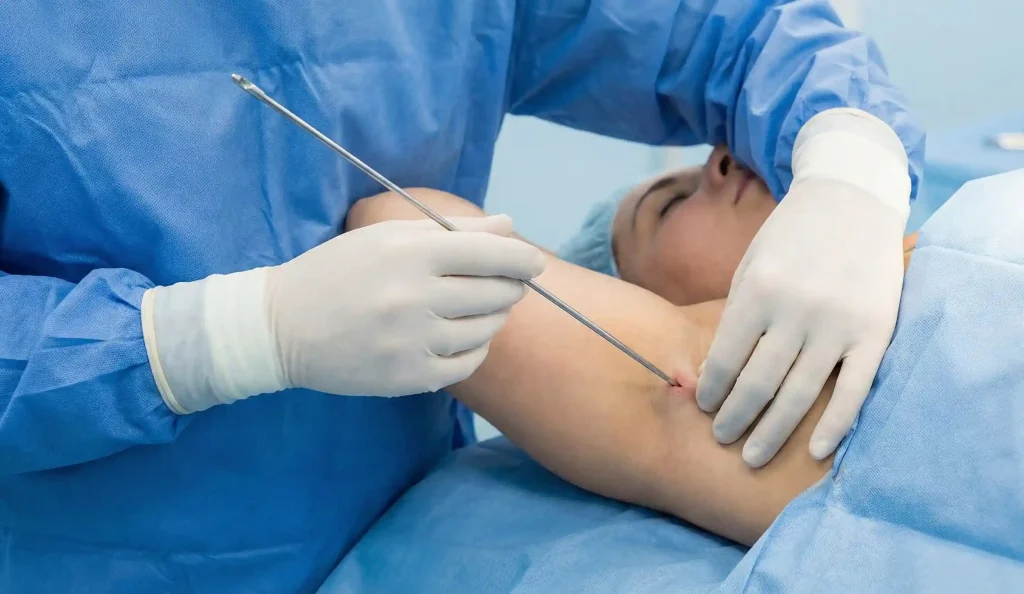
Breast liposuction only requires small incisions of 3-4 mm at sites such as the armpit or breast crease which are then practically invisible, and these are the main contrasts with the procedure described above. The patients usually resume their desk jobs within 3-5 days. There are no drains used, the stitches are very short, and the patient’s pain level is much lower. For the correct candidate i.e., usually a patient with fatty breasts, no ptosis, but wanting a little reduction, this procedure offers two advantages, namely smaller and lighter breasts without the constant reminder of surgical scars.
Frequently Asked Questions About Breast Liposuction
Not really. Liposuction will cut down the volume but will not get rid of the skin or change the position of the nipple. If your breasts are sagging, lipo could make them look even more deflated.
Compared to the standard breast reduction, liposuction is safer for breastfeeding as the milk ducts and nerves are preserved. Still there is always a small risk of damage.
The removed fat cells are dead cells. However, if you gain a lot of weight or have a baby, the remaining breast tissue could grow back.
Most people say that they feel sore and bruised just like after a heavy workout, but by far the pain from liposuction is much less than a surgical breast reduction where large incisions are made.
VASER has been shown to induce the secretion of collagen which is good for the firmness of the skin, however, it is not able to address moderate to severe cases of skin laxity or stretch marks.
Matarasso, A. (2000). Liposuction of the Chest and Back. Clinics in Plastic Surgery.
Abboud, M. H., & Dibo, S. A. (2015). Scarless Breast Reduction: Liposuction-Assisted Breast Reduction. Clinics in Plastic Surgery.
Hoyos, A. E., & Millard, J. A. (2007). Vaser-assisted high-definition liposculpture. Aesthetic Surgery Journal.
Moskovitz, M. J., et al. (2007). Breast Reduction by Liposuction Alone. Annals of Plastic Surgery.