Switching products or adjusting dosage can help.
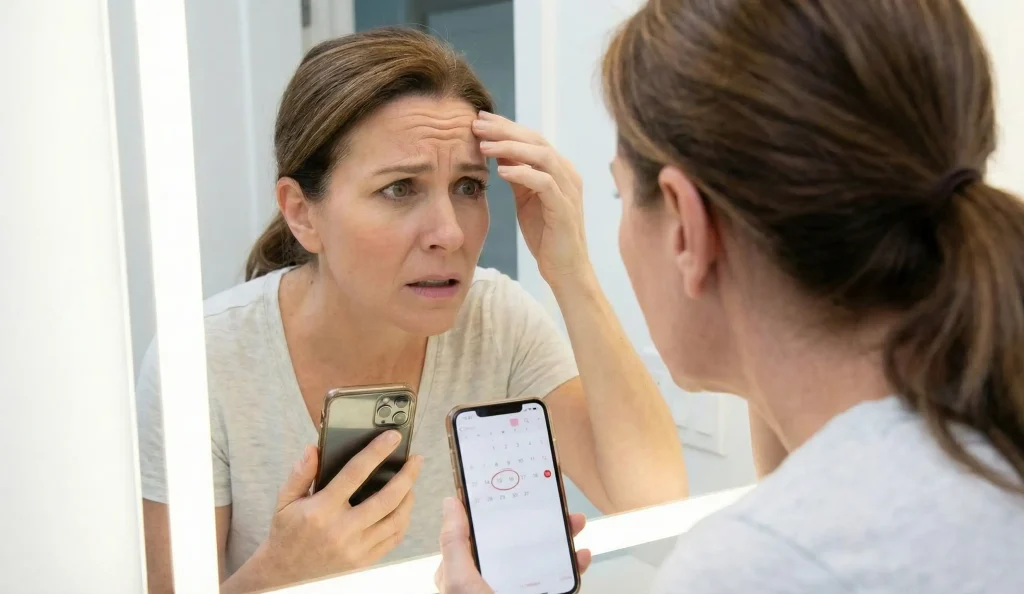
Botulinum Toxin is undoubtedly the leading cosmetic treatment globally because it delivers results. However, a minority of people who have been using it for a long time experience a bewildering and irritating moment when the typical number of units no longer freezes the wrinkles as it did before. You wait the usual two weeks for the”kick-in,” but the movement stays. This is a case of Botox Resistance, which is statistically rare but still a very real issue for people who use neurotoxins to stay young.
You find it hard to believe that you have become “immune” to the fountain of youth. However, the first thing you should do before you freak out is to make a correct diagnosis. Are you body really rejecting the drug, or does it have something to do with dosage, metabolism, or product handling? At Lin Health Europe Clinic, we treat non-responsive cases like scientific mysteries. We do not just inject more; we understand the reason behind the previous injection failure. Resistance can be beaten, but it is a matter of making a strategic decision to alter the treatment plan rather than just using a heavier hand.
True Immunity vs. Dosage Failure: The Diagnosis
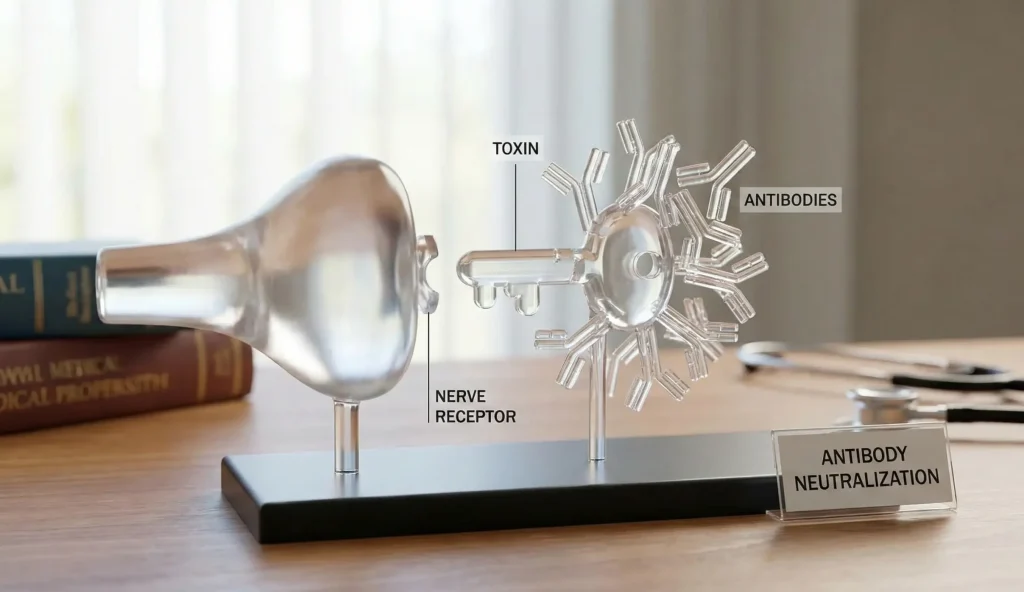
The process of overcoming resistance starts with making sure that it is really there. When one is resistant biologically, the immune system of the body recognizes the Botulinum Toxin protein as a harmful agent and produces neutralizing antibodies meant to block it. This means that the drug reaches your body, but your immune system destroys it before it can attach to the nerve endings. This is estimated to be the case with only about 1% to 1.5% of cosmetic patients.
Most times, the resistance is pretended. This situation can result from an incorrectly stored product (heat breaks down Botox), an overly diluted reconstitution, or the most common one, the aging facial muscles whose strength or heaviness have increased so much that a higher dose than the one that was used five years ago is now necessary. In order to rule out immunity, we often carry out a Frontalis Patch Test. This involves injecting a very small amount into only one side of the forehead. If that side has frozen while the other has not, then you are not immune, you were just underdosed. If there is absolutely no effect, we are dealing with true antibody resistance.
The Zinc Connection: Boosting the Binding Power
If your problem is weak results or the effect going off very fast, then the answer might be in your medicine cabinet rather than the syringe. Botulinum Toxin is a metalloprotease that depends on zinc. Simply put, the toxin molecule has to bind with a Zinc molecule in your body to effectively snip the proteins responsible for muscle movement. If you are deficient in zinc—which is the case for a large percentage of the population—the Botox will not be able to efficiently dock itself at the nerve.
It has been shown in animal studies that zinc and phytase co-administration significantly increases plasma zinc levels while providing the equivalent amounts of zinc than the control which has no phytase. Subsequently, the pre-administration of zinc and phytase for four days before treatment may lead to enhanced neurotoxin efficacy in the treatment. We tell patients who experience resistance setting in to do a “zinc load” right before the appointment. It is like a primer that makes sure that whatever toxin you inject has maximum chemical “stickiness” to work effectively.
The “Brand Swap” Strategy: Switching to Pure Toxins
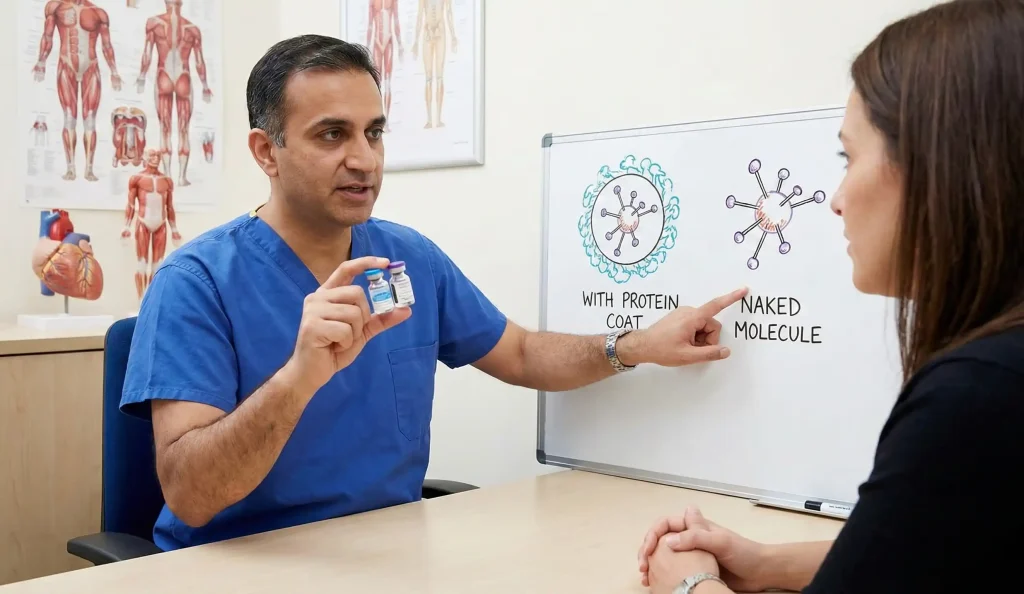
In case antibody-based resistance to the neurotoxin is confirmed, the most conventional step would be a brand change of the neurotoxin. The typically used Botox (OnabotulinumtoxinA) molecule is surrounded by a cluster of proteins that serve as protective molecules. These outer proteins are more often than not the ones to initiate the immune response, rather than the core toxin itself.
To break this cycle, patients are switched over to Xeomin (IncobotulinumtoxinA). Xeomin is the closest we can get to a biological neutral molecule and is therefore also called ‘naked injectable,’ because it is doubly filtered to eliminate all complexing proteins and contains only the active therapeutic molecule. Due to the absence of the protein envelope that usually triggers the immune alarm, Xeomin is often the solution for “immune” patients who could not previously respond to traditional Botox. Another option is Dysport which has a somewhat different protein structure and can, therefore, be effective in patients resistant to other brands.
The Timing Reset: Avoiding the “Booster” Trap
One of the most common reasons for the development of resistance is the habit of “frequent top-up.” This is a condition of patients who come to the clinic every 6 or 8 weeks to get rid of a bit of movement and, in doing so, they virtually administer a vaccine booster dose to themselves. Such exposure to small protein amounts train the immune system to recognize and attack it.
You might need to undergo a period of “cold turkey” to overcome resistance. Our suggestion is to prolong the duration between treatments to at least 4 to 6 months, so that antibody levels in your bloodstream can lower. NEVER do “touch-ups” two weeks after your appointment, just because you spotted a single wrinkle. To immunize yourself permanently against the drug would be worse than having a not-so-perfect result for a few months. We need to stop immune stimulation and break the cycle to reset your sensitivity.
Lin Health Europe Clinic: Custom Neurotoxin Planning
At Lin Health Europe Clinic, we reject the notion of “Botox” treatment as a one-size-fits-all solution. We have in our inventory the complete range of neurotoxins, i.e., Botox, Dysport, and Xeomin so that we can use them alternatively for our long-term patients. The technique of “toxin cycling” helps keep the patient from developing resistance.
When a patient is encountered with the problem of Botox Resistance, a very specific rehabilitation plan is prepared for him/her. This plan includes the washout period, a change of toxin to a purer one such as Xeomin, and guidance on zinc supplementation. We keep a detailed record of your batch numbers and reaction times. We realize that this procedure gives you confidence for a long time and so we use advanced pharmacology to make sure it lasts not just for a few years but for decades.
Frequently Asked Questions About Botox Resistance
If you are administered a standard or high dose of neurotoxin and there is no visible reduction of muscle movement even after 14 days, this could mean that you have Botox resistance. To distinguish whether this is true immunity or merely a dosing error, a patch test can be done.
Absolutely. The main and most effective method of overcoming Botox resistance due to antibodies is changing to a “pure” toxin like Xeomin, which does not have the complexing proteins present in other brands.
No, not always. In lots of instances, the antibodies gradually go down over time. If you skip treatment for 1-2 years and then use another brand, you might overcome Botox resistance and respond to the treatment again.
Yes. When you “micro-dose” or get touch-ups every few weeks, it is similar to a vaccine booster, the immune system is “trained” to create antibodies. To prevent Botox resistance, you should wait at least 3-4 months before having another session.
Although it is less common, resistance to any foreign protein is still possible. In addition, since it doesn’t contain the extra proteins that usually stimulate the immune system, Xeomin has the lowest risk of causing Botox resistance.
Torres, S., et al. (2014). Neutralizing antibodies to botulinum neurotoxin type A in aesthetic medicine. Dermatologic Surgery.
Kerscher, M., et al. (2012). IncobotulinumtoxinA: a highly purified and effective botulinum toxin type A. Journal of Drugs in Dermatology.
Koshy, J. C., et al. (2012). Effect of dietary zinc supplementation on botulinum toxin efficacy. Journal of Craniofacial Surgery.