
Discomfort is minimal with local anesthesia.
Among the various reasons why patients might postpone eyelid surgery, the anxiety about pain consistently tops the list. You want to have blepharoplasty to achieve a beautiful look but you may delay the decision as the thought of getting an injection near the eye frightens you. This intense fear of yours makes it necessary for you to get a clear, clinical explanation of the anesthesia process. At Lin Europe Clinic, we eradicate guesswork by giving true descriptions of the surgical experience. We make sure that you fully understand the sensations that you will have in the operating room.
The use of local anesthesia brings about a distinct, short-lasting feeling followed by complete pain relief. A brief sting will be felt during the initial injection of the anesthetic that goes away in a matter of seconds. We apply particular pharmaceutical methods to completely or almost completely get rid of this unpleasant feeling. Knowing how the numbing works biologically, you can face the procedure calmly. You will be kept comfortable and safe throughout the whole operation.
How the Injection Works in the Body
By means of a thin needle of fine gauge that is specially designed to cause the least trauma to the tissues, the surgeon injected the anesthetic solution. Right after the injection, you will notice a sharp pinch and then a burning sensation. This burning is due to the normal lidocaine being a bit more acidic than the neutral pH of the tissues of your body. This acidity stimulates the local nerve endings for about five to ten seconds until the chemical blockade starts to work.
The medicine immediately blocks the sodium channels in your nerves. Without the sodium, there won’t be any electrical impulses and the pain signal transmission will be interrupted. The tissue in the area will become numb, warm, and totally the sharp stimuli insensitive. Your consciousness will be maintained, but the surgical area will be devoid of all painful sensations. It is such a quick change to anesthesia that the most unpleasant part of the surgery has already been over by the time the procedure actually starts.
Modern Methods of Pain Control
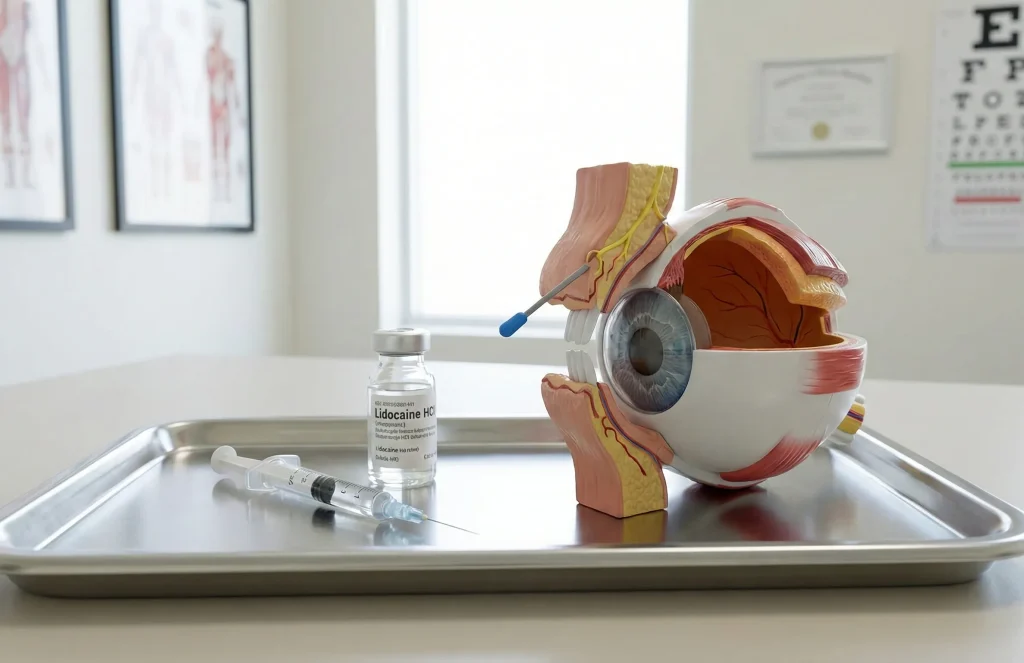
One of the ways that surgeons cut injection pain down is by altering chemically the anesthetic solution. To neutralize the acid, sodium bicarbonate is added when lidocaine is buffered. The use of this chemical reduces the burning sensation significantly at the time of administration. Clinical trials have shown the enhanced patient experience of buffered anesthesia over the standard anaesthetic solutions.
Another method we used was controlling how fast the chemical was given out to the patient. Instantly injection causes sudden tissue expansion, and brings in the pain sensors. The solution being injected slowly and steadily, we are able to avoid the eyelid skin getting stretched. Vibration treatment near the injection site may also be used by us. The sensory nerves are very busy with vibrations that are not capable of receiving pain signals.
Telling the Difference between Pressure and Pain
It is necessary that you make a distinction between the two sensations: feeling pressure and feeling pain. Local anesthesia is very effective in abolishing nociception which refers to the pain signal transmission. However, it does not totally inhibit the deeper receptors that are responsible for detecting pressure and movement. As a result, you can see the doctor obviously taking hold of your face and the tissues by the way of these non-painful sensations.
They may seem to you as pulling or a light heaviness. This touch preservation is normal and does not signify that the anesthesia did not work. If you happen to still have a pain, itching or tingling sensation, you can immediately make it known to the surgeon. In a matter of seconds, he will be able to give supplementary anesthesia through microinjections to reinforce the block. You remain in control over your comfort level the whole time that the surgery lasts.
Functional Benefits of Local Anesthesia

Local anesthesia for upper blepharoplasty is the mode of anesthesia most favored by surgeons to guarantee optimal functional results. The operation necessitates that voluntary muscle control be maintained by the patient. During the operation, the surgeon will ask you to open and close your eyes. This on-the-spot evaluation by the surgical team at every step will help the surgeon ensure that the skin that is removed is the correct amount and that symmetry is attained.
Besides, it also facilitates a quicker return to normal physiological functions. Post-general anesthesia, nausea, grogginess, and hemodynamic instability are some of the risks that one should be aware of. On the other hand, local anesthesia does not cause these systemic side effects. You will be alert right after the surgery. This makes it possible for the physician to discharge you soon so that you can go back to your place and have a good rest without the after-effects of heavy sedation.
Blepharoplasty in Turkey
You opt to have your blepharoplasty done at Lin Europe Clinic, Turkey because here you can get the highest standard of perioperative care. The pain management team at our clinic in Istanbul always ensures that your comfort during the treatment phases is guaranteed through the integration of advanced pain relief protocols. Minimal physical discomfort is our priority hence we use the smallest needle gauges and buffered anesthetic solutions for you. We will not in any way compromise your experience quality level.
To lessen stress, your surgical journey in Istanbul with us includes comprehensive logistical support. Private VIP transfer and luxury accommodation are within your reach at the click of a button. After your surgery, we will provide you with the education that you may need to take care of yourself through the nurses who will teach you the best ways to reduce the swelling and maintain the surgical outcomes. Lin Europe Clinic gives you the perfect combination of medical precision and patient-centered hospitality for a bold yet comfortable transformation.
Frequently Asked Questions About Eyelid Surgery Anesthesia
The stab of the needle penetrates sharply for a few seconds. After that, the pain goes away quickly as the medication becomes active and the eyelid goes numb and pain-free for the whole surgery.
No, you will not notice any sharpness or cutting as the nerves are blocked with chemicals. In fact, you might just be aware of some non-painful pressure or movement while the surgeon is operating.
The numbness produced by the anesthetic usually lasts for about an hour to two after the procedure has ended. Besides, there won’t be any residual drowsiness as you will slowly and naturally regain full sensation.
Generally speaking, local anesthesia is considered safer as it does not carry the systemic risks of full-body anaesthesia. Besides, it also facilitates a quicker recovery time and immediate discharge from the clinic.
Should you feel uncomfortable at any time, just tell the surgeon at once. To keep your comfort, he or she will be able to give you additional anesthetic immediately.
Hass, A. N., et al. (2014). Local anesthesia in blepharoplasty: A review of techniques and safety. Plastic and Reconstructive Surgery.
Zarem, H. A., & Resnick, J. I. (2002). Minimizing pain and anxiety in blepharoplasty surgery. Aesthetic Surgery Journal.
Friedberg, B. L. (2010). Anesthesia for cosmetic surgery: The TIVA/local revolution. Aesthetic Plastic Surgery.