
Worldwide, breast augmentation is among the top 5 most sought-after cosmetical surgeries. At Lin Health Europe Clinic, while the emphasis is on the natural beauty, the patient’s aesthetic desires have the opportunity to be realized with the aid of the breast augmentation technique, which is safe and effective. First and foremost, ‘how to heal properly after a breast surgery’ is the main concern of any plastic surgeon or a patient. For this purpose, this content will provide you with the key tips and related safe measures supported by the expert’s advice to make your recovery process at Lin Health Europe Clinic a smooth one in Istanbul, Turkey.
Understanding Breast Augmentation Recovery Process
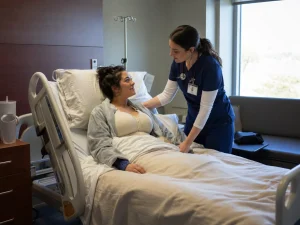
Breast augmentation merely means implant insertion either over or under the chest muscles so as to increase volume and shape. At the end of surgery, the healing all over the body starts, swelling, and tissue recovery being some of the stages along with implant integration. Thus, patients can complain of pain, slight hematoma, and swelling which will be more restrictive in the first few days after the surgery. Realizing their body’s healing timeline would help patients in controlling their expectations which in turn would positively affect their compliance with the post-operative instructions.
The healing period with limited activities usually of light nature should not exceed 1 or 2 weeks. A long journey of about 6 weeks is needed for complete recovery, and the final outcomes keep getting better as the swelling goes down. The surgeons’ advice has to be followed very closely if one desires to be free of worries like infections, migrations of the implant or abnormal scar formation.
Do The Right Things to Make Your Body Heal Faster After Breast Surgery
Using a well-structured plan after breast augmentation leads to the step-by-step process to heal victoriously. Some of the must-do actions as per Lin Health Europe Clinic experts are as follow:
- Use a surgical bra or compression garment to support you just like it is prescribed. A properly designed surgical bra is the base of the support system of the human body, it takes up the excess liquid, and it makes sure the implants are correctly situated. Thus, a bra is the best choice to be worn in the intervening period after the operation. Most patients are instructed to wear the garment for several weeks post-surgery.
- Get some sleep and refrain from any kind of heavy work. Working on the principle of stay and rest will your body will recover fully. The first two weeks should be strictly for rest. Light walking is good for a better blood supply but in case of injury, you should avoid lifting heavy objects and doing hard work.
- Take medications as prescribed and manage the pain accordingly. The patient should follow the doctor’s prescription strictly and take antibiotics, anti-inflammatories, and pain medications in the correct manner. In this way, the infection removal rate is greatly lowered and pain is greatly relieved.
- Keep up a good dietary and hydration habit. Eating protein sources, fresh fruits, and vegetables is the key to the proper repair of tissues. EPS also evaporates swelling and therefore it provides you with a good general recovery way.
- Go to the doctor when he asks you to. The visit with the doctor regularly means that the situation is being perfectly controlled by the surgeon, he/she can spot an infection that might have taken place early, and provide medications.
Things Which You Shouldn’t Do And Keep Away From During Your Recovery Period
Not doing specific things was also an essential part of the recovery steps positive, which included mainly the avoidance of certain activities. Here are some of the don’ts after breast augmentation:
- Do not lift heavy weights or engage in a high-impact exercise
Activities that strain the chest muscles can displace implants and prolong swelling. High-impact sports should be avoided until your surgeon confirms full healing.
- Do not ignore infection signs or unusual symptoms
Increased swelling, redness, fever, and/or unusual discharge may induce the likelihood of infection or other complications besides which. The necessary course of action is immediate medical help if any of these signs occur.
- Avoid the habit of smoking and the consumption of alcoholic drinks
Nicotinic and alcoholic beverages are the culprits that restrain circulation, delay tissue healing, and increase the chances of infection. Recovery becomes a lot more successful if one chooses to be clean during that period.
- Do not sleep on your stomach or press the area of the chest
Positions for sleeping that press against the implants can change both dimensions and location. Sleeping at the back or the side with pillows for support is the most recommended way.
- Do not stop wound care and the practice of personal hygiene
The right way of cleaning and changing the dressing prevent the invasion of microorganisms and reduce the chances of scarring. The surgeon’s instruction on incision care should be the guideline always.
Managing Pain, Swelling, and Scarring Safely
- Pain, swelling, and scarring are all within normal limits and are signs accompanying recovery. Patients can handle these symptoms securely in the following ways.
- Pain management: Take opioids as prescribed by your doctor. If the pain is not very strong, the use of over-the-counter drugs such as Ibuprofen and Paracetamol is enough. At the same time, a cold pack can quickly lower the sensation of pain for a short period of time.
- Swelling control: Compressive garments, light massage (only if your surgeon has given the go-ahead), and rest with the upper body elevated alleviate the build-up of fluid.
- Scar minimization: Silicone sheets, scar creams, and sun protection help the incisions to a normal look. Scars get lighter gradually over months and the use of the correct care products gives better results with time.
Long-Term Care for Lasting Breast Augmentation Results
The wound healing process is just the first step in preserving the beauty of one’s breasts and the natural look of them. Long-term care also consists of such practices as:
- Keep a healthy and stable weight: Big changes in weight will not only change the pattern of the breasts but also the placement of implants.
- Keep communication with your doctor always and monitor your health at regular intervals: Health assessment of the implants is usually a part of checking breast health during the doctor’s visit.
- Keep track of your breasts’ changes: Don’t hesitate to talk to your doctor if you find a lump or experience pain, or if anything else unusual happens to your breasts. Finding problems very quickly is very important.
- Live a healthy lifestyle: Regular exercise, eating healthy, and not smoking all go hand in hand with good lasting results.
By implementing these recovery and long-term care measures, the clientele of Lin Health Europe Clinic can derive the benefits of breast augmentation without any worries or risks. The combination of the surgeon’s expertise in performing the procedure and the patient’s adherence to post-operative instructions ensures the best possible outcomes and the least number of complications.
References
- American Society of Plastic Surgeons. “Breast Augmentation: Recovery and Risks.” Plastic Surgery Statistics and Guidelines.
- Rohrich, R. J., et al. “Breast Augmentation: Techniques, Complications, and Outcomes.” Plastic and Reconstructive Surgery, vol. 133, no. 5, 2014, pp. 1130–1142.
- Spear, S. L., et al. “Optimizing Breast Augmentation Outcomes Through Proper Post-Operative Care.” Aesthetic Surgery Journal, vol. 35, no. 3, 2015, pp. 321–330.
- Hidalgo, D. A., et al. “Long-Term Follow-Up in Breast Augmentation Patients.” Clinics in Plastic Surgery, vol. 42, no. 4, 2015, pp. 587–595.
Frequently Asked Questions About Breast Augmentation Healing
Most patients experience initial recovery within 1 to 2 weeks, while complete healing and implant stabilization usually take up to 6 weeks. Individual healing times may vary depending on age, health, and adherence to post-operative care instructions.
You should avoid heavy lifting, high-impact exercises, smoking, and alcohol consumption, as these can slow healing and affect implant positioning. Sleeping on your stomach or applying pressure to your chest should also be avoided during the first few weeks.
Wearing a surgical bra or compression garment as instructed helps control swelling effectively. Elevating your upper body while resting and following proper wound care also supports faster reduction of fluid accumulation.
Breast implants provide long-lasting results, but natural aging, weight changes, and hormonal fluctuations can alter breast appearance over time. Regular follow-ups with your surgeon help ensure optimal outcomes.
Proper healing includes gradual reduction of swelling, minimal bruising, and controlled discomfort that improves each day. Any signs of redness, unusual pain, fever, or discharge should be reported to your surgeon immediately for evaluation.