
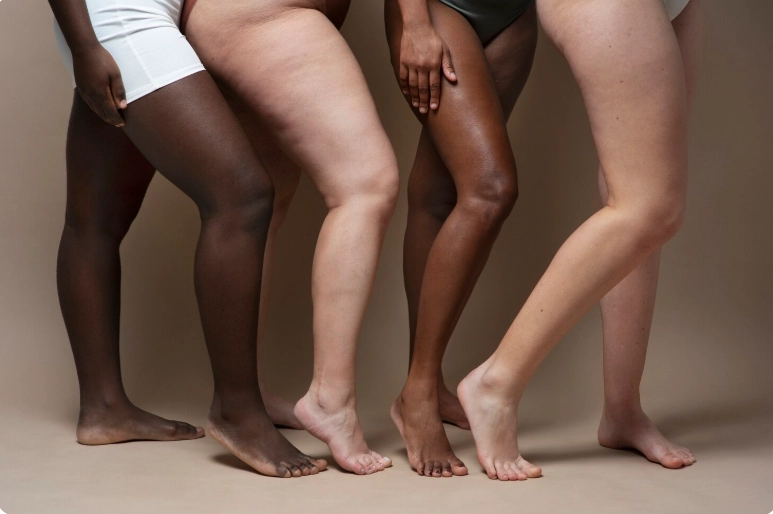
At Lin Health Europe Clinic in Istanbul, the beauty of nature is just the beginning. Several factors such as genetics, age, and lifestyle can lead to localized fat deposits in various parts of the body, including the knees. A lot of patients experience that their legs are getting such fat deposits that they become resistant to diet and exercise. Knee liposuction is a selective fat removal surgery that aims to get rid of these unnecessary deposits so that legs appear slimmer and more proportional. If carried out by competent surgeons, it not only provides a safe, predictable, and lasting solution but also raises the person’s self-esteem and gives aesthetic pleasure.
What Is Knee Liposuction and How Does It Work?
Knee liposuction refers to the body contouring surgery which is done through minimal invasive methods to get rid of fat from the inner as well as the outer knee area. Weight loss usually results in reduction of fat all over the body, however in case of knee liposuction, fat is removed from the area where it is the most stubborn. Doctors impregnate a tumescent solution, which comprises saline, local anesthetic, and vasoconstrictors, into the tissues and then use slim cannulas to suck out the fat cells. This solution, along with making the fat easier to remove, also helps in minimizing bleeding and pain.
The surgery usually takes one to two hours and can be done using local anesthesia or mild sedation according to the patient’s preference and the surgeon’s advice. No surgery is involved in knee liposuction that deals with muscles or ligaments hence the mobility is preserved and the healing time is shortened. By doing a comprehensive correction of the knee area, surgeons can give the lower part of the leg a volumetric and harmonious look which in turn, complements the overall body proportions.
Benefits of Knee Liposuction for Leg Contouring

Knee liposuction is not only effective for fat reduction but also provides multiple benefits:
- Targeted Fat Reduction: It gets rid of the fatty deposits of the body that are extremely resistant to regular weight loss methods.
- Improved Leg Proportions: Knee contouring can give a better visual flow from thigh to calf, thus improving overall leg aesthetics.
- Enhanced Confidence: Beautiful, slender knees frequently become the reason of patient happiness and they feel good when they wear shorts or dresses.
- Minimally Invasive: The procedure is less invasive due to smaller incisions, thus it has less scarring and the recovery time is shorter compared to traditional methodologies.
- Permanent Fat Removal: The fat cells that are extracted through the procedure will not be replenished, if the patient keeps their weight stable.
Apart from that, knee liposuction is a good match with other plastic surgery operations. There are people who have this surgery done in combination with thigh liposuction, calf contouring, and non-surgical treatments such as radiofrequency skin tightening to get excellent outcomes.
The Procedure: How Surgeons Perform Knee Liposuction
The first step is a detailed preoperative consultation. The doctors do a brief examination of the fat amount, skin elasticity, and leg anatomy in general. They might take pictures and use digital tools to measure and plan the contouring strategy.
Depending on how extensive the treatment is, patients on the surgery day either get local anesthesia with sedation or general anesthesia. The doctors perform small cuts at the knee crease or under the knee to hide the fat deposits they are going to take. They do the suction technique with a thin cannula and delicately remove the fat while they do the precise shaping of the surrounding area to get the natural curve.
Throughout the operation, fluid is constantly injected to maintain the proper moistness of the tissue, reduce bleeding and the possibility of edema after the procedure. The incisions are then covered with stitchings that the body will eventually absorb or with surgical tape. Immediately after the garments, which have the function of support for the newly treated area and of the acceleration of the healing process, are put on.
What Patients Can Expect From Knee Liposuction Recovery
The healing process in the case of knee liposuction is generally very fast when compared to other surgeries that are more invasive. For a few days, the patients may feel a little swelling, bruising, or tenderness in the knee area. These symptoms will disappear after a certain time and the patient can use the compression garments, cold therapy, and pain medication that the doctor has prescribed to manage them.
Most patients can go back to their normal daily activities in a few days. They, nevertheless, should not do any vigorous activity or heavy lifting for 2 to 3 weeks. Walking is one of the early physical activities that can stimulate blood flow and lessen the chance of blood clots. The doctor-patient visits are very important in terms of checking on the healing process and having the best results.
Usually, patients can get initial contour enhancement between the 2nd and 4th week. At the same time, the swelling that has caused the final results to not have been visible so far, disappears, and final results are seen after 3-6 months. Moreover, behaving in a healthy manner and managing to keep your weight stable are the two things that will have a positive impact on the long-term effects of knee liposuction.
How Long the Results Last and How to Keep Your Legs Slim
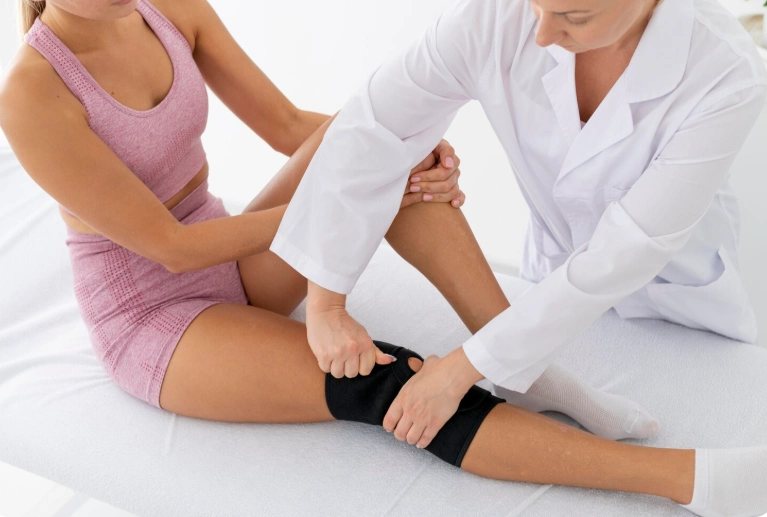
Through knee liposuction, the patient is allowed to get rid of the fat cells in the treated area on a permanent basis. Nonetheless, the fat cells that are still there can increase in volume if the patient gets a lot of weight. A combination of exercise, nutrition, and hydration is indispensable in order to keep your legs in shape.
Occasionally on patients opt for skin tightening by non-invasive methods or small adjustments made to enhance their long-term results. Lin Health Europe Clinic provides total aftercare programs with support in nutrition, exercise, and body contouring maintenance. The clinic’s holistic approach not only helps patients to meet their aesthetic goals but also to keep their general health.
Patient testimonials of pain knee liposuction treatment as highly satisfying reporting increased self-esteem, better comfort with clothing, and a more aesthetically balanced figure. Through intertwining knee liposuction with other cosmetic procedures, the harmonious leg proportions and thus overall body symmetry can be improved further.
References
- Rohrich RJ, Sorokin ES, Brown SA. “Body Contouring: Liposuction of the Knee and Thighs.” Plastic and Reconstructive Surgery. 2016;138(3):622–631. doi:10.1097/PRS.0000000000002495
- Klein JA. “Tumescent Technique for Local Anesthesia Improves Safety of Liposuction.” Dermatologic Surgery. 2018;44(8):1021–1027. doi:10.1097/DSS.0000000000001604
- Matarasso A, Matarasso SL. “Liposuction of the Legs: Safety, Outcomes, and Patient Satisfaction.” Aesthetic Surgery Journal. 2019;39(1):NP21–NP33. doi:10.1093/asj/sjy150
FAQ is about Knee Liposuction
Knee liposuction is generally safe when performed by experienced plastic surgeons using modern tumescent techniques. Complications are rare and usually minor, such as temporary swelling or bruising.
Most patients resume daily activities within 3–5 days, while full recovery and final results may take 3–6 months. Wearing compression garments and following post-operative care instructions accelerates healing.
Yes, knee liposuction effectively removes localized fat deposits that resist diet and exercise. It can create slimmer, more contoured knees when performed with precise surgical technique.
Targeted knee liposuction is the most reliable method for removing stubborn fat around the knees. Non-surgical methods like exercise or diet alone often cannot eliminate these localized fat pockets.
Patients typically feel minimal discomfort due to local anesthesia and the tumescent technique. Mild soreness or bruising may persist for a few days but is manageable with standard pain relief.
Common side effects include temporary swelling, bruising, and minor numbness around the treated area. Serious complications are uncommon when performed in a certified clinic with proper surgical care.